
Lieferung heute & morgen

Qualitätsgarantie

Willkommens-Angebote freischalten: KOSTENLOSE Lieferung | Bis zu 80 % RABATT | Kostenlose 30-Tage-JoyPlus-Testphase
App herunterladen
A no-drill double roller blind offers a flexible solution for privacy and sun protection, especially in rental properties where damaging window frames must be avoided. However, the selection process is fraught with pitfalls that can lead to a poor purchase. Incorrect measurements, unsuitable materials, or unstable fittings are common problems. This guide will help you identify the crucial features and find a model that perfectly suits your needs.
Many products promise simple installation and perfect functionality, but the reality is often different. Pay close attention to these three typical weaknesses to avoid disappointment.
To avoid these mistakes, you should carefully check three technical aspects before buying. These determine the durability and functionality of your new privacy blind.
The most common method for a no-drill blind is the clamp-fit system, where brackets are clamped directly onto the window sash. The crucial factor here is the adjustable range of the clamp brackets.
A day and night blind, also known as a zebra blind for windows, consists of two parallel fabric panels with alternating woven transparent and opaque stripes.
To avoid light gaps at the sides, correct measurement is essential.
Here are some recommendations tailored to different living situations and requirements.
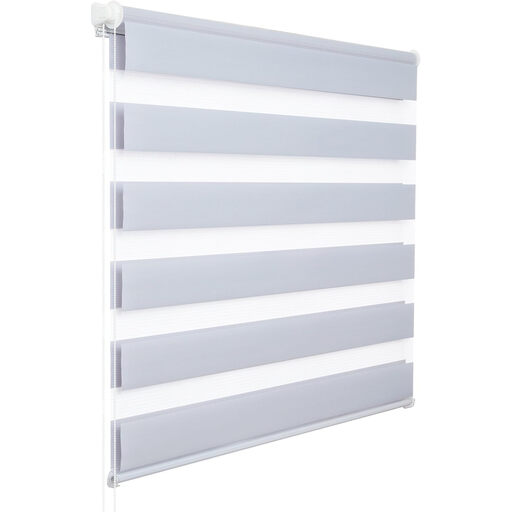
Why This Fits Their Persona: Ideal for typical rental apartments with uPVC windows. This model in a neutral grey window blind offers a straightforward and reliable solution for living rooms or bedrooms without requiring any structural changes.
The clamp brackets are designed for a common frame thickness of 1-10 mm, thus avoiding fitment issues. The 100% polyester fabric with thermally sealed edges prevents fraying.
Simple, drill-free installation; stepless light control via the chain hoist, which can be mounted on the left or right side.
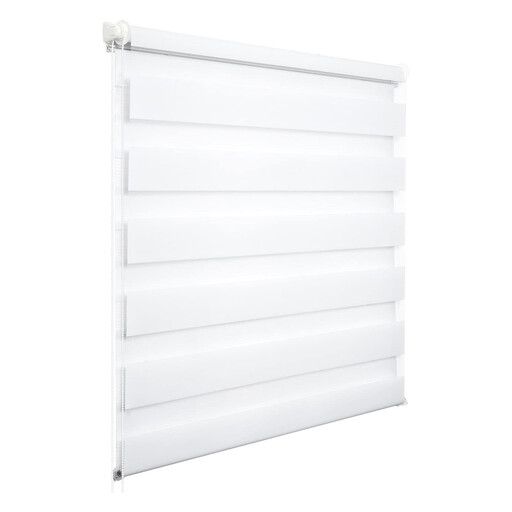
Why This Fits Their Persona: Perfect for floor-to-ceiling windows or balcony doors in modern homes. The 220 cm length covers even tall glass surfaces for which standard blinds are often too short, ensuring a uniform look.
The product description includes clear instructions on how to calculate the order width, avoiding the mistake of insufficient coverage. The clamp brackets are suitable for a wider frame thickness of 13-23 mm.
The extra length is ideal for tall windows and doors. The fabric's hot-cutting technology ensures durability and prevents fraying, even with frequent use.
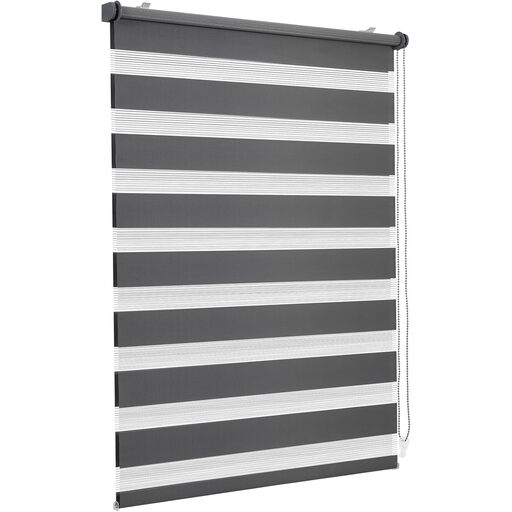
Why This Fits Their Persona: For those who value a modern aesthetic. The dark grey design blends seamlessly into minimalist or industrial interior styles, serving as a stylish decorative element in the office or living room.
The slim profile, with a thickness of 1 to 2.3 cm, ensures an unobtrusive installation. The versatile mounting options (drilling or clamping) offer flexibility in case clamp-fitting is not ideal.
The chain hoist can be mounted on either side, allowing for flexible adaptation to the room layout. The design offers precise control over light and privacy.
We have compiled a complete, real-time list of products that fully satisfy these strict selection criteria and UK safety regulations.
1. How securely does a no-drill double roller blind really hold? The stability of a clamp-fit blind depends critically on correct installation and compatibility with the window frame. If the clamp brackets are suitable for the thickness of your window sash and are tightened firmly, they provide a secure hold for daily use. They are designed for raising and lowering the blind but should not be subjected to additional loads.
2. Can I also attach a clamp-fit blind to a wooden window? As a rule, this is not recommended. Most clamp brackets are designed for the smooth, standardised profiles of uPVC windows. On wooden windows, the clamps can dent the material or may not find a secure grip due to the surface texture. Some product descriptions, like those from WOLTU, explicitly exclude suitability for wooden windows.
3. Is the fabric width of a duo blind always narrower than the specified total width? Yes, this is a feature of its design. The specified total or order width always includes the side brackets and the mechanism. The fabric panel itself is therefore inherently narrower, usually by about 4 to 5 cm. This must be taken into account when measuring to ensure adequate coverage of the glass pane.