
Lieferung heute & morgen

Qualitätsgarantie

Willkommens-Angebote freischalten: KOSTENLOSE Lieferung | Bis zu 80 % RABATT | Kostenlose 30-Tage-JoyPlus-Testphase
App herunterladen
A no-drill clamp-fit double roller blind can provide privacy and shade in rented homes, houses and offices without making holes in the window frame or wall. However, inaccurate measurements, unsuitable window frames and unclear descriptions of how much light a blind blocks can often lead to the wrong purchase.
So, if you’re looking for a day and night blind, zebra blind or duo blind, don’t focus only on colour and price. What matters is whether the clamp-fit system is compatible with your window, the actual fabric width and how you intend to use the blind.
A no-drill blind is usually attached to the top of the window frame using clamp brackets. This type of installation only works with certain frame thicknesses. For the WOLTU models covered here, the product descriptions generally specify a suitable frame thickness of 13 to 23 mm. According to the supplier, another model is designed for frames measuring 16 to 22 mm.
Before placing your order, measure:
According to the product information, these clamp-fit systems are not designed for roof windows, many wooden frames, sliding windows or fixed glazing.
For a clamp-fit window blind, the stated width usually includes the entire construction, including the brackets. According to the WOLTU product descriptions, the fabric is around 4 to 5 cm narrower.
As a practical guide:
So, on an 80 cm-wide blind, the usable fabric width may be considerably less than 80 cm. If you want to fit a privacy blind directly in front of the glass pane, factor in this difference when planning.
A classic day and night double roller blind has alternating sheer or light-filtering and opaque fabric strips. Sliding the fabric panels against each other creates different levels of light, from letting in more daylight to significantly reducing the view through the window.
This isn’t the same as a fully blackout blind. For bedrooms where you want to keep residual light to a minimum, a separate blackout blind with a coated backing is usually a better choice. A light-filtering blind, on the other hand, is suitable for living rooms, kitchens, bathrooms or offices where you still want to let in daylight.
First, check whether your window is suitable for clamp-fit installation. A no-drill blind is especially practical in rented homes, as it means making fewer changes to the windows and walls when you remove it. Some models can also be screwed into place for a more permanent installation.
The clamp brackets must sit fully on the frame and be tightened securely. If they’re loose, the blind may run crookedly or fall down.
According to the product descriptions, the WOLTU double roller blinds featured here are made from 100% polyester. Some descriptions mention heat-cut edges, which are intended to reduce fraying. Use a soft cloth or brush to clean the blind. Avoid harsh cleaning products and vigorous rubbing.
For bathrooms and kitchens, it’s also important to make sure the blind isn’t in constant contact with splashing water. ‘Suitable for damp rooms’ doesn’t mean the fabric is machine-washable or waterproof.
A blind with a chain can be adjusted to any height, and on several models the chain can be fitted on either the left or right. However, the chain must be secured out of children’s reach. If you have young children or pets, a cordless blackout blind operated using a bottom rail may be a suitable alternative.
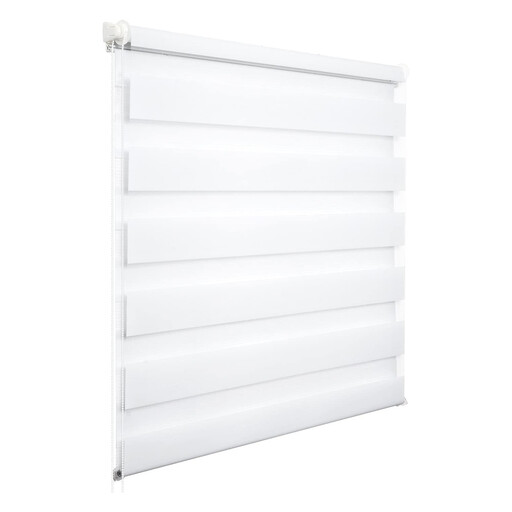
Why this product suits this type of buyer: Its compact width is a good fit for smaller windows in living rooms, home offices or bedrooms. According to WOLTU’s product description, it can be clamp-fitted to frames measuring 13 to 23 mm thick, with the controls fitted on the left or right.
The product description specifies the frame thickness and points out that the fabric is narrower than the overall blind. This makes it easier to plan for realistic coverage.
100% polyester according to the product information, chain operation and two installation options: clamp-fit or screw-fixed.
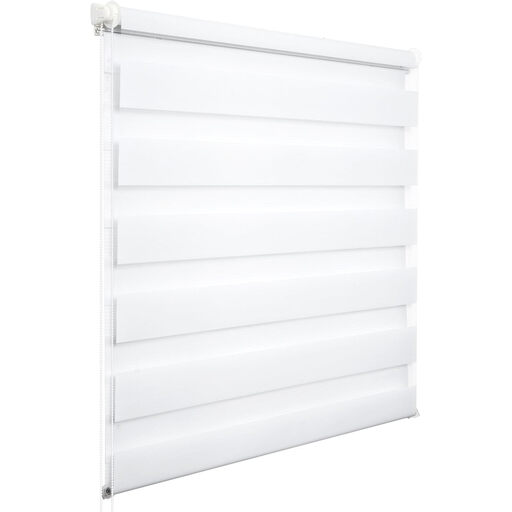
Why this product suits this type of buyer: Its greater height makes it a good option for tall windows or patio doors. According to WOLTU’s product description, this zebra blind has alternating sheer and opaque stripes, plus a weighted bottom rail.
The product information specifies both suitability for frames measuring 13 to 23 mm and the narrower fabric width. This reduces the risk of choosing the wrong size for the coverage you need.
A longer design with chain operation, polyester fabric and clamp-fit or screw-fixed installation, according to the product information.

Why this product suits this type of buyer: This model is designed for bedrooms, home offices or rooms where you want to reduce the amount of light coming in. According to WOLTU’s product description, it has no operating chain and is adjusted using a bottom rail. It’s designed for frames measuring 16 to 22 mm thick.
The product description clearly distinguishes between clamp-fit and screw-fixed installation, and specifies the suitable frame thickness. This helps avoid the common confusion between the measurements for blackout and double roller blinds.
Cordless operation, coated backing according to the supplier, and polyester fabric that can be wiped clean with a damp cloth.
We’ve put together a complete, regularly updated list of products that meet these strict selection criteria and fully comply with the safety regulations in force in the EU.
That depends on the frame thickness, the clamp brackets and correct installation. The brackets must sit fully on the frame and mustn’t obstruct the window when it opens. If the frame profile isn’t suitable, choose a different type of installation.
There’s no set lifespan. It depends on how often you use it, how much sunlight it gets, how it’s cleaned and how much force is used to operate it. Gentle handling, regular dusting and avoiding sudden movements can help reduce wear. Check the product listing for details of any guarantee or warranty.
No. A manual double roller blind with a chain or bottom rail doesn’t need electricity, so there are no ongoing energy costs. You’ll only need to consider the purchase price, any replacement parts and the effort involved in cleaning it.