
Lieferung heute & morgen

Qualitätsgarantie

Willkommens-Angebote freischalten: KOSTENLOSE Lieferung | Bis zu 80 % RABATT | Kostenlose 30-Tage-JoyPlus-Testphase
App herunterladen
As a renter or a practical homeowner, you often face the same challenge: you need effective privacy and sun protection but want to avoid damaging your window frames with drill holes. A no-drill double roller blind seems like the ideal solution. However, the online market is flooded with products of widely varying quality and fit. Incorrect measurements, unstable brackets, or disappointing fabrics can quickly lead to a bad buy.
This guide, created by your Joybuy Product Recommendation Officer, shows you what to look for. We'll highlight the most common pitfalls and explain the crucial parameters to help you make an informed decision.
Before you invest, you should be aware of the typical problems that arise with low-quality products and lead to frustration.
To avoid these pitfalls, focus on three objective criteria. These will help you separate the wheat from the chaff and find a suitable no-drill window blind.
Drill-free installation is usually done with so-called clamp brackets. A clamp-fit blind is clamped directly onto the window sash. The decisive factor here is the frame thickness (also called the rebate depth).
A day and night blind, also known as a zebra clamp-fit blind, consists of alternating transparent and opaque fabric panels. By sliding the two fabric layers against each other, you can seamlessly adjust the amount of light coming in.
This is the most common point of error. Note the difference between the fabric width and the order width.
Based on these objective criteria, we have identified some products that are suitable for different user profiles.
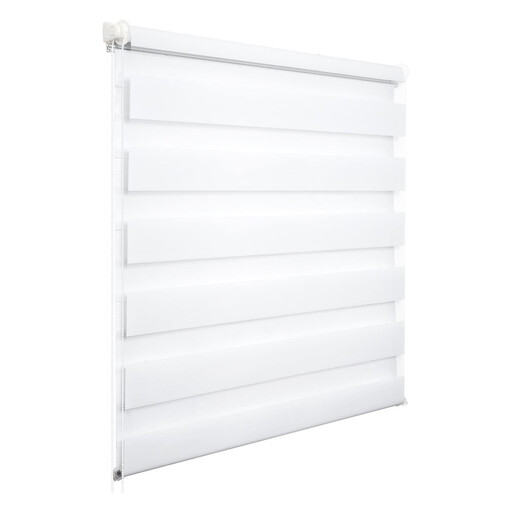
Why This Fits Their Persona: Ideal for standard windows in rental properties. The white colour is neutral and complements any interior style. The installation is straightforward and leaves no marks upon moving out, avoiding issues with the landlord.
The product description clearly states compatibility for frame thicknesses of 13 to 23 mm, thus avoiding the fitment trap. Its function as a day-and-night blind offers transparent light control instead of vague promises.
Simple, tool-free clamp-fit installation; stepless adjustment of light and privacy.
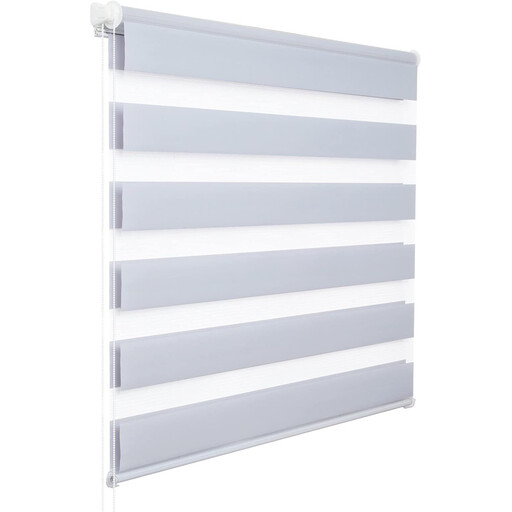
Why This Fits Their Persona: The modern grey colour and generous dimensions are perfect for floor-to-ceiling windows or patio doors in the living room. It blends seamlessly into a contemporary interior and acts as a stylish design element.
According to the manufacturer, the 100% polyester fabric is processed with thermal-cutting technology, which prevents the edges from fraying. This directly addresses the pitfall of fragile construction and ensures a longer lifespan.
Durable, dimensionally stable material; suitable for humid environments and easy to clean.
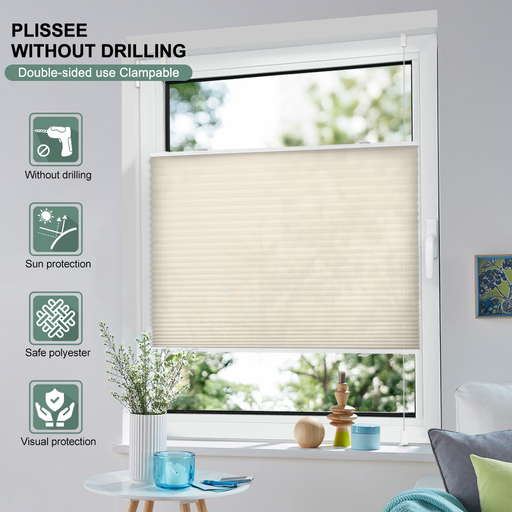
Why This Fits Their Persona: A no-drill pleated blind is an excellent alternative to a double roller blind. It provides targeted anti-glare protection for screens without completely darkening the room. The pleated structure has a modern and minimalist look.
The tool-free clamp-fit mounting system is clearly designed for drill-free installation. The description as "opaque" for privacy while allowing light to pass through is precise and avoids the trap of misleading light-protection claims.
Allows for flexible height adjustment for targeted privacy and glare protection; modern pleated aesthetic.
We've compiled a complete, up-to-date list of products that fully meet these strict selection criteria.
The stability of a clamp-fit blind depends largely on two factors: correct installation and the compatibility of the clamp brackets with your window frame. If the frame thickness is within the range specified by the manufacturer and the brackets are tightened firmly, the blind is perfectly stable for daily use. It is designed for the normal opening and tilting of windows.
In most cases, this is not recommended. The clamp brackets are optimised for the standardised profiles of uPVC windows. With wooden windows, there is a risk that the clamping mechanism could damage the softer material or fail to find a secure grip due to the often unique shape of the frame. Manufacturer warnings usually state this explicitly.
Cleaning is straightforward. According to manufacturer instructions, it is usually sufficient to regularly dust the fabric with a soft brush or a duster. For light stains, a slightly damp cloth can be used. Aggressive cleaning agents should be avoided at all costs, as they could damage the fabric or the colour.