
Lieferung heute & morgen

Qualitätsgarantie

Willkommens-Angebote freischalten: KOSTENLOSE Lieferung | Bis zu 80 % RABATT | Kostenlose 30-Tage-JoyPlus-Testphase
App herunterladen
The search for a flexible storage solution leads many to no-drill hooks. Whether in a rented flat, a student dorm, or your own home, the idea of leaving walls and tiles unscathed is compelling. However, the market is filled with products whose promises often don't hold up in practice. Before you make a decision, it's crucial to understand the common pitfalls that lead to frustration and unnecessary expense.
A frequent issue is exaggerated load capacity claims. A hook that claims to hold 5 kg on the packaging might give way under the weight of a single wet towel. Another pitfall is the lack of specificity regarding surface suitability. Many products only work on lab-like smooth, non-porous surfaces such as glass, but fail on common materials like textured wallpaper or lightly structured bathroom tiles.
To avoid a bad purchase, you should focus your attention on two key parameters: the mounting type and the material properties of the surface. These factors are decisive for the reliability and longevity of the hooks.
The choice of mounting method is fundamental and depends directly on the location and the weight to be supported.
The functionality of a no-drill hook lives or dies by the surface on which it is mounted.
Based on these objective criteria, we have compiled a selection of products suitable for specific use cases and user profiles.
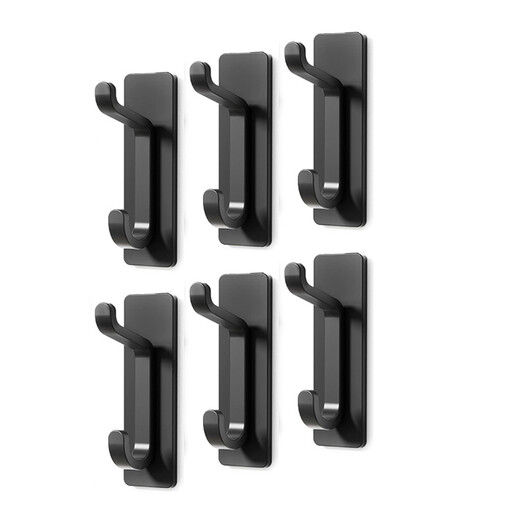
Why This Fits Their Persona: Ideal for students or renters who need a cost-effective and straightforward solution for organising lightweight items like keys, tea towels, or accessories. The 6-pack offers excellent value for money for use in multiple locations.
The product relies on a clear adhesive mount for smooth surfaces and avoids vague promises. The stainless steel material is robust for the price and more durable than simple plastic hooks.
Material: Rust-resistant stainless steel.
Quantity: 6 hooks per pack for versatile use.

Why This Fits Their Persona: Perfect for users who need a reliable, waterproof, and flexible solution directly in the shower or bathroom. The reusability and high load capacity are ideal for towels, bathrobes, and shower accessories.
This product directly addresses surface incompatibility by being clearly specified for smooth, non-porous surfaces. The stated load capacity of up to 5 kg (11 lbs) is backed by a specific suction technology.
Technology: Suction cup system for a strong hold on tiles and glass.
Flexibility: 360° rotatable hook and residue-free reusability.
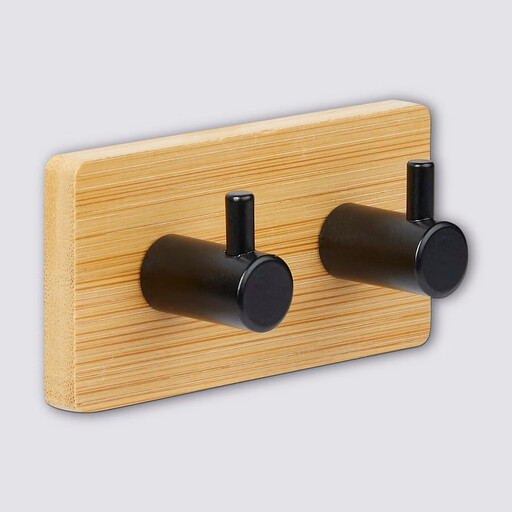
Why This Fits Their Persona: For users where aesthetics are just as important as function. The combination of natural bamboo and steel blends harmoniously into modern living concepts, serving not only as a holder but also as a small design element.
This product combines appealing design with a straightforward adhesive function. It avoids the pitfall of focusing only on aesthetics by relying on a proven mounting method for indoor use.
Design: Combination of bamboo wood and steel for a high-quality look.
Installation: Simple adhesive mounting for indoor use.
We have compiled a complete, real-time list of products that fully satisfy these strict selection criteria and UK safety regulations.
Most no-drill hooks, especially suction cup and standard adhesive hooks, are not suitable for textured wallpaper. The uneven, porous structure prevents a vacuum from forming or the adhesive from finding a sufficiently large and stable contact area. Some manufacturers offer special adhesive strips for wallpaper, but their load capacity is often limited. It is advisable to check the product description carefully.
The removal method depends on the adhesive. Many modern adhesive strips can be removed by slowly pulling them parallel to the wall. For more stubborn adhesive residues, gently heating with a hairdryer can help soften the glue. Residues can then often be removed with a suitable cleaning agent or rubbing alcohol. However, always test this on an inconspicuous area first.
The lifespan of an adhesive hook depends on the quality of the adhesive, the load, the surface condition, and environmental factors such as humidity and temperature fluctuations. A high-quality strong adhesive hook, correctly applied to a suitable, clean surface and not overloaded, can last for several years. Products from brand manufacturers often provide guidance on expected durability.