
Lieferung heute & morgen

Qualitätsgarantie

Willkommens-Angebote freischalten: KOSTENLOSE Lieferung | Bis zu 80 % RABATT | Kostenlose 30-Tage-JoyPlus-Testphase
App herunterladen
The search for a flexible storage solution leads many to no-drill hooks. Especially in rental apartments or on delicate surfaces like tile, reaching for a power drill simply isn't an option. The market offers a vast array of adhesive and suction cup solutions, but not all of them live up to their promises. Before you make a decision, it's crucial to understand the common pitfalls that often lead to damaged walls and frustration.
This guide will help you separate the good from the bad. We'll highlight the critical product features and show you what to look for to find a reliable and truly damage-free solution.
To avoid these problems, you should check three key aspects before buying. These will determine whether a hook is suitable for your intended use and will perform reliably over the long term.
Choosing the right mounting technology is fundamental and depends directly on the surface.
The quality of the hook itself and a realistic assessment of its load capacity are crucial for safety.
For renters, protecting the walls is the top priority. Read the product description carefully to check which surfaces the hook is suitable for.
Based on these criteria, we have identified some products that offer a well-designed solution for specific use cases.
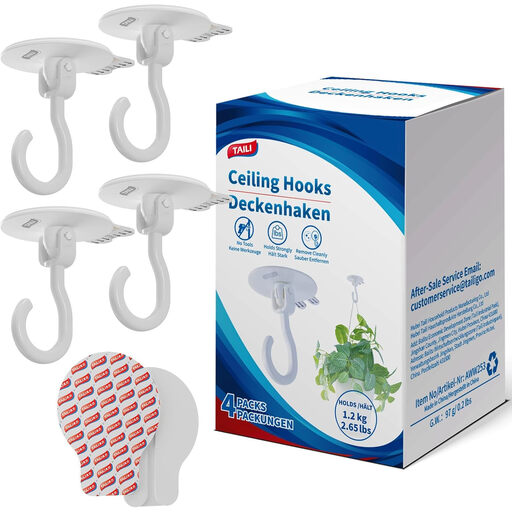
Why This Fits Their Persona: Ideal for people who want to flexibly hang seasonal decorations, string lights, or small plants on walls and ceilings without installing permanent fixtures.
The patented adhesive system is designed for long-term adhesion. Removal is achieved by slowly stretching the adhesive strip, which minimises the risk of paint chipping on suitable surfaces.
The 2-in-1 design, with its 180° tilt and 360° rotation, allows it to be used as both a no-drill wall hook and an adhesive ceiling hook.
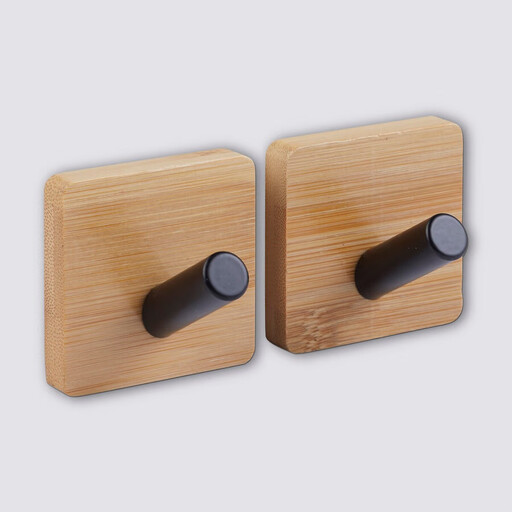
Why This Fits Their Persona: Perfect for renters and homeowners looking for a functional hanging solution that aesthetically blends into a modern, nature-inspired living space.
This set relies on a straightforward, simple adhesive mount and avoids exaggerated claims. It is designed for light to medium-weight items in dry indoor areas and performs this task reliably.
The combination of FSC-certified bamboo and steel creates a visually appealing alternative to standard plastic hooks. Ideal for the hallway or bedroom.
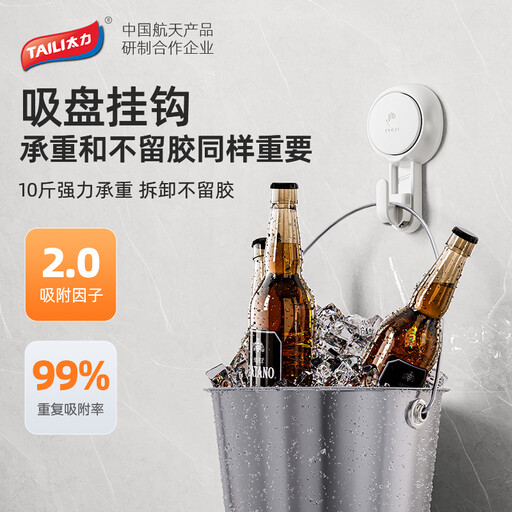
Why This Fits Their Persona: For anyone who needs an absolutely reliable and flexible solution for smooth surfaces like tiles in the shower or on a kitchen backsplash.
By forgoing adhesive, this hook bypasses the problem of weakening adhesion in humid conditions. The suction technology is specifically designed for damp environments and is guaranteed to leave no residue.
The hooks are waterproof, rustproof, and can be removed and repositioned at any time without tools. Ideal as no-drill hooks for tile.
We have compiled a complete, up-to-date list of products that fully meet these strict selection criteria and safety standards.
The lifespan of an adhesive hook depends on several factors: the load, the surface texture, and environmental conditions like humidity and temperature. When applied correctly to a suitable, clean surface, a quality product can last for several years. In damp rooms, the lifespan tends to be shorter unless the product is explicitly designed for such environments.
Suction cup hooks are inherently reusable. They can be easily detached and reattached to another smooth surface. Most self-adhesive hooks are designed for single use. However, some brands, like tesa with its Powerstrips, offer replacement adhesive strips that allow you to reuse the hook itself.
For suction cup hooks, simply release the locking mechanism or lift a corner of the suction cup to let the air out. For adhesive hooks with flexible strips (e.g., Powerstrips), pull slowly and parallel to the wall on the designated tab until the hook comes off. Never pull the hook directly away from the wall. For solid adhesive pads without a pull tab, gently heating the adhesive with a hairdryer can soften it. You can then try to slice through the adhesive behind the hook using a thin, strong thread (like dental floss).