
Lieferung heute & morgen

Qualitätsgarantie

Willkommens-Angebote freischalten: KOSTENLOSE Lieferung | Bis zu 80 % RABATT | Kostenlose 30-Tage-JoyPlus-Testphase
App herunterladen
Everyone wants an organised home, but the thought of damaging walls—especially in a rental—can be a major roadblock. No-drill hooks promise an easy solution for hanging towels, jackets, or kitchen utensils without reaching for a power drill. However, the market is flooded with products that often fail to live up to their promises in real-world use. Before you make a decision, it's crucial to understand the common pitfalls that can lead to frustration and wasted money.
This guide will help you identify the key features and make an informed choice that suits your specific needs and living situation.
Many products advertise high load capacities and universal application, but the reality is often quite different. Pay attention to these three critical points to avoid disappointment:
To find the right hook, focus on the technical fundamentals. These three factors determine its functionality and longevity.
Choosing the right mounting technology is the most important step. Each method has specific surface requirements:
The material affects not only the appearance but also the durability, especially in kitchens and bathrooms.
Do you need a single robe hook for a bathrobe or a full hook rack for the whole family's coats? Consider how much you need to hang. A rack distributes the load more effectively and creates more organisation in a small space. The design should complement your existing decor, whether it's minimalist stainless steel or natural bamboo.
Here are some product recommendations tailored to specific use cases and needs.
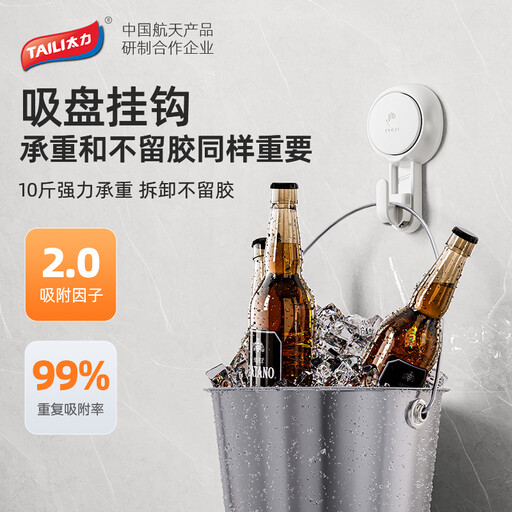
Why it's a great fit: Perfect for renters who need a completely damage-free and flexible solution. These hooks can be repositioned at any time without leaving marks on tiles or glass—ideal for bathrooms and kitchens.
This product solves the surface incompatibility problem by being explicitly designed for smooth, non-porous surfaces. When applied correctly, its suction mechanism is more reliable than simpler models.
Completely reusable and leaves no residue. Installation is tool-free and takes seconds. According to the manufacturer, each hook has a load capacity of up to 2 kg.
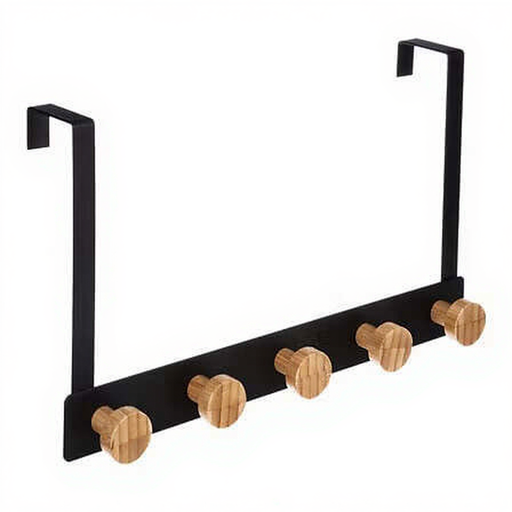
Why it's a great fit: For anyone who wants to create significant storage space quickly and easily. It's perfect for hallways, bedrooms, or bathrooms to store jackets, bags, and towels neatly behind the door.
This hook rack completely bypasses the issues of adhesive and suction hooks, as its use is independent of wall condition. The robust steel construction prevents problems with rust and deformation.
No installation required; it's ready to use instantly. With five hooks, it offers high capacity for various items. Fits standard doors with a thickness of up to 4 cm.

Why it's a great fit: For those seeking a functional solution that also serves as a stylish home accessory, blending seamlessly into their interior design. The combination of natural bamboo and steel creates a high-end, modern look.
This product avoids the trap of cheap materials. The use of real bamboo (FSC-certified) and steel ensures an appealing aesthetic and greater durability than basic plastic hooks.
Elegant design thanks to its material combination. The self-adhesive backing allows for easy, drill-free installation on suitable smooth surfaces.
We've compiled a comprehensive, up-to-date list of products that fully meet these strict selection criteria and comply with current regulations.
1. How long do adhesive hooks really last? The lifespan depends heavily on the adhesive quality, the surface condition, the weight of the item, and environmental factors like humidity. A high-quality adhesive hook applied to a clean, smooth, and dry tile can last for several years. In direct shower areas, moisture can shorten its lifespan.
2. Can I use suction cup hooks on textured wallpaper? No, that is not possible. Suction cups require a completely smooth, airtight, and non-porous surface to create and maintain a vacuum. Textured wallpaper is both textured and porous, which makes adhesion impossible. They are suitable for glass, high-gloss tiles, smooth metal, or acrylic.
3. How can I identify a rustproof stainless steel hook for the bathroom? Look for product descriptions that explicitly mention "stainless steel" or "rustproof stainless steel" (sometimes with specifications like "304 grade"). Be cautious with terms like "metallic finish" or simply "chrome-plated," as these can often hide a rust-prone core beneath a thin protective layer that can wear off. A brushed or matte finish is often an indicator of solid stainless steel, whereas a high-shine chrome layer can also be applied to lower-quality material.