
Lieferung heute & morgen

Qualitätsgarantie

Willkommens-Angebote freischalten: KOSTENLOSE Lieferung | Bis zu 80 % RABATT | Kostenlose 30-Tage-JoyPlus-Testphase
App herunterladen
The search for suitable privacy and sun protection for rental apartments or newly designed rooms often ends with a central challenge: installation. No one wants to leave unsightly drill holes in window frames or walls. A no-drill pleated blind seems to be the ideal solution. However, the market is filled with products whose quality and functionality vary greatly. Before you make a purchasing decision, it's important to know the most common pitfalls that can lead to frustration and wasted investments.
This guide will help you identify the crucial features and make an informed choice.
Many products promise simple, damage-free installation. In practice, however, flaws often emerge that severely limit their usefulness. Pay special attention to these three points:
To avoid these problems, you should check three core parameters before buying. These largely determine the longevity and functionality of your new privacy screen.
Drill-free installation is mainly achieved through two systems: clamping and sticking.
Some models also offer tensioned systems, where the pleated blind is fixed between the upper and lower window frame. These are well-suited for stable guidance.
The function of a pleated blind is determined by its fabric. A distinction is essentially made between three levels of light transmission:
A flexible alternative is the dual roller blind without drilling, also known as a zebra blind. Here, transparent and opaque fabric panels alternate, allowing the light incidence to be steplessly regulated.
To avoid side light gaps, correct measurement is essential. Note the distinction made by manufacturers:
Practical Tip: Measure the width of the glass pane and add about 2 cm on each side to cover the pane well. The order width should therefore be glass pane width + 4 cm. Make sure the blind does not collide with the window handle. The height usually corresponds to the entire height of the window sash.
Based on the criteria mentioned, we have identified some products that are suitable for different user profiles.
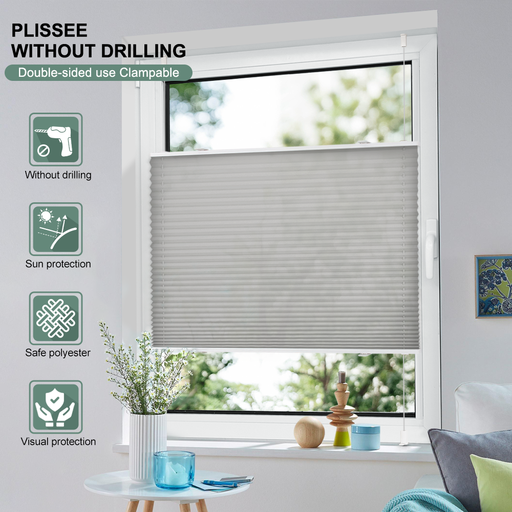
Why This Fits Their Persona: A straightforward and functional solution for standard windows in rental apartments. Ideal when basic privacy and sun protection are needed without a large investment. The anthracite pleated blind colour complements many modern interiors.
The clamp-fix system is designed for common window frames, avoiding fitment issues. The product description declares it as a privacy and sun screen, which keeps expectations about light transmission realistic.
Tool-free installation and simple, stepless height adjustment. The polyester fabric material is easy to care for.
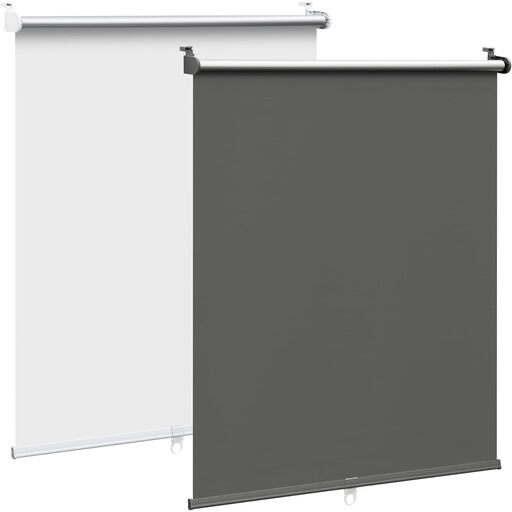
Why This Fits Their Persona: Optimal for bedrooms, children's rooms, or other spaces where near-total darkness is desired. The additional thermal insulation is a practical side benefit for regulating room temperature.
Directly addresses the "false blackout" pitfall with a silver backing that the manufacturer claims provides 100% blackout. The clamp-fix system is specified for frame thicknesses of 16-22 mm.
Effective blackout and thermal insulation. The cordless design increases safety, especially in households with children.
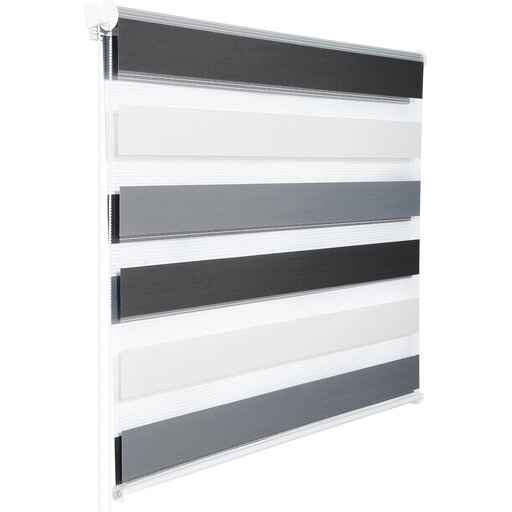
Why This Fits Their Persona: Perfect for living rooms or offices where lighting needs change throughout the day. The modern zebra design allows for fine-tuning from full transparency to opaque privacy.
Solves the "all-or-nothing" problem of simpler blinds. The user can precisely control light and privacy, thus avoiding a blind that is either too dark or not private enough.
Stepless regulation of light transmission through alternating transparent and opaque stripes. The chain hoist can be mounted on the left or right side as desired.
We have compiled a complete, up-to-date list of products that fully meet these strict selection criteria and German safety regulations.
1. How reliable are clamp-fix systems in the long run? Reliability heavily depends on the material quality of the clamp brackets and correct installation. Models with metal brackets are often more durable than those made of simple plastic. It is crucial to adhere to the window frame thickness specified in the product description. For very wide or heavy blinds, a system that also offers screwing as an option can provide more stability.
2. Are no-drill pleated blinds suitable for all window types? No, most clamp-fix systems are optimized for standard vertical uPVC windows. They are generally unsuitable for skylights, as these require special tension systems. For wooden windows, the shape or texture of the frame can also make installation with clamp brackets difficult or impossible. Always check the manufacturer's specifications for suitability.
3. How do you clean a folding or pleated blind? Most polyester fabrics can be gently dusted with a soft brush or a vacuum cleaner on the lowest setting. For light soiling, a slightly damp cloth is often sufficient. Avoid aggressive cleaning agents or full immersion in water, as this can damage the fabric, the pleating, and any special coatings.