
Lieferung heute & morgen

Qualitätsgarantie

Willkommens-Angebote freischalten: KOSTENLOSE Lieferung | Bis zu 80 % RABATT | Kostenlose 30-Tage-JoyPlus-Testphase
App herunterladen
A no-drill pleated blind with clamp brackets can be a practical solution for rented homes, offices and living spaces. It generally leaves the window frame free of drill holes, while allowing you to adjust privacy and light levels as needed. However, inaccurate measurements, unclear claims about blackout performance or unsuitable clamp brackets can often lead to the wrong purchase.
A size such as “90 x 120 cm” does not always make it clear whether the width or height is listed first. Before buying, check the product details and measurement recommendations. For several of the pleated blinds featured here, the rule is: the ordered width should be around 4 cm wider than the glass, while the ordered height should be based on the height of the entire window sash.
For example, if the window glass measures 51 cm across, a 55 cm-wide pleated blind may be suitable. The height should cover the entire window frame or sash.
A light-filtering pleated blind reduces visibility from outside and cuts glare, while still allowing daylight into the room. A fabric described as “opaque” mainly prevents people from seeing in directly; it does not necessarily make the room completely dark.
If you want to keep a bedroom as dark as possible, look specifically for a model described as blackout or room-darkening. Even with crepe-like, opaque fabrics, a small amount of light may still come in around the sides or through the material.
Clamp brackets need a suitable window frame. For example, the WOLTU double roller blind is specified for frames 13 to 23 mm thick. According to the product description, this model is not suitable for roof windows, wooden frames or certain sliding windows and fixed glazing.
Adhesive brackets also need a clean, dry and preferably smooth surface. They may not stick as well to rough or uneven surfaces. Before fitting, compare the manufacturer’s instructions with the frame thickness and window type.
First, measure:
For a balcony or patio door, check that the pleated blind will not prevent the door from opening freely. A 90 x 200 cm pleated blind, for example, may be a good option for doors or particularly tall windows. A 90 x 120 cm pleated blind or 90 x 100 cm pleated blind may suit shorter windows, provided the measurements match.
An opaque window covering is a good choice for rooms where privacy is the priority. A light-filtering fabric is useful if you still want the room to feel bright during the day. For bedrooms or home offices, a more room-darkening fabric or a roller blind with a denser coating may be more suitable.
Polyester fabric can usually be cleaned with a soft, slightly damp cloth. However, moisture-resistant does not automatically mean waterproof. In kitchens and bathrooms, avoid exposing the blind to direct water or heavy condensation for extended periods.
Models with handles can usually be adjusted from the top or bottom. Double roller blinds are often operated using a side chain. Keep operating chains and cords out of children’s reach, as they can pose a strangulation risk. Check that the brackets are secure at regular intervals after fitting.
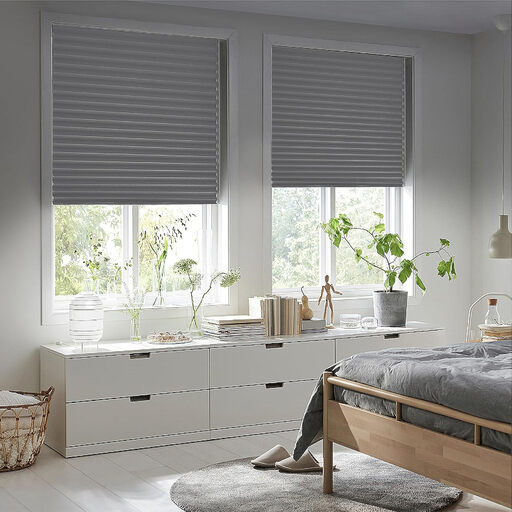
Why this product is a good match: This model can be fitted with clamp brackets or adhesive fixings, without drilling, and adjusted using the handle and pull cord. It is suitable for smaller windows in living rooms, kitchens or offices.
The product details specify the dimensions, four adhesive brackets and cleaning with a damp cloth. It is explicitly stated that the blind is not suitable for roof windows.
Polyester fabric, height-adjustable operation and four adhesive brackets included.
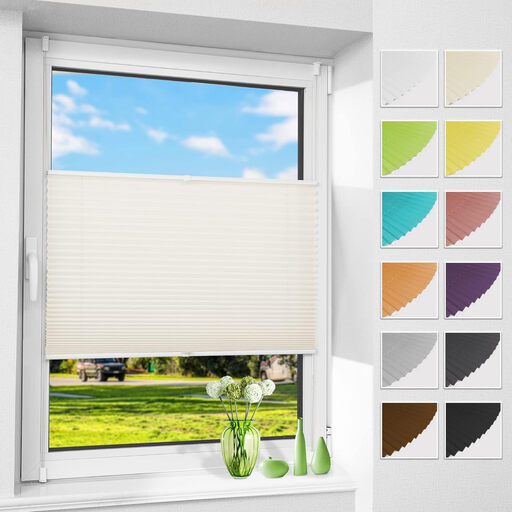
Why this product is a good match: According to the product description, the adjustable brackets are designed for frames 10 to 23 mm thick. The top and bottom rails make it easy to position the blind as needed.
The specified frame thickness and recommended overlap of around 3 to 4 cm are clearly stated. This model is not suitable for wooden, sliding or roof windows.
100% polyester, an aluminium rail, cleaning with a damp cloth and removable without permanent fixings.
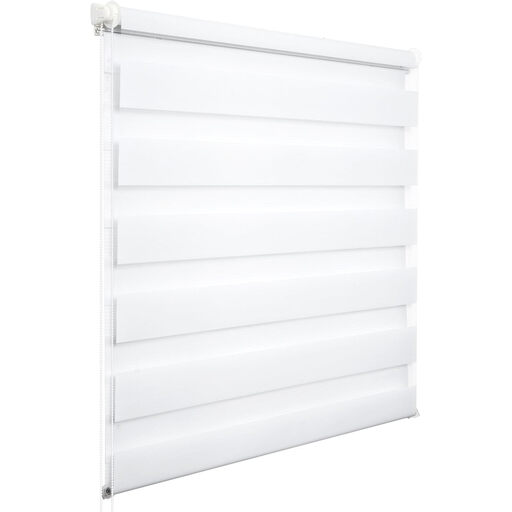
Why this product is a good match: Alternating transparent and opaque fabric stripes allow you to adjust the light in stages. The chain can be fitted on either the left or right.
The permitted frame thickness of 13 to 23 mm is specified, as are the exclusions for roof windows, wooden frames and certain window types.
100% polyester, a side-mounted chain, clamp-fit and optional screw fitting, plus a weighted bottom rail.
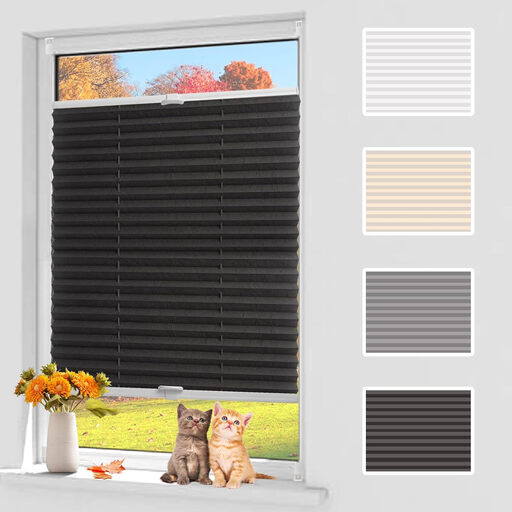
Why this product is a good match: Its 200 cm height may suit balcony and patio doors, as well as tall windows. Use the handle to move the blind up or down.
The product description distinguishes between opaque fabric and complete blackout. It also states that the blind is not suitable for sloping roof windows.
90 x 200 cm size, adjustable clamp brackets and suitable for use on windows and doors.
We’ve put together a complete, regularly updated list of products that meet these strict selection criteria and fully comply with the safety regulations in force in the EU.
Clean the window frame before fitting and let the surface dry completely. Clamp brackets are attached to the frame; with adhesive brackets, apply the adhesive strip evenly and without stretching it. Do not put any weight on the pleated blind until the recommended adhesive or fixing time has passed.
Then open and close the window carefully. Check that the handle, chain or bottom rail does not catch on the fittings. A pleated blind with clamp brackets is particularly useful in rented homes, provided the frame shape and thickness are suitable. For doors, also make sure the blind will not knock against a wall or furniture when the door opens.
How well it holds depends on the frame thickness, surface, product weight and whether it is fitted correctly. Clamp brackets are held mechanically against the window frame. Adhesive brackets need a clean, dry and smooth surface. Check the fixings regularly and follow the manufacturer’s instructions for the specific product.
Many clamp-fit models are designed for rectangular tilt-and-turn windows. Whether a particular blind stays secure when the window is tilted depends on the brackets, window frame and product design. With double roller blinds, the chain and bottom rail must also be able to move freely.
A pleated blind does not need electricity, so it does not incur any running costs. The only costs may be for the initial purchase, replacement parts or refitting later on. The key is to choose a model with the right measurements and a fitting method suited to your window frame.