
Lieferung heute & morgen

Qualitätsgarantie

Willkommens-Angebote freischalten: KOSTENLOSE Lieferung | Bis zu 80 % RABATT | Kostenlose 30-Tage-JoyPlus-Testphase
App herunterladen
A no-drill pleated blind can quickly add privacy and sun protection to rented homes, offices and living spaces. However, inaccurate measurements, unsuitable mounting surfaces or unclear descriptions such as ‘blackout’ can easily lead to the wrong purchase. Check a few technical details before you buy to make it easier to find the right pleated blind for windows and doors.
The product size usually refers to the width and height of the blind, not necessarily the visible glass area. If you measure only the pane, areas at the sides may be left uncovered. For several Dream-Seeker models, the recommended guide is a blind width around 4 cm wider than the glass. This only works if there is enough space around the window handles, seals and frame.
Before placing your order, check the following:
A light-filtering pleated blind softens daylight and can reduce views into your home, but it will not make a room completely dark. A model described as ‘blackout’ or ‘room-darkening’ is said in the product description to let less light through, although the actual effect also depends on gaps at the sides and the fitting position.
A more light-reducing fabric may be useful in bedrooms and children’s rooms. In a living room, office or kitchen, a light-filtering privacy blind is often enough if you still want to let in daylight.
A clamp-fit pleated blind is usually attached to the window sash. The frame thickness must fall within the stated range. Adhesive brackets need a clean, dry and preferably smooth surface. Rough, uneven or heavily textured surfaces can affect how well they stick.
According to the product details, suction cups are suitable for smooth surfaces such as glass or tiles, but not textured walls. If you are fitting a pleated blind without drilling, you should also check regularly that the brackets and clamps are still secure.
A pleated blind with clamp brackets is a practical choice for many rented homes, as it avoids drilling holes. Check the following first:
For example, the Allesin model has adjustable brackets for frame thicknesses of 10 to 23 mm. According to the product description, the WOLTU honeycomb pleated blind is also designed for frame thicknesses of 10 to 23 mm. These measurements do not automatically apply to other models.
Polyester is the most common material among the products listed. The specific fabric matters more than general marketing claims:
Most product descriptions recommend cleaning with a soft or damp cloth. Avoid harsh cleaning products, vigorous rubbing and prolonged direct exposure to water.
Depending on the design, the blind is adjusted using a pull cord, a handle or top and bottom operating rails. Keep cords and operating controls out of children’s reach. Before use, check that the brackets are secure and that the blind does not catch on the window handle.
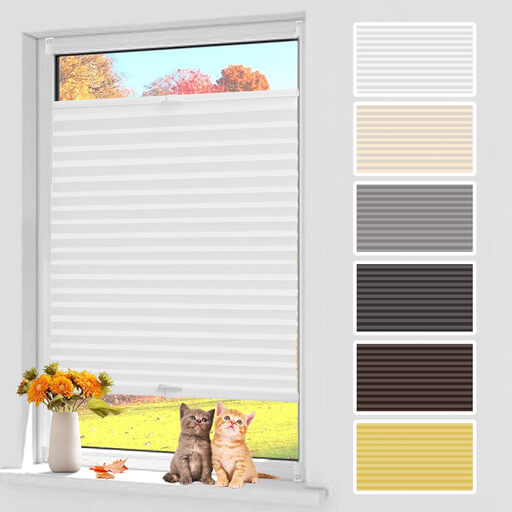
Why this product suits this profile: Its compact size is suitable for smaller standard windows. According to the product description, it can be fitted without tools using the clamp-fit system.
The width and height are clearly stated. Even so, check before buying that 60 × 100 cm is suitable for the glass and frame width.
Polyester fabric, a stated product weight of 370 g and an adjustable position for light and privacy control.

Why this product suits this profile: Its honeycomb structure, top and bottom handles, and clamp-fit range of 10 to 23 mm will appeal to buyers who value construction and ease of use.
The suitable frame thickness is clearly specified. The description also notes that the blind should be wide enough to avoid catching on the window handles.
100% polyester according to the product details, clamp-fit installation and stepless adjustment using the top and bottom handles.
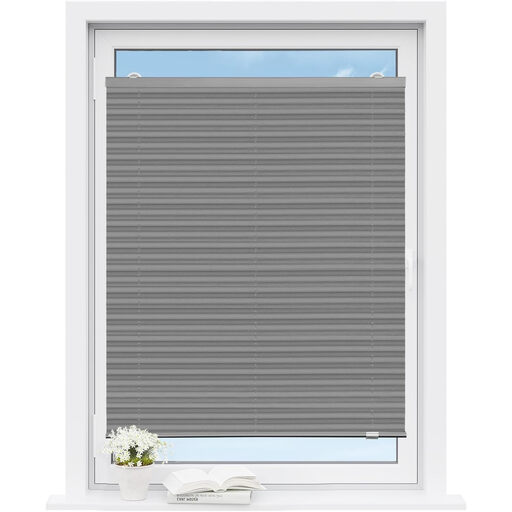
Why this product suits this profile: A removable fitting can be handy on smooth glass or tiled surfaces, in balcony areas and wherever the blind needs to be moved between locations.
Its suitability is specifically limited to smooth surfaces. Do not use suction cups on rough or textured surfaces.
Adjustable width according to the product details, with removable suction-cup brackets for flexible use.

Why this product suits this profile: Its extra height makes it worth considering for tall windows or doors, provided the frame, glass width and mounting surface are suitable.
The product description specifies clamp brackets and recommends a width equal to the glass width plus 4 cm. You will still need to measure carefully before ordering.
90 × 200 cm, adjustable positioning and no-drill installation according to the supplier.
We’ve put together a complete, regularly updated list of products that meet these strict selection criteria and fully comply with the safety regulations in force in the EU.
Depending on the model, it is fitted using clamp brackets, adhesive brackets or suction cups. Clamp brackets attach to the window frame and are suitable for many turn and tilt-and-turn windows. Adhesive brackets need a dry surface free from grease. According to the product details, suction cups are only suitable for smooth surfaces.
There is no set lifespan. It depends on the fabric, how often the blind is used, exposure to sunlight, moisture and how securely it is fitted. Checking the brackets regularly and adjusting the blind carefully can help it last. Replace adhesive brackets if they begin to lose their grip.
No. A manually operated pleated blind does not need electricity. Costs arise when you buy it and, if necessary, replace parts or brackets. A motorised model may involve additional purchase or battery costs, but the products mentioned here are operated manually.