
Lieferung heute & morgen

Qualitätsgarantie

Willkommens-Angebote freischalten: KOSTENLOSE Lieferung | Bis zu 80 % RABATT | Kostenlose 30-Tage-JoyPlus-Testphase
App herunterladen
A no-drill pleated blind with clamp brackets is suitable for rented homes, owner-occupied properties and rooms where you don’t want to make permanent changes to the window frame or walls. Depending on the model, it is fitted directly to the window frame using clamp brackets or adhesive mounts. Before you buy, though, there are a few important details to check. The wrong measurements, an unsuitable frame or unclear information about light transmission could mean that the blind doesn’t fit properly or provide the level of privacy you want.
Clamp-fit pleated blinds need a suitable window frame. They often have specific frame thickness requirements, such as 10 to 23 mm, 13 to 23 mm or 16 to 22 mm. Depending on the model, they may not be suitable for wooden windows, roof windows, sliding windows or very uneven surfaces. So check the fitting surface before placing your order.
With a no-drill pleated blind or roller blind, the overall width, including the brackets, may be greater than the actual fabric width. For some day-and-night roller blinds, the product description states that the fabric is around 4 to 5 cm narrower than the overall measurement. If you measure only the glass and don’t account for the brackets, you risk gaps at the sides that let light through or problems with the window handle.
A light-filtering pleated blind lets daylight into the room, while reducing visibility from outside and glare to varying degrees, depending on the fabric. A blackout fabric offers more privacy, but it won’t necessarily make the room completely dark. For bedrooms or workspaces with screens, a blackout blind or a roller blind designed to darken the room may be more suitable than a semi-transparent model.
As a general guide for many pleated blinds:
Measurement guidance varies from one product to another, so always check the details on the relevant product page. A made-to-measure pleated blind is an alternative for unusually sized windows, but ready-made sizes may be more affordable and convenient to deliver for standard windows.
A pleated blind with clamp brackets is usually fitted to the window sash without tools. Adhesive mounts may offer an additional fitting option, but they need a clean, dry and preferably smooth surface. Remove dust and grease before fitting. If you have tilt-and-turn windows, also check that the brackets can safely support the blind’s weight.
Check the product details carefully:
A beige, grey or white pleated blind differs in more than just appearance. Light-coloured fabrics often make the most of daylight, while darker colours may feel more effective at reducing glare. For flexible light control, pleated blinds that can be moved from both the top and bottom are useful. Day-and-night roller blinds, on the other hand, have alternating transparent and opaque fabric bands that you adjust using a chain.
Polyester is the most commonly used fabric among the products listed. It can usually be cleaned with a soft cloth or soft brush. Moisture-resistant does not mean waterproof: these blinds may be suitable for bathrooms and kitchens, but avoid prolonged direct contact with water, such as in a shower.
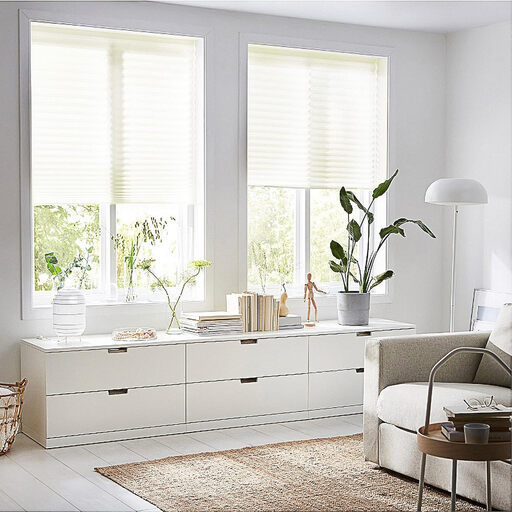
Why it suits this buyer: Its compact size and beige finish make it a good fit for smaller standard windows in living rooms and home offices. You can adjust its position using the handle.
The product description specifies a no-drill clamp-fit system and says to check that the window frame is suitable. The fabric is moisture-resistant, but not waterproof.
Polyester fabric, height-adjustable operation, and a choice of widths and heights.
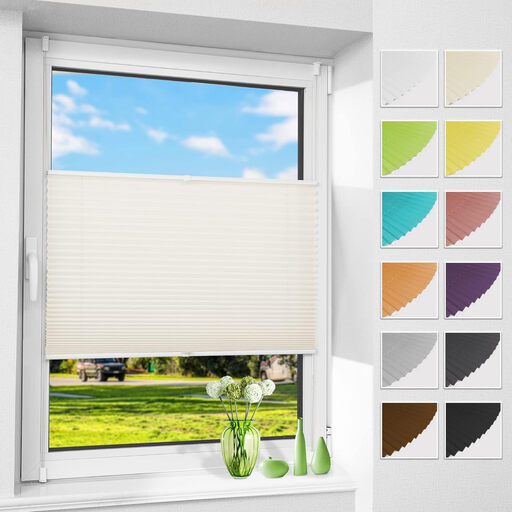
Why it suits this buyer: Adjustable brackets and operation from both sides can be useful on tilt-and-turn windows that you open regularly.
According to the product description, the brackets are designed for frames 10 to 23 mm thick. This clearly defines which frames the blind will fit and makes it easier to check compatibility in advance.
Polyester fabric with an aluminium bar, no-drill clamp fitting, and cleaning with a damp cloth.

Why it suits this buyer: If you’re choosing a blind for a bedroom, office or room that gets a lot of light, its stated blackout properties are an important factor to consider.
The product description states the frame range of 16 to 22 mm, explains that the fabric width differs from the overall width, and says that the blind is not suitable for roof windows.
Cordless operation using the handle, clamp or screw fitting, and cleaning with a damp cloth.
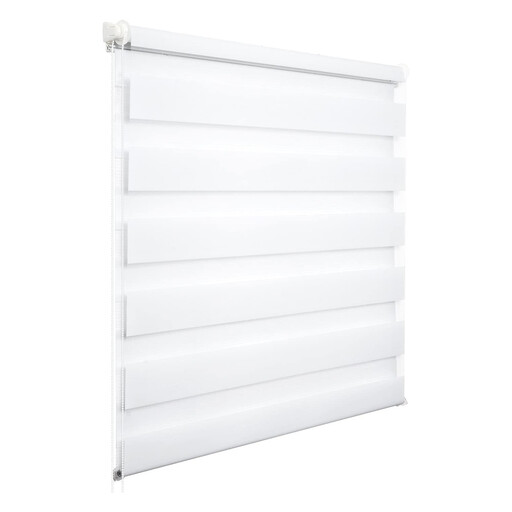
Why it suits this buyer: Alternating transparent and opaque fabric bands let you adjust the amount of daylight and privacy in stages.
The product description specifies clamp brackets for frames 13 to 23 mm thick and notes that the blind is not suitable for roof, wooden or sliding windows.
100% polyester according to the product description, a chain that can be fitted on the left or right, and a wipe-clean surface.
We’ve put together a complete, regularly updated list of products that meet these strict selection criteria and fully comply with the safety regulations in force in the EU.
Depending on the model, it either hooks onto the window sash using clamp brackets or is attached to a prepared, clean surface using adhesive mounts. Make sure the frame thickness is suitable and follow the fitting instructions for the product.
Its lifespan depends on factors such as fabric quality, exposure to sunlight, how often it is used and how well it is fitted. Gentle, regular cleaning, avoiding excessive force when operating it and securing it firmly to a suitable frame can all help keep it in good working order. There’s no reliable way to give a single lifespan that applies to every blind.
Some polyester roller blinds are described as moisture-resistant or suitable for damp rooms. However, that doesn’t automatically mean they’re waterproof. Avoid direct contact with water and prolonged exposure to damp conditions. The window blinds described here are not designed for use in a shower.