
Lieferung heute & morgen

Qualitätsgarantie

Willkommens-Angebote freischalten: KOSTENLOSE Lieferung | Bis zu 80 % RABATT | Kostenlose 30-Tage-JoyPlus-Testphase
App herunterladen
A no-drill pleated blind can be a practical solution for rented homes, refurbished rooms and windows where you want to avoid damaging the frame. However, not every no-drill pleated blind will fit every window. Problems often arise from inaccurate measurements, unsuitable frames or a level of light control that isn’t right for the room.
For many products, the stated width refers to the entire blind, including the brackets. Depending on the model, the fabric itself may therefore be narrower. To help you choose the right one, check:
For several models, a pleated blind width around 3 to 4 cm wider than the glass pane is suggested as a guide. However, this varies by product, so check the fitting instructions for the model you’re considering.
A light-filtering pleated blind softens daylight and can also provide privacy. A blind that prevents people seeing in reduces visibility from outside, but depending on the fabric, it may still let light into the room. A blackout pleated blind is generally better suited to bedrooms, although light gaps at the sides of the window frame can affect how dark the room gets.
So don’t just look for terms such as “Blackout”. Also check:
A pleated blind with clamp brackets is usually attached directly to the window sash. The frame thickness is key to finding the right fit. Some models are designed for frames measuring 10 to 23 mm, while others fit frames measuring 13 to 23 mm or 16 to 22 mm.
Fitting may not be suitable for wooden windows, roof windows, sliding windows or uneven surfaces. Adhesive brackets also need a clean, dry and preferably smooth surface. Before buying, check that the blind is compatible with your specific window.
A no-drill pleated blind with clamp brackets attaches to the window frame without tools. This is often a good option for rented homes, provided the frame thickness and window shape are suitable. Adhesive brackets can offer another fitting option for smooth surfaces. Suction cups are mainly intended for smooth glass or tiled surfaces, and may come loose if exposed to dust, moisture or uneven surfaces.
For balcony and patio doors, also check that the blind won’t catch on the handle or door seal when you open and close the door.
A day and night blind with alternating transparent and opaque fabric strips lets you adjust light and privacy in stages. This design is also used in double roller blinds.
Polyester is widely used in the products listed. It can usually be cleaned with a soft, slightly damp cloth. Harsh cleaning products, sharp objects and excessive pulling can damage the fabric or brackets.
Keep pull cords and operating chains out of children’s reach. Before use, check that all clamp or adhesive brackets are firmly in place.
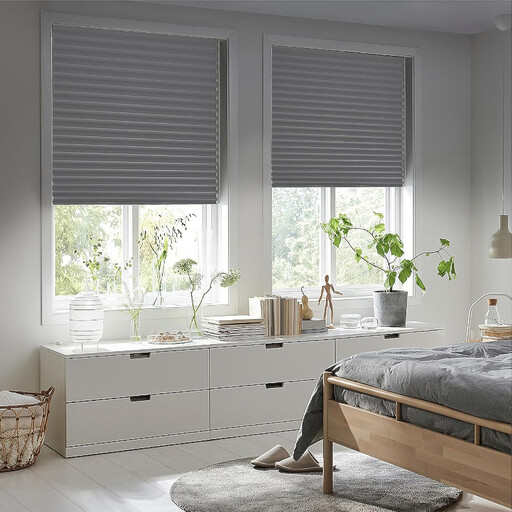
Why it suits this profile: This model comes in a popular width for many windows and is 200 cm high, making it suitable for windows or doors. Its semi-transparent fabric filters daylight and helps provide privacy.
The product description gives the measurements, explains the clamp or adhesive fitting options and recommends cleaning with a damp cloth. This makes it easier to check the fitting method and light-filtering effect before you buy.
75 × 200 cm, light grey polyester fabric, light-filtering design and no-drill fitting.
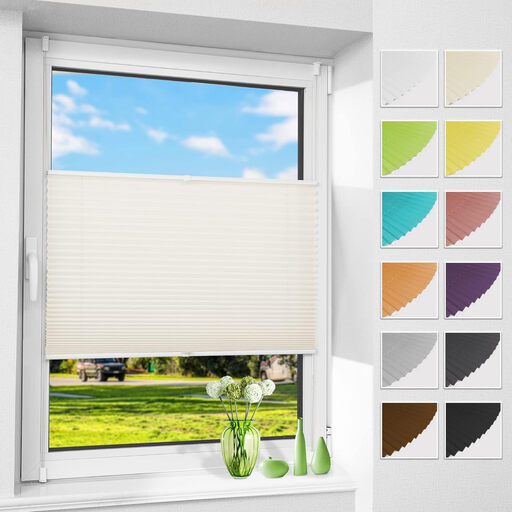
Why it suits this profile: According to the product description, the adjustable brackets fit frames measuring 10 to 23 mm thick. Handles at the top and bottom let you position the fabric flexibly.
The stated frame compatibility helps you avoid choosing an unsuitable clamp fitting. The description also highlights restrictions for roof windows, wooden windows and sliding windows.
Polyester fabric with an aluminium rod, adjustable brackets for frames 10–23 mm thick and easy cleaning with a damp cloth.

Why it suits this profile: This model is designed for window and door frames measuring 10 to 23 mm thick and has handles at the top and bottom. Its opaque fabric is suitable for rooms where you want privacy and less incoming light.
The product details specify the frame thickness, inside fitting and that the blind isn’t suitable for roof windows. This helps you check the technical limitations before buying.
Honeycomb structure, opaque polyester fabric, clamp fitting and adjustment using two handles.
We’ve put together a complete, regularly updated list of products that meet these strict selection criteria and fully comply with the safety regulations in force in the EU.
Depending on the model, it can be fitted using clamp brackets, adhesive brackets or suction cups. No-drill clamp systems hook onto or clamp to the window frame. The frame needs to be the right thickness, and the surface should be flat and clean.
Its lifespan depends on the material, how often it’s used, exposure to sunlight and how securely it’s fitted. Regularly checking the brackets and cleaning the blind carefully can help it last longer. There’s no single lifespan that applies to every model.
A manual pleated blind normally has no electricity costs. Ongoing expenses are generally limited to cleaning and, if needed, replacing brackets or accessories. The main costs to consider are the purchase price, finding the right size and choosing the level of light control you want.