
Lieferung heute & morgen

Qualitätsgarantie

Willkommens-Angebote freischalten: KOSTENLOSE Lieferung | Bis zu 80 % RABATT | Kostenlose 30-Tage-JoyPlus-Testphase
App herunterladen
A no-drill pleated blind is ideal for rented homes, offices and rooms where you don’t want to make permanent changes to window frames or walls. Options range from classic Klemmfix pleated blinds to adhesive models and blinds with suction cups. But the differences go beyond colour and price.
Unclear measurements, an unsuitable fitting method or exaggerated claims about blackout performance can often lead to the wrong purchase. Check a few technical details before you buy to make sure your choice is better suited to your windows, doors and light-control needs.
A pleated blind with clamp brackets attaches to the window sash and, when fitted correctly, usually leaves no drill holes. Adhesive models, on the other hand, need a clean, dry and preferably smooth surface. Adhesive brackets may not stick as well to rough, uneven or heavily textured frames.
With a Klemmfix pleated blind, the thickness of the window frame also needs to be suitable. For example, some models are designed for frame thicknesses of 10 to 23 mm or 13 to 23 mm. Check this measurement against your window before you buy.
The terms light-filtering pleated blind, light-permeable pleated blind and blackout pleated blind describe different properties. A light-permeable fabric reduces visibility from outside and cuts glare, while still letting daylight into the room. A fabric that blocks the view protects your privacy, but may still let diffused light through.
Side gaps also affect how well a blind darkens a room. If the fabric sits only within the glazed area, light may come in at the sides or below the frame. For bedrooms or presentation areas, consider the fabric, coverage and fitting position together.
Product dimensions are usually given as width × height. For many pleated blinds, it’s recommended that you measure the width of the window glass and add around 3 to 4 cm, depending on the system. Other models are sized according to the full frame width, so always check the fitting instructions for the model you’re considering.
Also check whether the window handle, seal or fittings could get in the way of the fabric or clamp brackets. Roof windows, wooden frames, sliding windows and sloping windows often have specific restrictions.
For a pleated blind for a rented home, clamp brackets are particularly handy because they don’t require drilling. They attach directly to the window sash and are often suitable for tilt-and-turn windows. Adhesive fittings are an alternative if the frame is too narrow for clamp brackets. The surface must be grease-free, dry and smooth.
Suction cups are best suited to smooth glass or tiled surfaces. They’re less suitable for textured surfaces. For balcony or patio doors, the fitting needs to be secure, as frequent opening and closing can cause extra movement.
Polyester is widely used in the products listed here. It can usually be cleaned with a soft cloth or a soft brush. However, moisture-resistant doesn’t automatically mean waterproof. For bathrooms and kitchens, it’s important to distinguish between normal humidity and direct contact with water.
For chain-operated or pull-cord systems, make sure the controls are out of children’s reach. Before use, check that brackets, clamps and adhesive pads are secure.
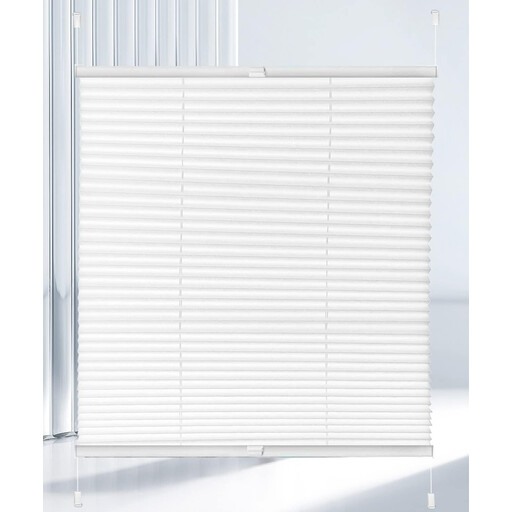
Why this product suits this buyer: This light-filtering no-drill pleated roller blind is designed for living rooms, bedrooms and offices, and attaches with a Klemmfix fitting without drilling.
The product description specifically says it filters light rather than providing complete blackout. This makes it easier to set realistic expectations about how much light it will let through.
80 × 200 cm, white polyester fabric and no-drill Klemmfix fitting.

Why this product suits this buyer: Alternating sheer and opaque stripes let you adjust this day and night roller blind continuously, from filtering light to providing greater privacy.
Light control comes from two layers of fabric, rather than a vague claim about blackout performance. Check first that your frame thickness is compatible with the 13–23 mm range.
Clamp or screw fitting, a chain that can be fitted on either the left or right, and cleaning with a damp cloth.

Why this product suits this buyer: Its honeycomb structure and top-and-bottom handles make it a good choice if you want to combine light control with flexible positioning for everyday use.
The product details specify a compatible frame thickness of 10–23 mm and state that it isn’t suitable for roof windows. This makes it easier to check whether it will work for you before buying.
Polyester honeycomb structure, Klemmfix fitting and continuous adjustment using two handles.
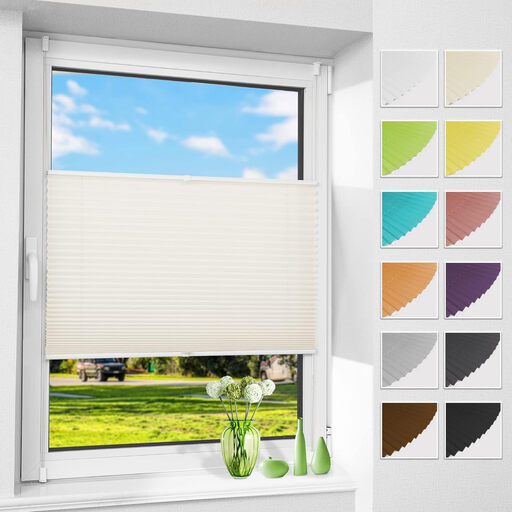
Why this product suits this buyer: This light-filtering pleated blind is designed for rectangular tilt-and-turn windows in living rooms, kitchens, bathrooms and offices.
The description rules out use with roof windows, wooden windows and sliding windows. This helps you avoid choosing a blind based on size alone.
Adjustable brackets for frame thicknesses of 10–23 mm and operation using top and bottom handles.
We’ve put together a complete, regularly updated list of products that meet these strict selection criteria and the safety regulations in force in the EU.
Its lifespan depends on the fabric, brackets, fitting surface and how often it’s used. Check regularly that the clamps are secure. With adhesive fittings, dust, moisture or changes in temperature can weaken the bond.
Yes, some models are specifically designed for windows and doors. Before buying, check how the door moves, where the handle is and how much frame space is available. For frequently used balcony or patio doors, a secure Klemmfix fitting is usually more practical than an unsuitable adhesive surface.
It depends on the fabric and how the blind is fitted. A model described as a blackout pleated blind can significantly reduce direct light. However, side gaps or fitting the blind within the glazed area may still let some light through. When choosing, consider the fabric description, measurements and coverage together.