
Lieferung heute & morgen

Qualitätsgarantie

Willkommens-Angebote freischalten: KOSTENLOSE Lieferung | Bis zu 80 % RABATT | Kostenlose 30-Tage-JoyPlus-Testphase
App herunterladen
A no-drill pleated blind is ideal for rented homes, owner-occupied properties and rooms where you don’t want to make permanent changes to window frames or walls. Depending on the model, it can be fitted using clip-on brackets, adhesive brackets or suction cups. But fitting it without drilling is only part of the decision: the size, surface, light transmission and operating mechanism all determine how well the blind works in everyday use.
Many listings give the dimensions of the blind itself, not the visible glass area. If you measure only the pane and use that width unchanged, you may end up with gaps at the sides that let in light. For several Dream-seeker models, it’s therefore recommended that you choose a width around 4 cm wider than the glass. The exact recommendation may vary depending on the brackets, so check the product description before buying.
For the height, you’ll often need to measure the entire window or door area, including the frame. Handles, fittings and any protruding parts must not obstruct the blind’s movement.
A blackout pleated blind or a light-blocking blind significantly reduces the amount of light entering the room. However, light may still be visible around the sides, through light-coloured frames or at the edge of the fabric. A light-filtering pleated blind, on the other hand, lets daylight into the room while reducing glare and visibility from outside, but won’t create a dark sleeping environment.
A light-blocking fabric is usually a good choice for bedrooms. In a living room, kitchen or home office, a light-filtering pleated blind may be more comfortable if you want to keep the room bright.
A stick-on pleated blind needs a clean, dry and preferably smooth surface. Rough, dusty, greasy or uneven surfaces can affect how well the adhesive holds. Moisture and frequently opening the window can also affect the fitting.
Before fitting, clean the window frame and door surfaces according to the manufacturer’s instructions, then allow them to dry completely. With a clip-on system, you’ll also need to make sure the frame thickness is compatible with the brackets. One example is the WOLTU honeycomb pleated blind, whose clip-on brackets are designed for frame thicknesses of 10 to 23 mm, according to the product details.
A secure fitting is especially important for doors and windows that are opened frequently. The blind shouldn’t swing about when the window is tilted, or catch on the handles.
Check the exact description of the material:
Some terms used in product names can overlap, so check the detailed information on light transmission, material and recommended use too. The fabrics featured here aren’t designed for direct exposure to water, such as in a shower.
Pleated blinds are available in a range of sizes, for example for narrow windows, large windows or balcony doors. White reflects more light visually, making rooms appear brighter. Beige and light grey often blend more subtly with warm or neutral interiors. Anthracite or charcoal can create more contrast in a room.
Also check whether the model has a bottom rail, a pull cord or both. Cords require particular care: fit the product out of the reach of children to avoid the risk of strangulation.
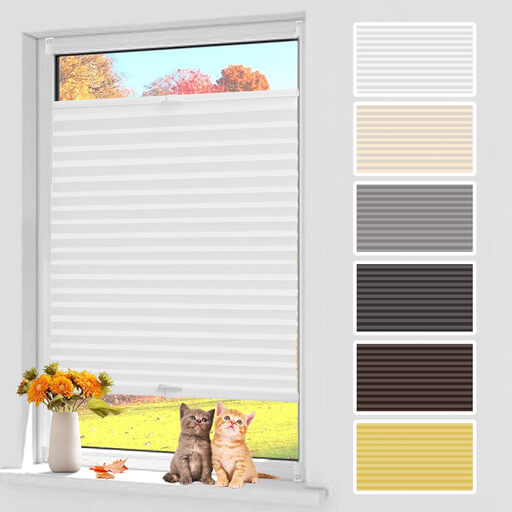
Why this product suits this profile: Its compact size is suitable for smaller standard windows in bedrooms, home offices or living rooms. It can be fitted without drilling using a clip-on bracket or similar fitting.
The specific 60 cm width makes it easier to compare the blind with your window measurements. Still, check the glass width, frame and fittings before ordering.
White polyester, 60 × 100 cm, adjustable height and easy cleaning with a soft cloth.

Why this product suits this profile: Its honeycomb structure, metal frame and adjustable clip-on brackets will appeal to buyers who pay particular attention to construction and a precise fit.
The stated frame compatibility of 10–23 mm gives you a specific measurement to check. This helps prevent you ordering a clip-on system that won’t fit your frame.
100% polyester according to the product details, metal frame, clip-on fitting and top and bottom operating rails.

Why this product suits this profile: The larger size is worth considering for tall windows or doors, such as balcony and patio doors. The product description specifies blackout fabric, privacy and a no-drill fitting.
The product page recommends cleaning the surface and notes that the blind is not suitable for rough or uneven surfaces. Make sure these conditions are met before fitting.
90 × 200 cm, white polyester, flexible height adjustment and suitable for windows and doors.
We’ve put together a complete, regularly updated list of products that meet these strict selection criteria and the safety regulations in force in the EU.
Don’t force the blind, overload it or leave it exposed to direct water for prolonged periods. If the adhesive starts to lose its grip, replace the brackets before the blind comes loose.
How long it lasts depends on the fitting method, surface, frame thickness, how often it’s used and the room’s climate. Clip-on brackets can be removed if the frame is suitable. Adhesive brackets need a smooth, clean surface and should be checked regularly to make sure they’re secure. It isn’t possible to give a general lifespan without knowing the specific conditions.
Yes, some models are listed as suitable for windows and doors. Before buying, however, compare the door’s width and height with the position of the handle and the area it needs to move through. Several of the models mentioned aren’t suitable for sloping roof windows.
A light-blocking fabric reduces visibility from outside and incoming light. How much it darkens the room also depends on the fabric, colour, gaps at the sides and fitting position. To choose the right blind, check the descriptions for “blackout”, “light-filtering” and “privacy” separately.