
Lieferung heute & morgen

Qualitätsgarantie

Willkommens-Angebote freischalten: KOSTENLOSE Lieferung | Bis zu 80 % RABATT | Kostenlose 30-Tage-JoyPlus-Testphase
App herunterladen
As a renter or homeowner, you know the dilemma: you need effective sun and privacy protection but don't want to drill into your window frames. A no-drill pleated blind is the go-to solution. However, the market is flooded with products of widely varying quality. Making the wrong choice not only leads to frustration but also to unnecessary expenses.
Before you make a decision, you should be aware of the three most common pitfalls when selecting a drill-free pleated blind:
This guide will help you navigate these challenges and make an informed decision.
To ensure your new pleated blind is durable and functional, you should check three core parameters: the mounting method, the fabric properties, and the correct measurements.
No-drill installation is primarily achieved through three systems. The choice depends on your window type and your needs.
The function of your pleated blind is largely determined by its fabric. The main properties are:
To avoid light gaps, precise measurement is crucial. Manufacturers typically provide clear instructions that you should follow. Usually, one of the following rules applies:
Check the product description carefully to see which measurement method is recommended for the specific model.
Here are some recommendations tailored to different needs and living situations.
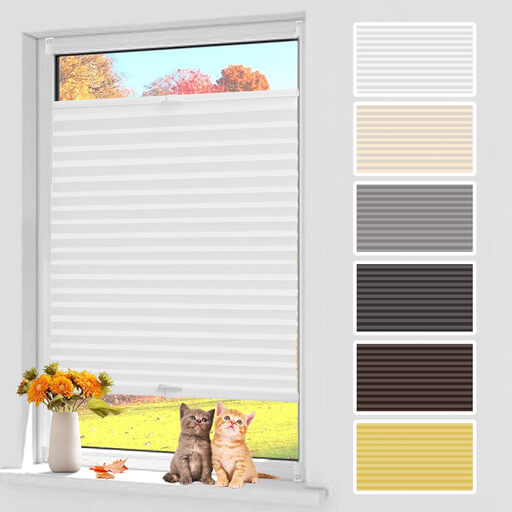
Why This Fits Their Persona: A straightforward and cost-effective solution for standard windows in rental apartments. It provides basic privacy and glare protection without breaking the bank. The white colour complements most interior design styles.
The included clip-on system is designed for standard uPVC windows and, when installed correctly, offers a more reliable hold than simple adhesive solutions, minimising the risk of it falling down.
Tool-free assembly and a low weight make installation very simple. The fabric offers a good compromise between glare protection and light transmission.

Why This Fits Their Persona: Ideal for bedrooms or south-facing rooms. Anyone who values complete darkness, energy efficiency, and sound insulation will find a multifunctional solution here.
The honeycomb structure gives the fabric greater stability and shape retention than simple pleated blinds. According to the manufacturer, the 100% polyester fabric is tear-resistant and moisture-repellent, which counteracts the pitfall of poor fabric quality.
The air pockets of the thermal pleated blind have an insulating effect and can help reduce energy costs. It also provides blackout and a sound-dampening effect.
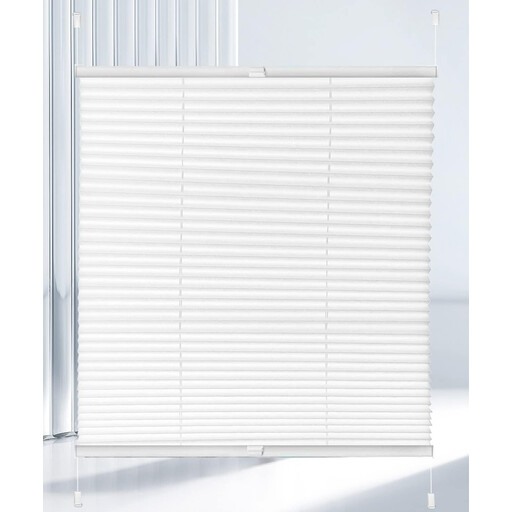
Why This Fits Their Persona: Suitable for floor-to-ceiling windows or balcony doors in living areas. The large format provides a continuous, elegant solution for privacy without completely darkening the room.
For large sizes, a stable mounting system is crucial. This model's clip-on system is designed to securely hold even the heavier weight and larger surface area to the frame, thus avoiding the pitfall of unstable mechanisms.
Offers a solution for large glass surfaces, which are often difficult to equip without drilling. The light-filtering fabric ensures privacy without the room losing its brightness.
We've compiled a complete, up-to-date list of products that fully meet these strict selection criteria and UK regulations.
The durability heavily depends on the type of mounting and correct installation. A clip-on pleated blind that sits firmly on a suitable window frame can remain stable for several years. With adhesive systems, the lifespan is highly dependent on surface preparation and humidity. Thoroughly cleaning the frame with alcohol before mounting is crucial here.
Most clip-on or adhesive pleated blinds are not suitable for sloped windows. Gravity would cause them to sag and put excessive strain on the tension cords. For roof windows, there are special blind systems with side guide rails that require a fixed installation. Always check the product description for a note like "Not suitable for sloped roofs."
A standard pleated blind consists of a single, zigzag-folded sheet of fabric. A honeycomb blind (also called a cellular or double-pleated blind) consists of two fabric layers that are joined in the middle, creating honeycomb-shaped air chambers. These chambers give the blind an insulating property (thermal effect) and improve sound absorption. Furthermore, in honeycomb blinds, the tension cords are hidden inside the honeycombs, which provides a more uniform look without visible holes in the fabric.