
Lieferung heute & morgen

Qualitätsgarantie

Willkommens-Angebote freischalten: KOSTENLOSE Lieferung | Bis zu 80 % RABATT | Kostenlose 30-Tage-JoyPlus-Testphase
App herunterladen
A no-drill pleated blind is ideal for rented homes, children’s bedrooms, offices and other rooms where you don’t want to make permanent changes to the window frame or walls. It is usually fitted directly to the window or door frame using clamp brackets or adhesive pads.
Despite being easy to fit, buying one can still lead to problems. Here are three common pitfalls:
Check these points before ordering and you’ll be better placed to choose a clamp-fit pleated blind to suit your windows, doors and room.
First, measure the width of the glass, the width of the frame and the full height of the window. For many models, the recommended order width is based on the glass width, or includes a specified overlap at the sides. Always check the individual product description.
For example, the stated width range for the WOLTU pleated blind with adjustable width is 45 to 120 cm. According to the product details, the width can be reduced by up to 10 cm using basic tools such as a saw or scissors. The recommended frame rebate is 1,5 to 2,3 cm; outside this range, the clamp brackets may not fit properly.
If you’re fitting a pleated blind to a window or door, make sure it won’t obstruct the handle. Check that the brackets and profiles have enough clearance from any parts that protrude.
A light-filtering pleated blind filters daylight and, depending on the fabric, can reduce direct visibility into the room. However, it won’t automatically make the room dark. A privacy pleated blind prevents people from seeing in, but may still let diffused light through.
For bedrooms or rooms with sensitive screens, consider a blackout pleated blind or a pleated roller blind made from a more light-blocking fabric. Even so, check the “blackout” claim against the product details: the fabric alone can’t completely prevent light coming through gaps at the sides of the window.
A sunshade pleated blind can reduce direct sunlight. Its effect on heat depends on the fabric construction, window area, orientation and fitting distance. So, if you’re considering a thermal pleated blind or honeycomb blind, look for specific details about the material, coating and suitable frame thickness rather than relying on general claims about energy savings.
A pleated blind with clamp brackets attaches to the window frame and can often be fitted without tools. It’s a particularly suitable option for renters, as long as the frame rebate matches the product measurements.
For adhesive fitting, the surface must be clean, dry and free from grease. Residue, dust or a rough surface can affect how well the pads stick. Keep the window closed while fitting the blind so you can check the position of the brackets.
Also consider how the blind is operated. Cords and tensioning systems must be fitted according to the instructions and checked regularly to make sure they’re secure. Models with handle operation or a cordless design can be a practical alternative for households with children and pets. Keep small fitting parts out of children’s reach during installation.

Why this product suits this buyer: The fixed size of 65 x 200 cm may suit standard-sized windows. It can be fitted without drilling, using either clamp-fit or adhesive fixings.
The product description explains that the frame needs to be cleaned and highlights the importance of securing the clamps properly. This helps you plan the installation in advance.
Polyester fabric, clamp-fit installation, suitable for windows and doors, with adjustable height.

Why this product suits this buyer: Its polyester honeycomb structure and metal frame will appeal to buyers who want to consider material details, flexible operation and compatibility with a specific frame size.
The product details specify a clamp bracket range of 10 to 23 mm and warn that handles and other protruding parts must not be covered.
Honeycomb structure, top and bottom handles, moisture-resistant polyester and clamp-fit installation for indoor use.
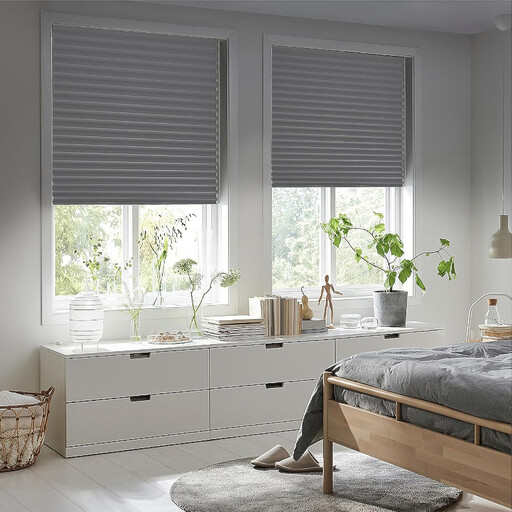
Why this product suits this buyer: The 90 x 200 cm size may suit larger windows or doors. The choice of clamp or adhesive fitting offers two options, provided the frame and surface are suitable.
The instructions recommend cleaning the fitting surface first. This helps reduce the risk of applying adhesive pads to a dusty or greasy surface.
Light-filtering polyester fabric, clamp or adhesive fitting, and manual height adjustment for windows and doors.
We’ve put together a complete, regularly updated list of products that meet these strict selection criteria and fully comply with the safety regulations in force in the EU.
Before fitting, we recommend following these steps:
Most fabrics can be cleaned with a soft, slightly damp cloth. Harsh cleaning products, scouring pads and sharp objects can damage polyester fabric or its coatings. Also, moisture-resistant doesn’t necessarily mean that the blind is suitable for continuous contact with water.
It depends on the shape and thickness of the frame, the weight of the product and the type of fixing. Clamp brackets need a frame rebate that falls within the right size range. For adhesive pads, a smooth, clean and dry surface, along with correct installation, is essential. Check that the blind is secure before using it.
A blackout pleated blind made from light-blocking fabric can significantly reduce the amount of light coming in. However, light may still enter through gaps at the sides between the fabric and the window frame. For the darkest possible room, the blind’s width, fitting position and window shape are all important.
There’s no set lifespan. It depends on factors such as how often the blind is operated, the material, sun exposure and how securely it is fitted. Regularly checking the clamp brackets, fittings and cords can help you spot loose connections early.