
Lieferung heute & morgen

Qualitätsgarantie

Willkommens-Angebote freischalten: KOSTENLOSE Lieferung | Bis zu 80 % RABATT | Kostenlose 30-Tage-JoyPlus-Testphase
App herunterladen
As a renter or homeowner, you often face the challenge of installing effective sun and privacy protection without damaging window frames or walls. A no-drill pleated blind seems like the ideal solution. However, the market is flooded with products of widely varying quality. Before you make a decision, it's crucial to understand the common pitfalls that can lead to frustration and unnecessary expense.
This guide will help you identify the key features to look for and make an informed choice that meets your functional and design requirements.
Easy installation is the main advantage of clamp or adhesive systems. However, this is also where the most frequent defects hide, which can quickly render a product useless.
To avoid these problems, you should carefully examine three core aspects. These determine whether a product will function reliably in the long term.
The most common method is the clamp-on pleated blind. This involves clamping adjustable brackets directly onto the window sash.
The fabric's description reveals its function.
Precise measurement is the foundation for a perfect fit.
Here are some product recommendations tailored to different needs and living situations.
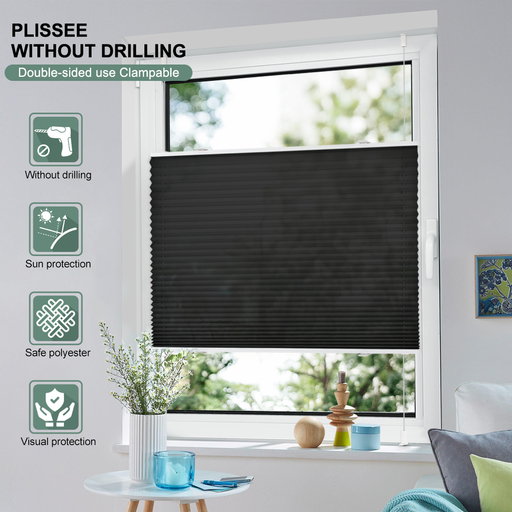
Why it's a great fit: Ideal for renters seeking a straightforward and affordable solution for standard windows in living rooms or offices. The installation is tool-free and leaves no marks.
The simple clamp-on system is designed for standard window frames and provides a solid hold when installed correctly, without the complexity of over-engineered mechanisms.
Offers good privacy while still allowing light to filter through. The fully adjustable top and bottom rails allow for flexible positioning according to the sun's angle.
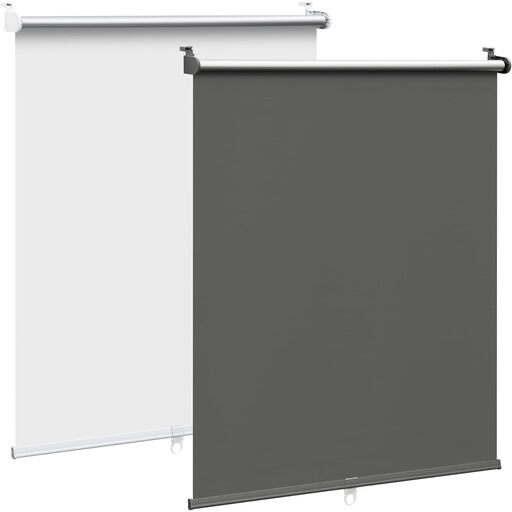
Why it's a great fit: Designed for rooms where darkness and safety are a priority. The cordless operation eliminates the strangulation hazard for children, and the thermal coating ensures darkness and temperature regulation.
According to the manufacturer, the silver coating on the back provides 100% blackout, avoiding the problem of fabrics that are falsely advertised as blackout-capable.
Cordless design for enhanced child safety. The thermal coating helps block heat in the summer and cold in the winter, contributing to a more comfortable room climate.
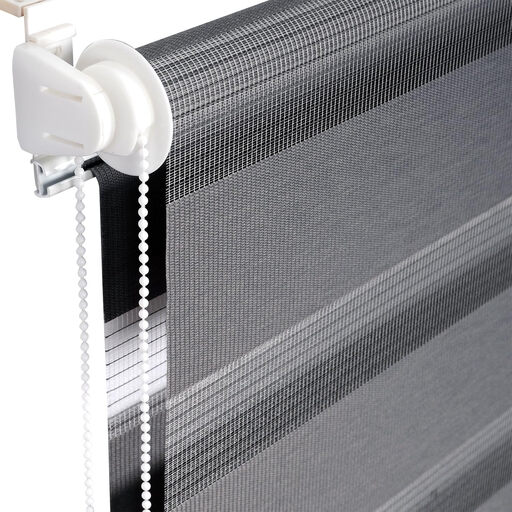
Why it's a great fit: For users who value modern design and variable control over light and privacy. The "zebra" design is both a visual accent and highly functional.
The robust chain pull mechanism and the clean finish of the polyester fabric with thermally cut edges prevent fraying and rapid wear.
Seamlessly adjust light levels from transparent to opaque. The chain pull can be mounted on either the left or right side, allowing for flexible adaptation to your space.
We've compiled a complete, up-to-date list of products that fully meet these strict selection criteria and safety standards.
The stability of a clamp-on system depends heavily on the quality of the clamp brackets and correct installation. Models with metal-reinforced brackets or those made from high-quality, flexible plastic offer a reliable hold, even with frequent use. It is crucial that the bracket fits snugly on the window frame without any play. For very large or heavy blinds, such as on a balcony door, additional screwing (if provided for by the manufacturer) can increase stability.
Yes, a roller blind for a balcony door can typically be installed without issue using a clamp-on system. Look for a model with a robust construction and sufficient height. Since balcony doors are opened and closed frequently, the quality of the clamp brackets is particularly important. Measure precisely to ensure the blind does not obstruct the door's movement and that the handle remains freely accessible.
A pleated blind consists of a single, accordion-folded piece of fabric. It is often tension-mounted directly within the glass beading and can be flexibly opened from both the top and bottom. A dual roller blind (also known as a zebra blind) consists of two parallel fabric panels with alternating transparent and opaque stripes. By shifting the panels using a chain pull, you can seamlessly adjust the light from nearly transparent to completely opaque. The choice depends on whether you prefer flexible positioning (pleated blind) or variable light control (dual roller blind).