
Lieferung heute & morgen

Qualitätsgarantie

Willkommens-Angebote freischalten: KOSTENLOSE Lieferung | Bis zu 80 % RABATT | Kostenlose 30-Tage-JoyPlus-Testphase
App herunterladen
A no-drill pleated blind is a practical choice for rented homes, owner-occupied properties and any room where you want to avoid damaging window frames or walls. Depending on the design, it can provide privacy, sun protection, light filtering or blackout coverage in bedrooms, children’s rooms, living rooms, kitchens, bathrooms and home offices.
Choosing the right one involves more than picking a colour and price. If you only look for the words “easy no-drill installation” in the product description, you may miss some important details. Here are three common pitfalls:
First, measure the visible glass width, the height of the window sash, and the depth and shape of the frame. Also check that the window opens fully and that the handle has enough clearance from the blind.
For some Dream-Seeker designs, it’s recommended that you choose a width about 4 cm greater than the glass width. This depends on the product, so always check the details on the relevant product page. Common sizes such as 70 x 120 cm pleated blinds, 70 x 140 cm pleated blinds and 80 x 100 cm suit many standard windows, but they won’t necessarily fit every window.
A made-to-measure pleated blind is made to your chosen width and height. This can be a good option for unusually sized windows, but it isn’t available with every clamp or adhesive fitting. Always check the measurements for the specific model rather than relying on the general product category.
A pleated blind with clamp brackets attaches to the top and bottom of the window sash without drilling. Before you buy, check:
A clamp-fit pleated blind is especially handy for rented homes, as it leaves no drill holes. Adhesive fitting can be an alternative if the frame shape isn’t suitable for clamps. The surface must be thoroughly cleaned and completely dry first. Adhesive may not hold as well on rough or uneven surfaces.
For doors and windows that are opened frequently, make sure the blind is securely fitted and has enough clearance. A roller blind for windows and doors shouldn’t rub against handles, seals or nearby surfaces.
The terms used in product descriptions have different practical meanings:
Colours such as white pleated blinds, beige pleated blinds and anthracite pleated blinds affect the look and feel of a room. Light colours have a subtle appearance and often keep the room brighter when used with light-filtering fabrics. Anthracite may help create a stronger blackout effect, but the fabric construction is what matters most.
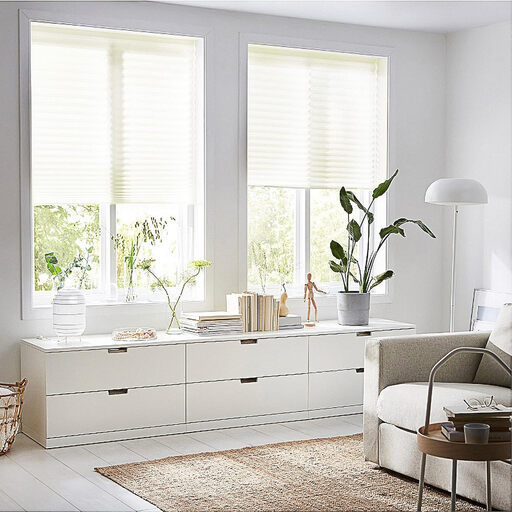
Why it suits this profile: The 70 x 120 cm size and beige colour are well suited to standard windows in living rooms, home offices or bedrooms. The light-filtering fabric lets daylight in while providing privacy and sun protection.
The product details specifically describe a light-filtering fabric and clamp-fit installation, so it’s clear this design isn’t intended to provide complete blackout.
Polyester fabric, height-adjustable operation and no-drill fitting to the window frame.
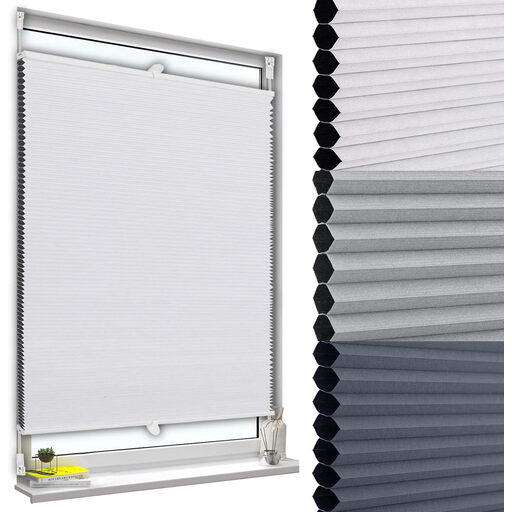
Why it suits this profile: The double-layer honeycomb structure and blackout fabric are designed to reduce light more effectively. The top and bottom handles let you position the blind flexibly.
The frame must be 10–23 mm thick for installation. Check that your window or door frame meets this requirement before ordering.
100% polyester fabric, metal frame, clamp fitting and a double-layer design, according to the product description.
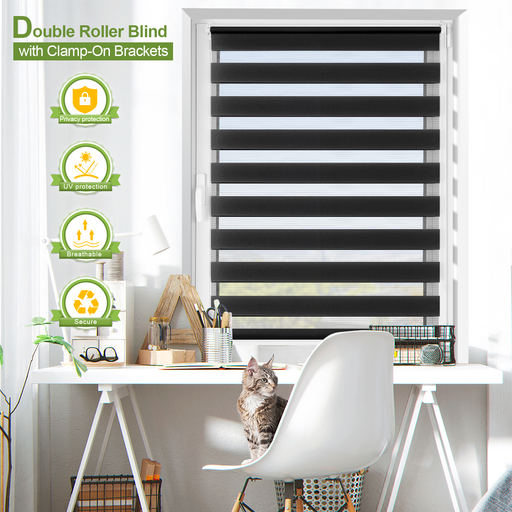
Why it suits this profile: At 45 × 150 cm, this DuoRollo is a good option for narrow, taller windows or doors. The combination of PVC, polyester fibre and a chain-operated mechanism allows you to adjust the light as needed.
The product details specify clamp-bracket fitting and say it’s suitable for windows and doors. It isn’t designed for roof windows or fixed windows that don’t open.
Double roller blind design, dark grey finish and tool-free fitting with clamp brackets.
We’ve put together a complete, regularly updated list of products that meet these strict selection criteria and fully comply with the safety regulations in force in the EU.
Before fitting the blind, clean the window frame with a suitable cloth that won’t leave any residue. If you’re using adhesive pads, the surface must be dry and free of grease. Don’t overtighten the clamps, as this could damage the frame or brackets.
Also check the product’s operating and safety instructions:
How long it lasts depends on the condition of the frame, the fitting method, how often you use it and how well you care for it. Check regularly that a properly fitted clamp bracket is secure, and adjust it if needed. With adhesive fittings, dust, moisture, heat or a rough surface can affect how well the pads stick.
With a clamp-fit pleated blind, the brackets attach to the window sash without drilling. With adhesive fitting, the brackets or supports are stuck to the frame. Clamp fittings depend on the thickness of the frame, while adhesive pads need a smooth, dry and sturdy surface.
No. Privacy and blackout don’t mean the same thing. A privacy pleated blind reduces visibility from outside, but may still let daylight through. For a darker bedroom, choose a design specifically described as blackout and take any gaps at the sides into account.