
Lieferung heute & morgen

Qualitätsgarantie

Willkommens-Angebote freischalten: KOSTENLOSE Lieferung | Bis zu 80 % RABATT | Kostenlose 30-Tage-JoyPlus-Testphase
App herunterladen
A no-drill pleated blind is an attractive solution for many homes, especially for renters. The ability to install them without causing permanent damage to the window frame, combined with flexible privacy and sun protection, makes them a popular choice. However, the market can be overwhelming, and not every product delivers on its promise. Misleading material claims or unstable mounting systems often lead to disappointment.
This guide serves as your roadmap. It highlights the criteria that truly matter and shows you how to sidestep common pitfalls to make an informed decision.
Many buyers report similar issues that often only become apparent after installation or a short period of use. Three of these are particularly widespread:
To avoid these problems, you should carefully check three technical parameters before buying. These determine the functionality and durability of your new privacy screen.
The most common method is the clamp-fit pleated blind. Here, adjustable brackets are clamped directly onto the window sash.
The choice of fabric depends on its intended use. There are essentially three levels:
For additional features, look for terms like thermal pleated blind or honeycomb blind. A honeycomb blind consists of two fabric panels that form an insulating air pocket. This structure helps keep heat out in the summer and warmth in during the winter, which can contribute to lowering energy costs.
Correct measurement is essential. Most mistakes happen here.
A clamp-fit folding blind measured according to these rules will fit perfectly and perform its function optimally.
Based on the quality criteria mentioned, we have compiled a few products for different user profiles.

Why This Fits Their Persona: A straightforward and effective blackout solution, ideal for standard windows in rental properties. The combination of clamp and adhesive mounting offers flexibility during installation.
The product offers two mounting options (clamping and adhesive). If the clamp mechanism doesn't hold optimally on the window frame, the adhesive provides a stable alternative, thus bypassing the problem of unstable brackets.
Provides a full blackout function at an accessible price point. The simple, white aesthetic is neutral and fits into almost any interior design scheme.

Why This Fits Their Persona: Ideal for bedrooms or south-facing rooms. The honeycomb structure not only provides a blackout effect but also offers thermal and acoustic insulation, noticeably enhancing living comfort.
The honeycomb structure gives the fabric greater dimensional stability and a higher-quality feel compared to single-layer fabrics. This counteracts the problem of poor fabric quality and ensures a more durable, functional solution.
Effectively insulates against heat and cold thanks to the air pockets in the honeycomb structure. According to the manufacturer, it also has sound-dampening properties.
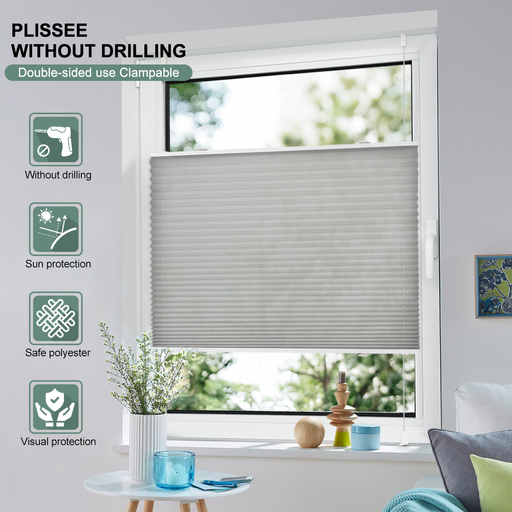
Why This Fits Their Persona: The modern anthracite colour is an excellent match for contemporary interior styles. The opaque fabric ensures complete privacy in living or work areas without completely darkening the room.
The product features clear specifications for clamp-fit mounting and aluminium rails, indicating a more robust construction. This helps prevent the typical problems with fit and durability.
Combines a modern aesthetic (anthracite) with an opaque fabric that creates privacy while still allowing some light through for a pleasant room atmosphere.
We have compiled a complete, up-to-date list of products that fully meet these strict selection criteria and local regulations.
The stability of a clamp-fit pleated blind largely depends on the quality of the clamp brackets and correct installation. With the right window frame thickness and high-quality brackets (ideally with a metal core), the hold is perfectly sufficient for daily use, even with frequent window opening. Additional adhesive pads, included with many models, can further increase stability.
Clamp-fit mounting is primarily designed for uPVC windows. On wooden windows, the pressure from the clamps could potentially damage the surface or paintwork. Furthermore, the shape of the window sash on wooden windows is often not suitable for clamp brackets. For wooden windows, blinds that are glued or screwed into the glazing bead (not the frame) are often the better alternative.
A standard pleated blind consists of a single, zigzag-folded panel of fabric. A honeycomb blind, on the other hand, is made of two fabric panels joined in the middle to form honeycomb-shaped air cells. These cells have an insulating effect against heat and cold and can also provide slight sound dampening. In honeycomb blinds, the tension cords run inside the cells, so there are no visible holes in the fabric, which improves the blackout performance.