
Lieferung heute & morgen

Qualitätsgarantie

Willkommens-Angebote freischalten: KOSTENLOSE Lieferung | Bis zu 80 % RABATT | Kostenlose 30-Tage-JoyPlus-Testphase
App herunterladen
The search for the right privacy and sun protection for windows often ends with a practical solution: the no-drill pleated blind. This installation method is an obvious choice, especially in rental properties where drilling holes in the window frame can cause problems. However, the market is confusing, and not every product delivers on its promises. Before you make a decision, it's crucial to understand the common weaknesses that can quickly turn a supposed bargain into a source of frustration.
This guide will help you identify the key quality features and make an informed choice that perfectly matches your requirements.
Many products look identical at first glance, but the differences are in the details. Watch out for these three common flaws to avoid disappointment:
To avoid the problems mentioned above, you should check three central aspects before buying. These largely determine the functionality and durability of your new pleated blind.
Drill-free installation is mainly achieved through two systems. Their suitability depends on your window type.
The choice of fabric depends on the function the pleated roller blind is intended to serve. There are essentially three levels of light transmission:
A perfectly fitting pleated blind sits flush at the sides and prevents unwanted light from entering. Follow a simple formula to find the right order width:
Order Width = Width of the window pane + approx. 4 cm (2 cm overlap per side)
Measure the pure glass width and add about 2 cm on each side. This ensures that the fabric covers the glazing bead and minimises light gaps at the sides. The order height should correspond to the height of the entire window sash.
Based on the criteria above, we have identified some products that are suitable for specific use cases.
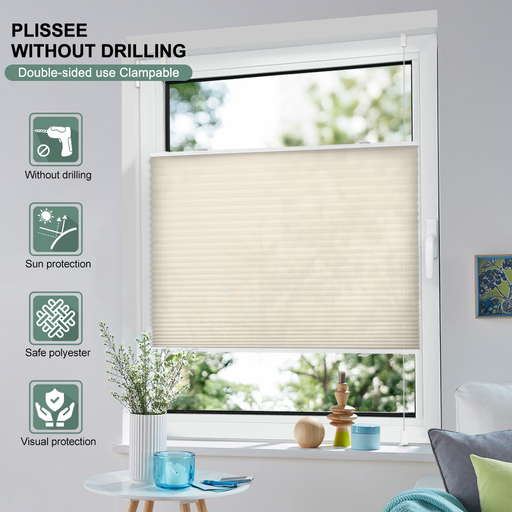
Why This Fits Their Persona: Ideal for renters seeking a straightforward and cost-effective solution for standard windows. It provides reliable privacy for living rooms or home offices without damaging the window frame. The installation is tool-free and completely reversible.
This product uses a proven clip-on system designed for common window frames, ensuring a stable fit without adhesives or drilling. This bypasses the problem of unreliable mounting.
The opaque yet translucent fabric offers a great balance between privacy and natural light. Its tool-free installation is especially beneficial for rental properties.

Why This Fits Their Persona: Perfect for bedrooms or children's rooms where effective light-blocking is crucial for restful sleep. The honeycomb structure offers added benefits like thermal and sound insulation, enhancing the room's comfort.
This honeycomb blind solves the problem of inadequate light blocking. Its dual-layer structure with concealed internal cords blocks light far more effectively than single-layer fabrics and prevents pinpricks of light.
According to the manufacturer, it provides blackout, thermal insulation, and sound dampening. The clip-on mount is designed for frame thicknesses of 10-23 mm, ensuring broad compatibility.
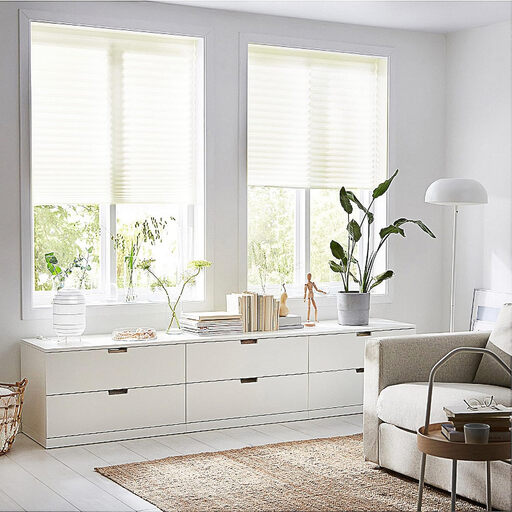
Why This Fits Their Persona: With its generous dimensions, this pleated blind is well-suited for floor-to-ceiling windows or balcony doors in a home office. The translucent fabric reduces screen glare without completely darkening the room, creating a pleasant work environment.
The product provides clear sizing instructions (Order Width = Glass Width + 4 cm), which minimises the risk of a poor fit. It also comes with both clamp and adhesive mounting options.
The top-down, bottom-up adjustability allows for flexible light control. Its moisture-resistant polyester fabric is low-maintenance, which is a practical advantage for daily use.
We've compiled a complete, up-to-date list of products that fully meet these strict selection criteria.
1. How do you clean a no-drill pleated blind? Most pleated blinds made of polyester fabric are low-maintenance. As a rule, it is sufficient to dust them regularly with a soft brush or a feather duster. For light stains, the fabric can be gently dabbed with a slightly damp cloth. Avoid harsh scrubbing and aggressive cleaning agents to prevent damage to the fabric's coating and colour.
2. Are clip-on pleated blinds really secure? Yes, when installed correctly on a suitable window frame, a clip-on pleated blind is a very stable solution. It is important that the thickness of your window frame is within the range specified by the manufacturer (e.g., 10–23 mm). The adjustable clamp brackets are tightened firmly and then provide a secure hold, even with daily operation of the blind.
3. What is the difference between a normal pleated blind and a honeycomb blind? A standard pleated blind consists of a single, Z-folded fabric panel. A honeycomb pleated blind, on the other hand, consists of two fabric panels that are joined together to form air-filled, honeycomb-shaped chambers. This design has two main advantages: the internal tension cords are not visible, which improves the blackout performance, and the air pockets act as insulation against heat in the summer and cold in the winter.