
Lieferung heute & morgen

Qualitätsgarantie

Willkommens-Angebote freischalten: KOSTENLOSE Lieferung | Bis zu 80 % RABATT | Kostenlose 30-Tage-JoyPlus-Testphase
App herunterladen
As a renter or homeowner, you know the dilemma: you need effective privacy and sun protection but don't want to damage your window frames with drill holes. A no-drill pleated blind seems like the ideal solution. However, the market is flooded with products of widely varying quality. False promises about blackout capabilities or unstable mounting systems often lead to disappointment and unnecessary expense.
This guide, created by your Joybuy Product Recommendation Officer, will help you navigate the common pitfalls. We focus on the objective features that define a quality product, so you can make an informed decision.
Many products promise simple installation and high functionality, but flaws often appear in practice. Pay close attention to these three points to avoid a bad purchase:
To avoid these problems, you should check three core parameters before buying. These are crucial in determining the quality, functionality, and longevity of your new privacy screen.
The choice of mounting method is fundamental. Both no-drill methods have specific use cases:
The effect of your blind depends on the fabric. There are four main levels:
The handling also plays a role in daily convenience.
Here are some product recommendations tailored to specific needs that meet the quality criteria mentioned.
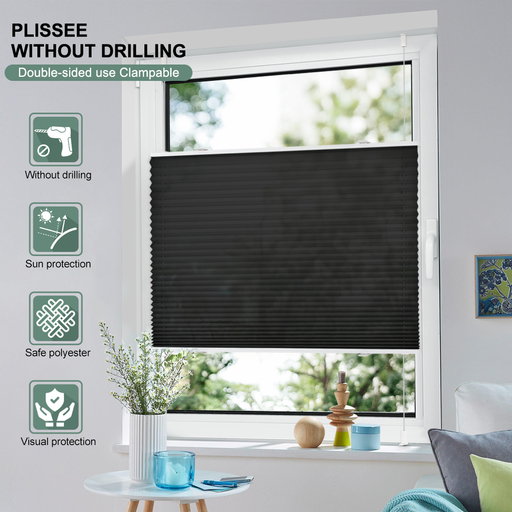
Why This Fits Their Persona: A straightforward and budget-friendly solution for standard rental apartments, providing reliable privacy without damaging the window frame. Ideal for living rooms or a home office.
The clamp-on system is designed for common window sash thicknesses, preventing the frequent problem of ill-fitting or wobbly brackets.
Tool-free installation in minutes; opaque fabric provides good privacy while still allowing light to filter through.
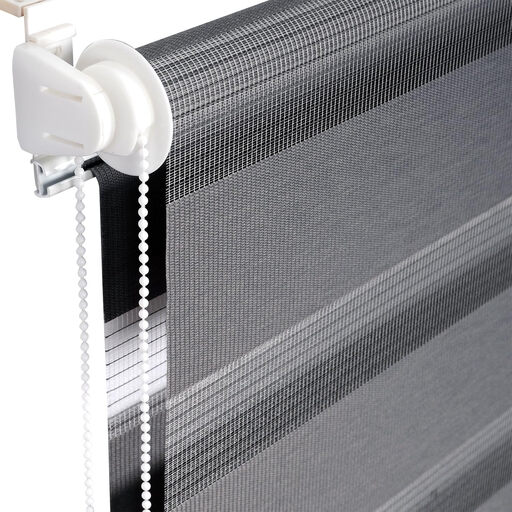
Why This Fits Their Persona: Ideal for living or work areas where flexible light control and a modern look are desired. The alternating stripes of the zebra blind are a stylish design element.
It solves the problem of misleading light-filtering claims, as you can seamlessly switch between translucent and opaque by shifting the fabric panels.
Infinitely adjustable control over light and privacy; the pull chain can be mounted on either the left or right side.

Why This Fits Their Persona: Perfect for bedrooms or rooms where maximum darkness is needed for restful sleep or to prevent glare (e.g., in a home cinema).
According to the manufacturer, the special silver coating on the back provides 100% blackout, countering the frustration of "blackout" blinds that are merely opaque.
Provides blackout and thermal insulation thanks to the coating; the cordless operation enhances safety in households with children.
We've compiled a complete, up-to-date list of products that fully meet these strict selection criteria.
Two measurements are crucial for a perfect fit:
A pleated blind consists of a single, pleated fabric (like an accordion) and is often positioned freely on the window. A dual roller blind (or zebra blind) has two fabric layers running one behind the other, with alternating sheer and opaque stripes that are shifted against each other to precisely control the light.
The durability of an adhesive pleated blind depends heavily on the quality of the adhesive and the condition of the surface. On clean, smooth, and grease-free glass or plastic surfaces, high-quality adhesive systems can last for years. However, adhesion can weaken with significant temperature fluctuations or high humidity. For windows that are frequently opened and tilted, a clamp-on system is often the more robust choice.