
Lieferung heute & morgen

Qualitätsgarantie

Willkommens-Angebote freischalten: KOSTENLOSE Lieferung | Bis zu 80 % RABATT | Kostenlose 30-Tage-JoyPlus-Testphase
App herunterladen
A no-drill pleated blind is a practical solution for modern privacy and sun protection, especially in rental properties where damaging the window frame is not an option. Its clamp-fit system promises a quick, tool-free installation. However, the market is saturated with products whose quality and fit often fail to meet expectations. Before making a purchase, it's crucial to understand the most common pitfalls to avoid a bad investment.
This guide will help you identify the key features and select a product that is both functional and durable.
Many buyers focus on colour and price, overlooking the technical details that determine daily usability. These three flaws are the most common sources of dissatisfaction:
To avoid these issues, you should check three core aspects before buying. These define the quality and functionality of your new privacy screen.
The term clamp-fit pleated blind describes the installation method, but the execution varies widely. Compatibility with your window is crucial.
The choice of fabric determines how well the blind fulfils its function as an internal window sunshade.
To prevent light gaps at the sides, don't just measure the visible glass pane. The recommended order width is typically calculated from the width of the glass pane plus a desired overlap (e.g., 2 cm on each side). Make sure the blind does not obstruct the window handle. The height usually corresponds to the entire height of the window sash.
Based on these criteria, we have identified some products that are suitable for different user profiles.
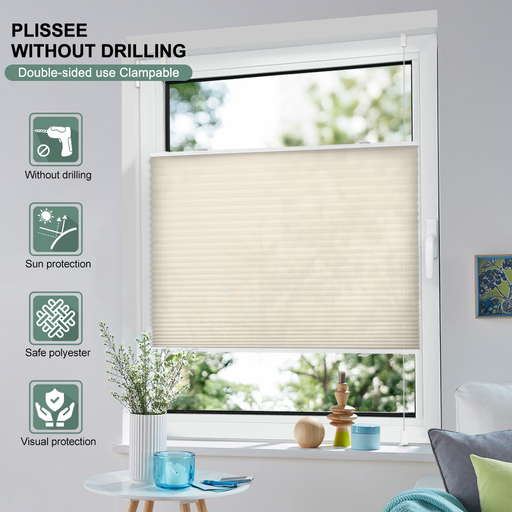
Why it's a good fit: A straightforward and functional solution for standard windows in rental properties. The tool-free clamp-fit installation prevents damage to the frame, and neutral colours like anthracite or beige complement most interior styles.
The product uses a standardised clamp-fit system for common window frames. The polyester fabric provides solid privacy and avoids the issues found in ultra-cheap products.
Simple, tool-free installation and great value for money for basic privacy and sun protection.
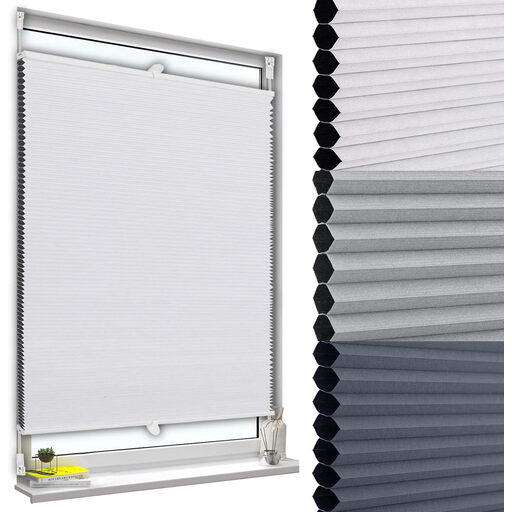
Why it's a good fit: Ideal for bedrooms and living rooms where thermal insulation and noise reduction are just as important as blackout functionality. The honeycomb structure creates an air barrier that keeps heat out in the summer and warmth in during the winter.
The honeycomb construction is inherently higher quality than single fabric layers. The adjustable clamp brackets are designed for a clearly defined frame thickness of 10–23 mm, which minimises fitment issues.
Combines blackout, thermal insulation, and sound dampening in one product. Operation via top and bottom handles allows for flexible positioning.
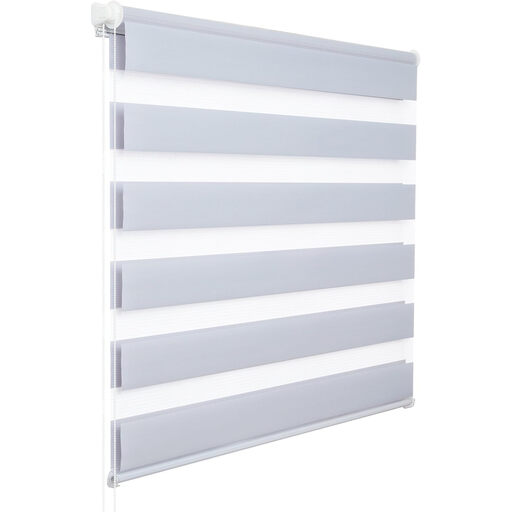
Why it's a good fit: Perfect for offices, kitchens, or living rooms where light control needs to be flexibly adjusted throughout the day. The dual roller design allows for a seamless transition from transparent to opaque.
As a clamp-fit dual roller blind, it offers a specific function that goes beyond a simple pleated blind. The clamp-fit system is designed for a narrower frame thickness of 1-10 mm, which requires precise selection but ensures a stable hold on compatible windows.
Infinitely variable control of light and privacy thanks to the alternating woven fabric panels. The edges are thermally sealed to prevent fraying.
We have compiled a comprehensive, up-to-date list of products that fully meet these strict selection criteria.
1. How long does a clamp-fit pleated blind last? The lifespan heavily depends on the material quality and handling. A blind with high-quality polyester fabric and sturdy metal rails can last for several years with normal use. Cheaper models with basic plastic parts often show signs of wear and tear after 1-2 years. Regular dusting and careful operation will extend its durability.
2. Can no-drill pleated blinds be attached to wooden windows? Most clamp-fit systems are designed for modern uPVC (plastic) windows with a standard rubber seal and a specific frame thickness. On old or very solid wooden windows, the clamp brackets often don't fit or can damage the surface. For wooden windows, screw-in brackets or adhesive pads are often the safer alternative. Always check the manufacturer's specifications for compatibility.
3. Does a honeycomb blind labelled as "blackout" really provide 100% darkness? A high-quality blackout or honeycomb blind is very effective at blocking light that hits the fabric directly. However, complete darkness in the room is only achieved if the blind is measured correctly, leaving minimal light gaps at the sides, top, and bottom. Side guide rails can further reduce light leakage. For absolute darkness, additional measures are often necessary.