
Lieferung heute & morgen

Qualitätsgarantie

Willkommens-Angebote freischalten: KOSTENLOSE Lieferung | Bis zu 80 % RABATT | Kostenlose 30-Tage-JoyPlus-Testphase
App herunterladen
A no-drill pleated blind is a practical solution for modern privacy and sun protection, especially in rental properties where window frames must remain undamaged. Installation is quick and requires no tools. However, the market can be confusing, and not every product delivers on its promise. Before you make a decision, it's important to know the most common pitfalls that can lead to a purchase you'll regret.
As your Joybuy Product Recommendation Officer, I'll help you understand the key product features and make an informed choice that's perfectly tailored to your needs.
Many buyers are swayed by appealing product images and marketing promises, but overlook crucial technical details. This often leads to disappointment and unnecessary expense.
To avoid these mistakes, focus on three core technical features. These determine the functionality, durability, and fit of your new privacy screen.
Choosing the right mounting system is fundamental. The two most common no-drill methods are:
The light transmission of the fabric determines how much light and privacy you get. There are usually three levels:
If you're looking for not just privacy but also improved energy efficiency, a honeycomb blind is the right option. Unlike a simple pleated roller blind, it consists of two fabric panels that form honeycomb-shaped air chambers. These air pockets act as an insulating layer:
Additionally, the honeycomb structure improves sound insulation.
Here are some recommendations tailored to different user profiles and needs.

Why This Fits Their Persona: Ideal for users who value energy efficiency as much as blackout functionality. The honeycomb structure contributes to thermal insulation and can help stabilise room temperature year-round, lowering energy costs.
This product avoids the trap of false thermal claims thanks to its physical honeycomb structure. The trapped air pockets provide a demonstrable insulating effect, unlike single-layer fabrics.
Combines 100% blackout with thermal and sound-dampening effects. The Klemmfix mounting is drill-free and suitable for frame thicknesses of 10-23 mm.
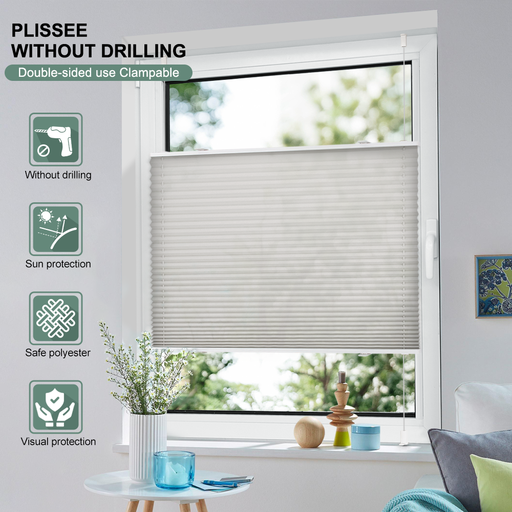
Why This Fits Their Persona: Perfect for renters who need an effective and residue-free removable blackout solution for bedrooms or children's rooms. The tool-free Klemmfix installation does not damage the window frame.
This blind solves the problem of misleading labels. The fabric is classified as true blackout (opaque) and completely blocks light instead of just dimming it.
Provides maximum light blockage for undisturbed sleep. The clamp bracket installation is simple and requires no tools, making it ideal for rental properties.
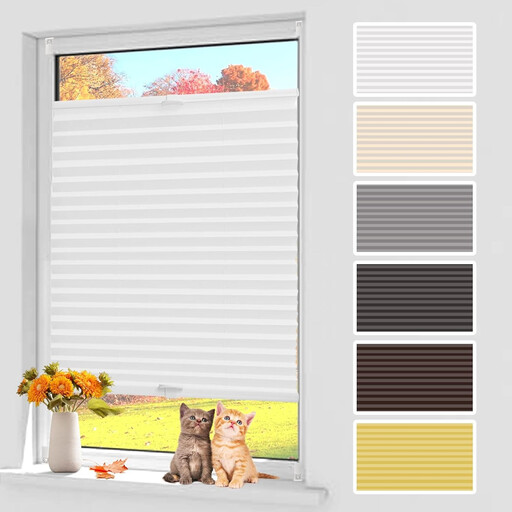
Why This Fits Their Persona: A straightforward and flexible solution for living rooms, kitchens, or offices where a balance between privacy and natural light is desired. The dual mounting option (clamp or adhesive) offers maximum flexibility.
This product is honestly described as translucent, thus avoiding the trap of false blackout promises. The flexible mounting option also addresses the problem of ill-fitting clamp brackets.
Offers effective privacy while maintaining a bright room ambiance. The simple installation via adhesive pleated blind or clamp is particularly user-friendly.
First, measure the width and height of the glass pane. For optimal coverage, it is recommended to add 1-2 cm to each side of the glass width, but make sure the blind does not interfere with the window handle. For a Klemmfix pleated blind, the crucial measurement is the thickness of the window sash (frame thickness), which is measured when the window is open. It should be within the tolerance range of the chosen clamp bracket.
No, Klemmfix systems are primarily designed for standard uPVC or aluminium windows that can be opened. They are generally not suitable for fixed-pane windows, skylights, or wooden windows with heavily profiled or very narrow frames. Always check the minimum and maximum frame thickness specified by the manufacturer.
A standard pleated blind consists of a single, zigzag-pleated fabric panel. A honeycomb blind, on the other hand, consists of two fabric panels joined together to form honeycomb-shaped air chambers. This structure gives the blind its insulating properties (thermal pleated blind), as the air in the honeycombs acts as a buffer against cold and heat, and also provides slight sound dampening.