
Lieferung heute & morgen

Qualitätsgarantie

Willkommens-Angebote freischalten: KOSTENLOSE Lieferung | Bis zu 80 % RABATT | Kostenlose 30-Tage-JoyPlus-Testphase
App herunterladen
A no-drill pleated blind is an attractive solution for modern sun and privacy protection. Its tool-free installation, which leaves no permanent damage on window frames or walls, is particularly appealing to renters and homeowners who prefer a hassle-free setup. However, the market is flooded with products of widely varying quality. Before you make a decision, it's crucial to understand the common weaknesses that often only become apparent after the purchase.
Many buyers report three central problems:
This guide will help you navigate these pitfalls and find a product that meets your needs for the long term.
The installation method is the core feature of a no-drill pleated blind. The reliability of the entire system depends on the quality of its mounting hardware.
The functionality of a pleated blind is determined by the properties of its fabric. There are clear distinctions that are relevant for different use cases.
Instead of making a one-size-fits-all recommendation, we have identified products tailored to specific needs and living situations.
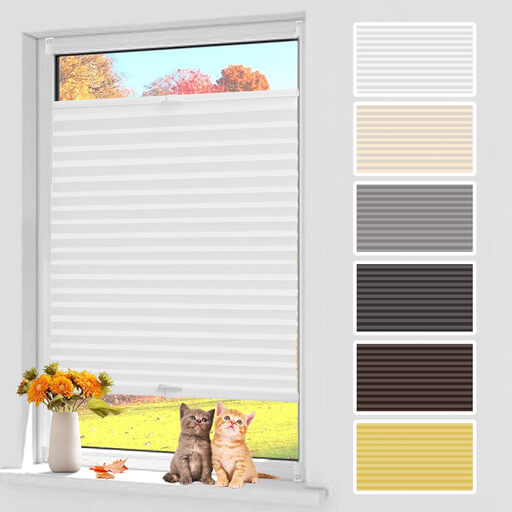
Why This Fits Their Persona: Ideal for renters seeking a quick, flexible, and residue-free solution for standard windows. The lightweight design and straightforward assembly make it perfect for living rooms or home offices where basic privacy and glare reduction are needed.
This product sidesteps the pitfall of unstable mountings by offering both a clamp and an adhesive option. This increases installation flexibility and ensures a secure hold on various window frames.
Tool-free installation and a low weight of 370 grams make it easy to handle. The fabric offers effective glare protection and is translucent.

Why This Fits Their Persona: Perfect for families who prioritise energy efficiency and restful sleep. The honeycomb structure provides thermal insulation, keeping heat out in the summer and warmth in during the winter, which can help lower energy costs.
This product solves the problem of misleading fabric descriptions. As a genuine honeycomb blind with opaque polyester fabric, it provides effective blackout, not just basic privacy.
Offers blackout, thermal insulation, and sound dampening in one. The stepless adjustment with top and bottom handles allows for precise light control.
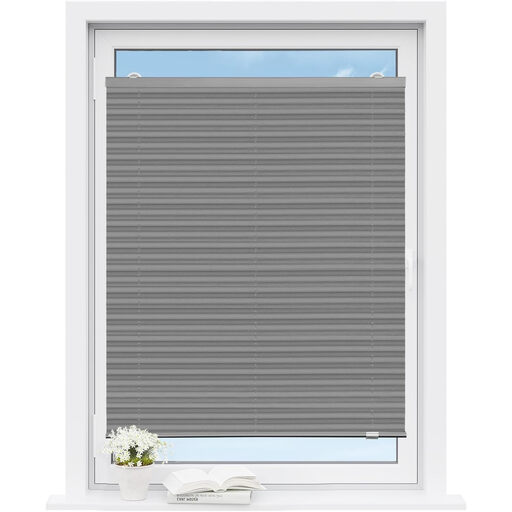
Why This Fits Their Persona: An excellent choice for situations where clamp or adhesive mounts won't work, such as on fixed-pane windows, glass doors, or in conservatories. The suction cups allow for flexible positioning directly on the glass pane.
This model solves the fitment problem for windows with unsuitable frames. Instead of depending on frame thickness, it adheres directly to the glass surface, bypassing compatibility issues.
Drill-free installation on smooth surfaces like glass or tiles. The semi-transparent fabric filters UV light while preserving natural brightness in the room.
We've compiled a complete, up-to-date list of products that fully meet these strict selection criteria and German safety regulations.
Durability heavily depends on the product's quality and correct installation. High-quality clamp-fit systems mounted on a suitable window frame (correct thickness, clean material) are very reliable and can last for years. For adhesive mounts, thoroughly cleaning and degreasing the frame before application is crucial. Inexpensive adhesives can lose their bonding strength during significant temperature fluctuations.
A high-quality blackout pleated blind with a true blackout fabric can significantly reduce light ingress. However, achieving 100% darkness is difficult, as minimal light gaps often remain at the sides of the blind. For the best possible result, precise measurement and the smallest possible tolerance between the fabric and the window frame are essential. A honeycomb blind often provides better coverage here than a simple pleated shade.
For rooms where the indoor climate plays an important role, the answer is often yes. In bedrooms, children's rooms, or rooms with intense sun exposure, the air cushion of a thermal pleated blind can noticeably regulate the room temperature. The potential savings on heating and cooling costs can justify the higher initial purchase price over time.