
Lieferung heute & morgen

Qualitätsgarantie

Willkommens-Angebote freischalten: KOSTENLOSE Lieferung | Bis zu 80 % RABATT | Kostenlose 30-Tage-JoyPlus-Testphase
App herunterladen
A no-drill pleated blind is a convenient solution for privacy and sun protection, especially in rental properties where drilling into window frames or walls is often prohibited. Installation with clamp or adhesive brackets is straightforward and leaves no damage. However, not all models live up to their promises. Before you make a decision, you should be aware of three common pitfalls that often lead to disappointment and unnecessary expense.
The selection of no-drill pleated blinds is vast, but the quality varies significantly. Pay attention to these points to find a durable and functional solution.
A common annoyance is weak clamp or adhesive mounts made from low-quality plastic. These can break after a short time, lose their clamping force, or warp from sun exposure. The result: the blind sags, slips, or in the worst case, falls off the window entirely. A sturdy clamp-fit pleated blind should have robust, adjustable brackets designed for the specified frame thickness.
The term blackout pleated blind is often used liberally. However, many fabrics advertised as "blackout" are merely opaque or dimming, still allowing significant daylight to pass through. This is inadequate for a bedroom or home cinema room. A true blackout blind requires a specially coated fabric or a honeycomb structure to effectively block light.
Inaccurate measurements lead to unsightly light gaps at the sides or a blind that doesn't fit properly at all. Complicated or unclear measurement instructions from manufacturers often add to the confusion. A well-fitting no-drill pleated blind requires precise dimensions tailored to your specific window situation.
To avoid these pitfalls, you should check three core parameters before buying. These determine the functionality, durability, and fit of your new privacy screen.
The attachment method is the defining feature of a no-drill pleated blind.
The fabric determines how much light enters the room and what additional functions the pleated blind provides.
Measure carefully to avoid light gaps. A common recommendation is: Order Width = Width of the glass pane + approx. 2–4 cm (1–2 cm per side) Make sure the blind does not interfere with the window handle. The height usually corresponds to the entire height of the window sash. Always check the manufacturer's specific measurement guide.
Here are some recommendations tailored to different needs and living situations.
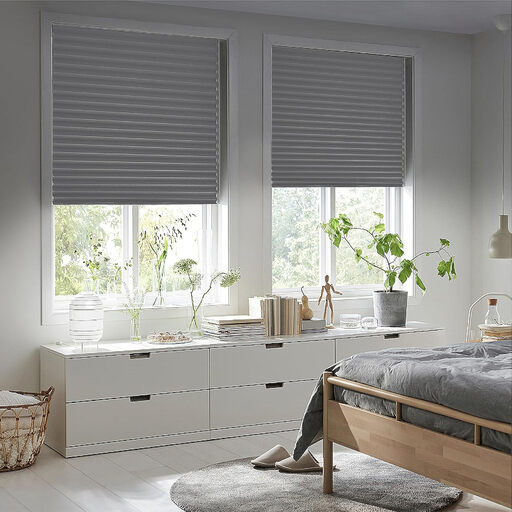
Why This Fits Their Persona: Ideal for renters seeking a straightforward and budget-friendly solution for basic privacy and glare protection in living areas or the office, without damaging the window frames.
The product description clearly labels it as "translucent" (semi-transparent), thus avoiding false expectations of a complete blackout. The adjustable clamp brackets are designed for common window frame thicknesses (10-23 mm) and provide a secure fit.
Simple, tool-free installation and a neutral design that blends into many interior styles. Provides effective privacy while maintaining a bright room ambiance.

Why This Fits Their Persona: Perfect for bedrooms or other spaces where maximum darkness and a peaceful atmosphere are desired. The insulating properties of the thermal pleated blind also help regulate room temperature and lower energy bills.
Thanks to its honeycomb structure with an internal coating, it achieves a high level of light blockage, living up to the blackout pleated blind name. The air chambers of the honeycomb blind also have a sound-dampening and insulating effect, which represents real added value.
Combines blackout, thermal insulation, and sound protection in one product. The clamp-fit installation is stable and damage-free.
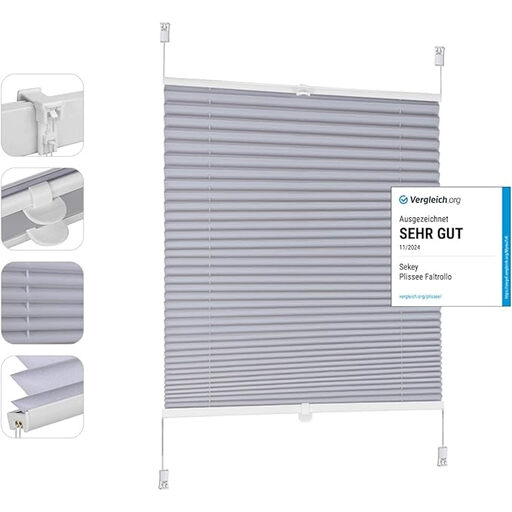
Why This Fits Their Persona: Optimal for workstations where screen glare must be avoided without completely darkening the room. The flexible operation allows for precise light control depending on the time of day and position of the sun.
Operation via handles on the top and bottom rails allows for stepless positioning. This helps you avoid the "all-or-nothing" trap of rigid shades, letting you control light exactly as needed to reduce glare while preserving brightness.
Infinitely adjustable from both the top and bottom for maximum flexibility in light control. The clamp-fit installation is tool-free and can be removed without leaving residue.
We have compiled a complete, up-to-date list of products that fully meet these strict selection criteria and all relevant safety regulations.
Most pleated blind fabrics can be gently cleaned with a dry duster, a soft brush, or the brush attachment of your vacuum cleaner on the lowest setting. For light stains, a slightly damp cloth can be used. Avoid harsh scrubbing and aggressive cleaning agents to prevent damage to the fabric's coating or finish.
Yes, most models are tensioned. This means they are secured at the top and bottom with cords within the frame. This tension ensures that the blind remains close to the window even when the sash is tilted, preventing it from swinging.
While a few models can be shortened in width, this is the exception rather than the rule. Most pleated blinds cannot be trimmed after purchase without damaging the mechanism and the fabric. It is therefore crucial to order the exact size you need from the start. Carefully check the product description for any information on trimmability.