
Lieferung heute & morgen

Qualitätsgarantie

Willkommens-Angebote freischalten: KOSTENLOSE Lieferung | Bis zu 80 % RABATT | Kostenlose 30-Tage-JoyPlus-Testphase
App herunterladen
A no-drill pleated blind is the ideal privacy and sun protection solution for many renters and homeowners. The tool-free installation protects window frames and walls—a crucial advantage, especially in rental properties. However, the market is flooded with products of widely varying quality. Before you make a decision, it's important to know the typical pitfalls that can lead to frustration and unnecessary expense.
As your Joybuy Product Recommendation Officer, I'm here to help you separate the wheat from the chaff. We'll highlight the three most common problems with no-drill pleated blinds and show you what to look for to find a durable and functional solution for your windows.
Many products promise easy installation and high functionality, but their weaknesses often show in practice. These three issues are the most common sources of disappointment:
To avoid these problems, you should check three key aspects before buying. These will help you find a suitable and long-lasting clip-on cellular shade or adhesive pleated blind.
The choice of mounting method depends on your window type and your needs.
The function of your pleated blind is determined by its fabric. There are three main levels:
A common mistake is measuring incorrectly. Follow this simple rule to determine the right size:
Based on these criteria, we have identified a few products that are suitable for different use cases.
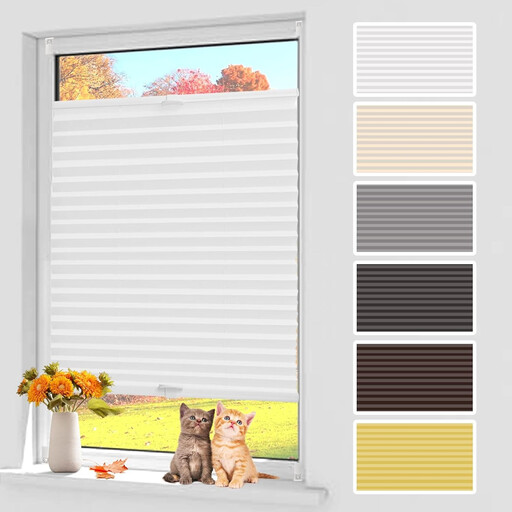
Why This Fits Their Persona: This model is a straightforward and functional basic solution. The classic white pleated blind suits almost any interior design style and, with its light-filtering fabric, offers a great compromise between privacy and brightness in the room.
It includes two mounting options (clip-on and adhesive) in the box. This increases the likelihood of a stable installation on different window types and bypasses the problem of an unsuitable or weak single mount.
Flexible mounting options for windows and doors; light-filtering fabric for bright rooms while maintaining privacy.

Why This Fits Their Persona: This no-drill roller blind is designed for anyone who needs maximum light control. The special silver coating ensures a reliable blackout effect and provides thermal insulation—ideal for restful sleep or focused work without screen glare.
It avoids the trap of misleading fabric descriptions. The product description explicitly states a "100% Blackout" function thanks to the silver coating, rather than relying on vague terms like "opaque."
Effective blackout and heat regulation; the cordless design increases safety in homes with children and pets.
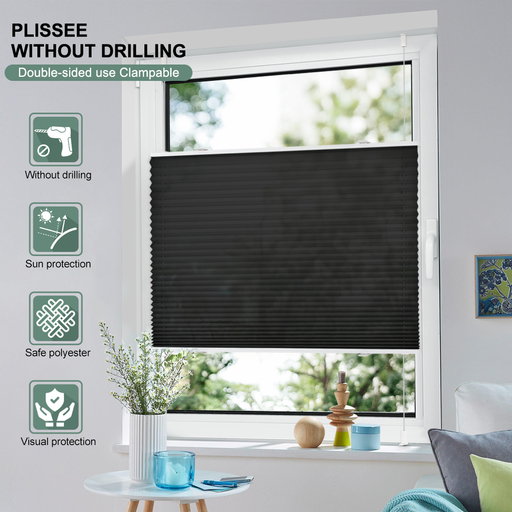
Why This Fits Their Persona: For those who value a cohesive aesthetic. The anthracite color is modern and adds an elegant accent to the window. The opaque fabric provides reliable privacy without completely darkening the room, making it a stylish choice for living and work areas.
The product relies on a pure clip-on system optimized for standard window frames. This avoids the complexity of combination systems and reduces the risk of a wobbly or ill-fitting installation.
Modern color scheme for contemporary interiors; straightforward and tool-free clip-on installation for a clean look.
We've compiled a complete, up-to-date list of products that fully meet these strict selection criteria and local regulations.
1. How long do clip-on pleated blinds last? The lifespan of a clip-on pleated blind heavily depends on the material quality of the mounts and the frequency of use. Models with robust clamps made of high-quality plastic or metal can last for several years with correct installation and normal use. Cheaper models with thin plastic parts are more prone to material fatigue.
2. Can I install a no-drill pleated blind on a balcony door? Yes, this is possible in most cases. A clip-on system is very suitable for inward-opening balcony doors, as it is attached directly to the door sash and does not obstruct movement. For sliding doors or fixed glass elements, adhesive or suction cup versions are the better choice, as there is no sash to clamp onto.
3. Do adhesive pleated blinds leave residue on the window frame? Modern adhesive systems often use high-quality adhesive strips that can usually be removed without leaving any residue. To make removal easier, it can help to gently heat the adhesive strip with a hairdryer beforehand. It is important to thoroughly clean the surface before application, as this not only improves adhesion but also facilitates residue-free removal later on.