Joybuy Insights

No-Drill Pleated Blinds: 2026 Buyer's Guide – How to Avoid the 3 Most Common Buying Mistakes

A no-drill pleated blind is a practical solution for privacy and sun protection, especially in rental apartments where damaging window frames must be avoided. While tool-free installation sounds simple, the market is flooded with products that have hidden flaws. Many buyers only discover after a few months that the mounting has weakened, the fabric fails to provide the desired function, or the operating mechanism is clunky.

This guide will show you what to look for to bypass the typical pitfalls and find a durable, functional no-drill pleated blind.

The 3 Most Common Traps When Buying Clip-On Pleated Blinds

Before you make a decision, you should be aware of the most common issues that lead to frustration and unnecessary expense.

  1. Unstable Clamp Brackets: Many budget-friendly options use clamp brackets made of thin plastic. Under the daily tension of the blind and due to temperature fluctuations at the window, these brackets can weaken over time, break, or lose their clamping force. The result is a blind that sags or, in the worst-case scenario, falls down completely.
  2. Misleading Fabric Descriptions: The difference between "opaque" and "blackout" is significant. An opaque pleated blind provides privacy from prying eyes but still allows daylight to filter through. A blackout pleated blind, on the other hand, should almost completely darken the room. Many products are marketed as blackout but only offer a room-darkening effect, which is often insufficient, especially for a bedroom.
  3. Poor Fit and Complicated Adjustments: An "easy-fit pleated blind" should be simple to install. However, the included clamp brackets often don't fit the specified frame thickness, or the instructions for trimming the blind to size are unclear. Incorrect measurements also lead to blinds that don't close properly, creating unsightly light gaps along the sides.

What Really Matters: The Key Selection Criteria

To avoid these problems, focus on three objective features that determine the quality and longevity of a pleated blind.

1. Mounting Type: Clamp-Fit, Adhesive, or Suction Cup?

The most common method is the clamp-fit pleated blind. For this type, adjustable brackets are clamped directly onto the window sash.

  • Pay attention to the clamp bracket material: Models with a metal core or those made from high-quality, reinforced plastic offer significantly greater stability and durability.
  • Check the compatible frame thickness: Measure the thickness of your window frame (excluding the rubber seal). The clamp brackets must be designed for this thickness; a common range is approximately 15 to 23 mm.
  • Alternatives for fixed glazing: For windows that don't open or for glass panels on balcony doors, pleated blinds with suction cup or adhesive mounts are an option. With these, the quality of the suction cups or adhesive strips is crucial for a long-lasting hold.

2. Fabric Quality and Light Control

The performance of your pleated blind depends directly on the fabric you choose. Clarify your exact needs before you buy.

  • Translucent: Ideal for living rooms or kitchens where you want to maintain brightness while reducing direct sunlight and improving privacy.
  • Opaque: The right choice for bathrooms or ground-floor apartments. Plenty of light still enters the room, but silhouettes are not visible from the outside. This type of no-drill privacy blind is a great all-rounder.
  • Blackout: Essential for bedrooms and children's rooms. Look for specially coated fabrics or honeycomb blinds. A honeycomb blind consists of two layers of fabric that form an insulating air pocket. This not only provides effective blackout performance but also improves thermal and sound insulation.

3. Measuring Correctly for a Perfect Fit

The most common reason for returns is incorrect measurements. Take the time to measure for your pleated window blind precisely.

  • Width: Measure the width of the glass pane (from seal to seal) and add your desired overlap on each side (typically 1-2 cm per side) to minimise light gaps. Make sure the blind will not obstruct the window handle. The order width is the total width of the blind.
  • Height: Measure the entire height of the window sash. The height of the blind should correspond to this measurement.

Our Top Picks for Different Needs in 2026

Here are some recommendations tailored to specific use cases and the quality criteria mentioned above.
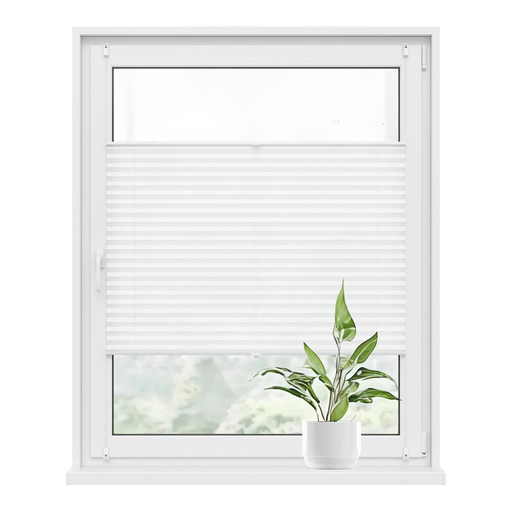
MATCH FOR: Pragmatic Renters
WOLTU Plissee Klemmfix ohne Bohren 85x100cm (BxH) Wei?

WOLTU Clip-Fix Pleated Blind without Drilling 85x100cm (WxH) White

Why This Fits Their Persona: A straightforward and reliable solution for standard windows in rental properties. It offers good privacy without darkening the room and can be removed without leaving any residue.

How It Avoids the Trap

The included clamp brackets have a metal core, making them significantly more stable than all-plastic versions and preventing sagging.

Key Advantage & Pros

Translucent fabric for bright rooms; the width can be trimmed by up to 10 cm if needed, allowing for high flexibility in fitting.
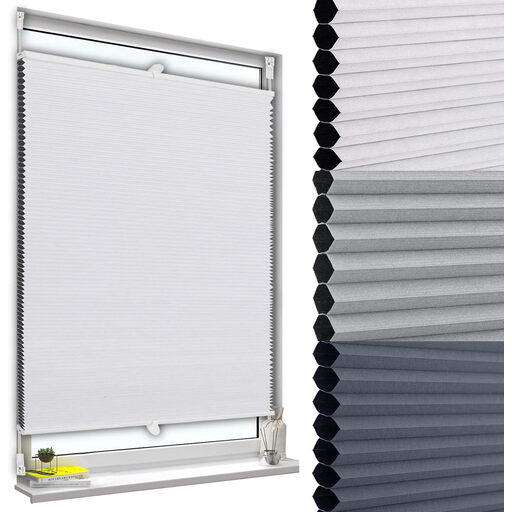
MATCH FOR: Peace-Seekers & Energy Savers
WOLTU Wabenplissee ohne Bohren Verdunkelung Thermo

WOLTU Honeycomb Pleated Blind No-Drill Blackout Thermo

Why This Fits Their Persona: Perfect for bedrooms or rooms that need to stay cool in the summer and warm in the winter. It provides maximum blackout for undisturbed sleep.

How It Avoids the Trap

Thanks to the double-layered honeycomb fabric, it achieves true blackout performance, not just a dimming effect. The product description is accurate and meets expectations.

Key Advantage & Pros

The honeycomb structure creates an air pocket that acts as a thermal barrier, helping to reduce heating costs in the winter and heat gain in the summer.
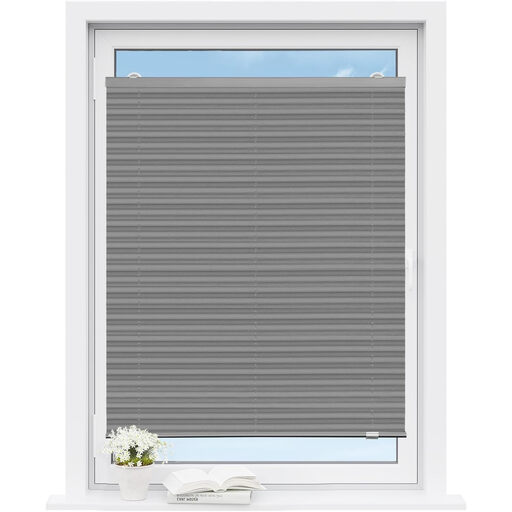
MATCH FOR: Flexible Solutions on Glass Surfaces
WOLTU Plissee ohne Bohren mit Saugn?pfen

WOLTU No-Drill Pleated Blind with Suction Cups

Why This Fits Their Persona: Ideal for situations where clamp-mounting isn't possible, such as on fixed-pane windows, skylights, or glass doors. The installation is done directly on the glass.

How It Avoids the Trap

Instead of weak clamps, this model relies on reinforced suction cups, which are designed for a secure hold on smooth surfaces like glass, according to the manufacturer.

Key Advantage & Pros

Maximum flexibility in positioning, as the blind can be placed anywhere on the glass surface. The installation is tool-free and leaves no residue.

Looking for more options?

We have compiled a complete, up-to-date list of products that fully meet these strict selection criteria.

Frequently Asked Questions (FAQ)

How do I correctly measure my window for a clamp-fit pleated blind?

Measure the width of the glass pane and add 1-2 cm on each side to prevent light gaps. The total width must not interfere with the window handle. For the height, measure the entire height of the window sash. Most manufacturers' order width refers to the total width of the blind, including the rails.

Do clamp brackets also hold on wooden or aluminium windows?

Yes, clamp brackets are generally suitable for uPVC, wooden, and aluminium windows, as long as the shape of the window sash and the frame thickness are compatible. The bracket is clamped onto the frame and typically features a protective rubber lining to prevent damage to the surface.

What is the difference between an opaque and a blackout pleated blind?

An opaque blind provides privacy from prying eyes but still allows daylight to enter the room. It is ideal for living areas and bathrooms. A blackout blind is constructed with a special coating or as a honeycomb shade to block almost all incoming light. It is therefore suitable for bedrooms and children's rooms.


Authored by: Joybuy Product Recommendation OfficerDate: 28/07/2026