
Lieferung heute & morgen

Qualitätsgarantie

Willkommens-Angebote freischalten: KOSTENLOSE Lieferung | Bis zu 80 % RABATT | Kostenlose 30-Tage-JoyPlus-Testphase
App herunterladen
A no-drill clamp-fit pleated blind can be a practical solution for rented homes, children’s bedrooms, offices, and balcony or patio doors. Fitting it without drilling generally leaves window frames and walls intact. However, not every model will suit every window.
Many disappointing purchases aren’t down to the blind itself, but to unclear measurements, unsuitable fixings or unrealistic expectations about light filtering and room darkening. The following points can help you choose the right no-drill pleated blind.
Depending on the model, the stated product width may include the brackets or refer to the fabric alone. If you measure only the visible glass, you risk leaving gaps at the sides or having the blind overlap the window handle.
For several Dream-Seeker models, the suggested guide is to choose a blind around 4 cm wider than the glass. This isn’t a rule for every model, though. Always check the fitting instructions and product details for the blind you’re considering.
A privacy pleated blind prevents people from seeing in, but depending on the fabric, it may still let in diffused light. A light-filtering pleated blind reduces glare and direct sunlight, but won’t fully darken a room.
Even when a product is described as “blackout”, check whether the fabric itself or just the product description promises a high level of room darkening. Light may still come in around the edges if the blind is fitted inside the frame.
Clamp-fit brackets need the right frame depth and a sufficiently smooth, sturdy surface. Some models aren’t designed for wooden windows, roof windows, sloping windows or uneven surfaces. If you’re using adhesive brackets, the frame must be clean, dry and free from dust or grease.
Families should also make sure chains, cords and small parts are kept out of children’s reach. Read and follow the manufacturer’s safety instructions before use.
Start by measuring:
For doors, also check that the blind won’t catch on handles or nearby fittings when the door is opened or closed. So when choosing a pleated blind for windows and doors, consider the space it needs to move as well as its width and height.
A beige pleated blind creates a subtle look in a bright room. An anthracite or grey pleated blind can create stronger contrast. However, colour doesn’t automatically affect how much light the fabric blocks.
A classic clamp-fit pleated blind is attached directly to the window sash using clamp brackets. Models with adhesive brackets require the surface to be thoroughly prepared. Suction-cup versions are designed for smooth surfaces such as glass and may come loose on textured surfaces.
The polyester fabric in the models listed can usually be cleaned with a soft, damp cloth. Being water-resistant doesn’t mean a fabric is waterproof. For kitchens and bathrooms, check whether the product is simply moisture-resistant rather than waterproof.
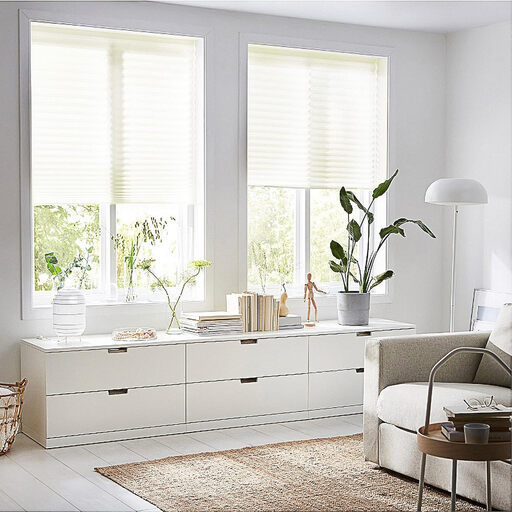
Why it suits this type of buyer: Measuring 90 × 120 cm, this beige, light-filtering blind is a good fit for small to medium-sized indoor windows where you want to combine daylight with privacy.
The product details specify the measurements and fitting method, and include guidance on the glass width. This makes it easier to check the size and clamp-fit installation before you buy.
Water-repellent, not waterproof, polyester fabric; adjustable height using the handle and pull cord; available in several colours and sizes.

Why it suits this type of buyer: This model has an easy-grip, cordless handle and is designed for window frames measuring 16–22 mm thick.
The required frame thickness and approximate fabric width are clearly stated, making it easier to check compatibility before fitting.
Cordless operation; polyester fabric with a coated backing, according to the product description; can be fitted with clamps or screws.

Why it suits this type of buyer: The honeycomb structure and adjustable clamp-fit frame make this a good option if you regularly use a light-reducing privacy blind in your living room, bedroom or home office.
The permitted frame thickness of 10–23 mm is clearly stated, along with a warning that the blind isn’t suitable for roof windows.
Honeycomb polyester fabric; operated using the top and bottom handles; no-drill clamp-fit installation and cleaning with a damp cloth.
We’ve put together a complete, regularly updated list of products that meet these strict selection criteria and the safety requirements in force in the EU.
How long it lasts depends on the frame material, brackets, fabric weight and how the blind is used. It’s a good idea to check clamp or adhesive fixings regularly. Heavy moisture, pulling on cords or repeatedly forcing the blind out of position can put strain on the fixings and fabric.
No. The door frame, handle position and available movement space must all suit the size of the product. Only models specifically designed for the height, width and fittings of balcony or patio doors are suitable. Several of the products mentioned aren’t suitable for roof windows, sloping windows or wooden frames.
A pleated blind is made from folded fabric and is often moved up or down using handles. A double roller blind has alternating transparent and opaque fabric stripes, which are usually adjusted using a side chain. If you want to adjust the amount of light in stages, check how the blind is operated and follow the safety instructions.