
Lieferung heute & morgen

Qualitätsgarantie

Willkommens-Angebote freischalten: KOSTENLOSE Lieferung | Bis zu 80 % RABATT | Kostenlose 30-Tage-JoyPlus-Testphase
App herunterladen
A no-drill pleated blind with clamp fixings can be a practical solution for privacy and sun protection in rented homes, offices or owner-occupied properties. Depending on the design, installation is carried out using clamp brackets, clamp-fix holders or adhesive pads attached to the window frame. This means that, in many cases, there is no need to drill holes in the wall or window frame.
To avoid incorrect measurements, loose fittings or an unsuitable light effect, shoppers should check several product details carefully before buying. Problems most often arise from three misunderstandings:
For several Dream-Seeker models, it is recommended that you choose a pleated blind approximately 4 cm wider than the glass. For example, if the pane measures 51 cm, a 55 cm-wide model may be suitable. The height should be based on the full window height, including the opening sash or frame area.
Other versions recommend adding 2 to 4 cm. You should therefore always check the specific product description. For balcony or patio doors, it is also important to make sure that the chosen installation method does not interfere with operation of the door handle.
The terms used in product names are not standardised. A no-drill pleated blind with light-filtering polyester fabric can diffuse daylight softly and reduce visibility from outside. However, a semi-transparent fabric will still allow light into the room.
For rooms where daylight is desirable, such as living rooms, kitchens or offices, a light-filtering pleated blind may be a sensible choice. In bedrooms, buyers should check more carefully whether the description refers to the fabric as “privacy”, “opaque” or “light-filtering”. These terms describe different properties and do not replace a standardised blackout guarantee.
The polyester pleated blinds in the available versions are moisture-resistant, but not waterproof. They may be suitable for bathroom windows, provided they are not exposed to direct contact with water. They are not designed for showers or areas that remain wet for long periods.
When using adhesive pads, the window frame must be clean, dry and as smooth as possible. Dust, grease, moisture or a rough surface can reduce adhesion. Models with adjustable clamp brackets may be designed for frames of a specific thickness. For some Dream-Seeker versions, the stated range is between 10 and 23 mm. A frame that is too thick or uneven can make installation more difficult.
The following selection groups specific models according to usage situation. The key factors are the dimensions, material, installation method and the light effect stated in each product description.
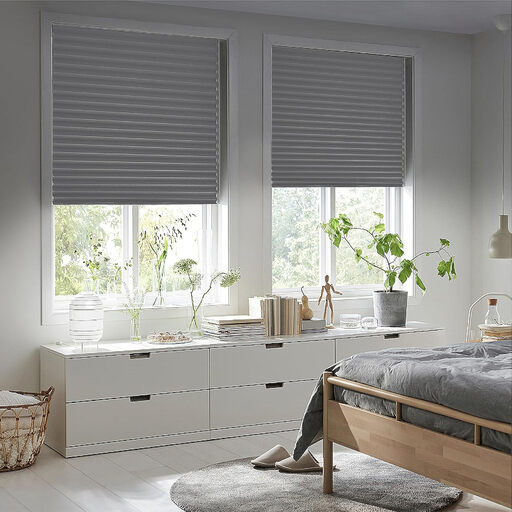
Why this product suits this profile: The compact size is suitable for smaller standard windows. The light grey, light-filtering polyester fabric offers a practical solution for living rooms, offices or kitchens.
The dimensions of 65 × 100 cm (W × H) are clearly stated. The product description also gives the width of the window glass plus approximately 4 cm as a guide.
Woven polyester, adjustable positioning using the handle and drill-free installation with a clamp-fix system.
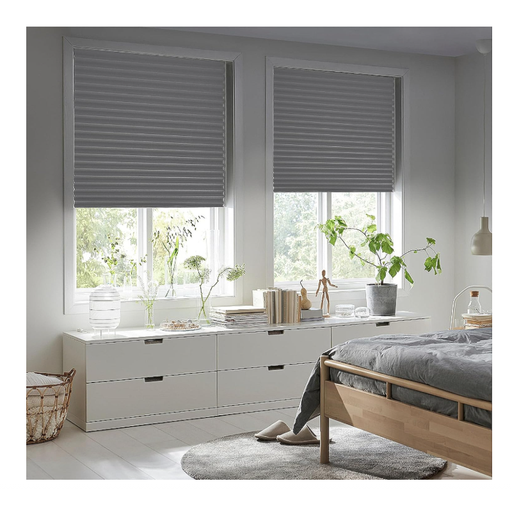
Why this product suits this profile: This version combines adjustable clamp brackets with a specified frame range of 10–23 mm. That makes it easier to choose the right option for window sashes of different thicknesses.
Rather than simply promising that it is “suitable for all windows”, the description states a measurable frame thickness. It also clearly describes the semi-transparent effect.
85 × 120 cm, polyester fabric, drill-free clamp installation and height adjustment using the cord.
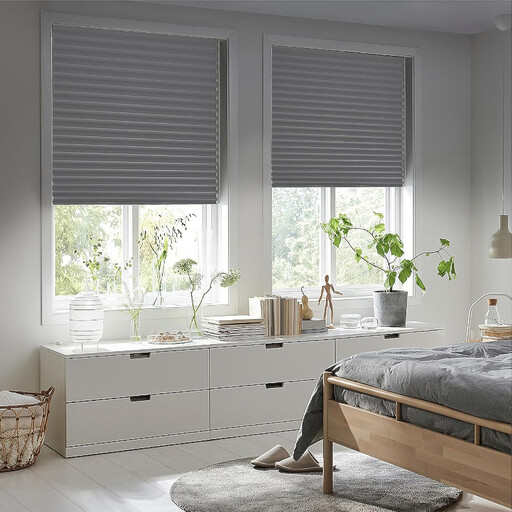
Why this product suits this profile: With a height of 200 cm, this no-drill pleated blind is worth considering for tall windows, balcony or patio doors indoors, provided the frame and mounting surface are suitable.
The description calls the fabric light-filtering and semi-transparent. This gives you a more realistic idea of the light effect than a blanket claim that it provides blackout.
75 × 200 cm, soft filtering of sunlight and installation without permanent drill holes.
We have put together a complete, regularly updated list of products that fully meet these strict selection criteria and the safety regulations applicable in the EU.
Not every version is suitable for sloping roof windows. Direct contact with water, very rough surfaces or excessive load can also limit usability. For products with cords, follow the safety instructions and keep the components out of children’s reach.
First, measure the glass width. Depending on the model, adding approximately 2 to 4 cm is recommended. The height is often based on the entire window frame. The specific measurement guidance in the product description takes priority.
Durability depends on the frame surface, installation method, weight and operation. Clamp brackets are attached to the window sash, while adhesive pads require a clean, dry and smooth surface. The holders should be checked regularly to ensure they remain firmly attached.
Not necessarily. A light-filtering or semi-transparent pleated blind diffuses daylight and can reduce visibility from outside. The level of privacy may be different when there is direct outdoor lighting or the room lights are switched on. If you need a higher level of privacy, look specifically for the term “privacy” and check the full product description.