
Lieferung heute & morgen

Qualitätsgarantie

Willkommens-Angebote freischalten: KOSTENLOSE Lieferung | Bis zu 80 % RABATT | Kostenlose 30-Tage-JoyPlus-Testphase
App herunterladen
The search for the right privacy or sun protection for rental apartments, or for windows where the frames must remain undamaged, quickly leads to no-drill pleated blinds. Installation without tools or permanent damage is a key advantage. However, the market is flooded with products of widely varying quality. Many buyers are disappointed shortly after purchase because the product fails to live up to its promises.
As a Joybuy Product Recommendation Officer, I analyse product information daily to help you distinguish functional, long-lasting solutions from short-lived marketing claims. Before you make a decision, you should be aware of the three most common pitfalls that can lead to a bad buy.
To avoid these issues, you should check three core aspects. These will define the functionality and longevity of your new window treatment.
The most common method is the clamp-fit pleated blind. This involves clamping adjustable brackets directly onto the window sash.
The fabric determines how well your interior window blind performs its job. There are three main functional types:
A no-drill dual roller blind (also known as a day and night blind) combines transparent and opaque fabric panels, allowing for seamless control over light levels.
The right size is fundamental. An incorrect measurement will inevitably lead to the light gaps mentioned earlier.
Based on these objective criteria, we have identified several products that offer well-designed solutions for specific use cases.
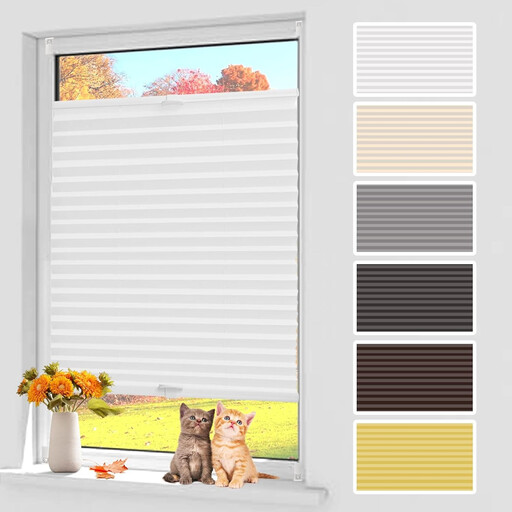
Why it's a good fit: Ideal for renters who need a straightforward and cost-effective solution for basic privacy in living rooms or the kitchen. The simple design and easy adhesive mounting make it a practical choice for standard windows.
This model relies on simple adhesive mounting. With careful preparation of the frame, this provides a reliable hold without the risk of unstable or ill-fitting clamp brackets.
Tool-free installation and a light-filtering privacy screen at a very accessible price point. The fabric provides privacy without darkening the room.
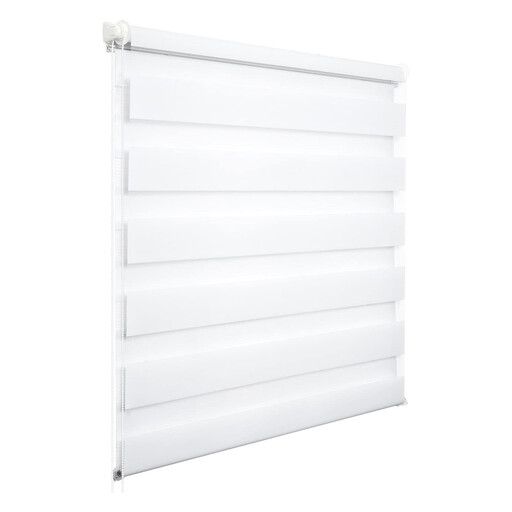
Why it's a good fit: Perfect for the home office, as it allows for flexible light control. You can reduce screen glare without completely darkening the room, thus maintaining a pleasant work environment.
This dual roller blind solves the "all-or-nothing" problem of many blinds. Instead of just choosing between light and dark, it offers nuanced and precise light control via its two fabric layers.
Seamlessly adjust the light from transparent to opaque. It can be installed with or without drilling, offering maximum flexibility.

Why it's a good fit: The combination of a high degree of blackout, thermal insulation, and a cordless design makes it a safe and functional choice for bedrooms and children's rooms where darkness and safety are priorities.
This blind delivers on its "blackout" promise with a special silver coating that, according to the manufacturer, ensures 100% light blockage. The cordless design eliminates the hazard of loose cords.
High level of blackout, added thermal insulation, and a child-safe design thanks to the absence of a pull cord. It is operated directly via the bottom rail.
We have compiled a complete, up-to-date list of products that fully meet these strict selection criteria and safety regulations.
How reliable is mounting with clamp brackets? When installed correctly, clamp mounting is very reliable. It is crucial that the frame thickness of your window matches the clamp bracket specifications (usually between 10 and 25 mm) and that the brackets are tightened securely. For very heavy blinds or particularly smooth plastic frames, the included adhesive pads can provide extra grip.
What is the difference between a no-drill pleated blind and a roller blind? A pleated blind consists of a fabric folded like an accordion. It is often tensioned and can be moved from both the top down and the bottom up, allowing for very flexible privacy positioning. A roller blind, on the other hand, consists of a smooth panel of fabric that is wound onto a tube and is typically operated only from the bottom up.
Can I use a no-drill blackout blind for a skylight? Usually not. Most clamp-fit systems are designed for standard vertical, rectangular windows. On sloped skylights, the fabric would sag. Skylights require special blind solutions with side guide rails or a fixed tension system, which usually need to be screwed into the window frame.