
Lieferung heute & morgen

Qualitätsgarantie

Willkommens-Angebote freischalten: KOSTENLOSE Lieferung | Bis zu 80 % RABATT | Kostenlose 30-Tage-JoyPlus-Testphase
App herunterladen
As a Joybuy Product Recommendation Officer, I see the vast number of options available for simple privacy and sun protection every day. No-drill pleated blinds are especially popular with renters and homeowners looking for a quick, damage-free solution. However, the market is flooded with products of widely varying quality. Before you make a decision, you should be aware of the typical pitfalls that often only become apparent after the purchase.
This guide will show you what to look for to find a functional and durable solution, instead of wasting money on a product that becomes useless after a short time.
Many products look identical at first glance, but the differences are in the details. These three problems are the most common sources of dissatisfaction:
To avoid the problems mentioned above, you should check three core aspects before buying. These determine whether a clip-on pleated blind is suitable for your windows and will perform its function long-term.
The type of attachment is the most important criterion for a secure hold. The most common systems are:
The fabric's description indicates the level of privacy and sun protection for the window.
Most pleated blinds are made of polyester, a low-maintenance and dimensionally stable material. Look for notes like "suitable for damp rooms" if you plan to use the blind in the bathroom or kitchen.
A perfectly fitting window blind is crucial. Stick to this simple formula recommended by many manufacturers:
Always check the specific measuring instructions of the respective manufacturer before ordering, as there can be slight variations.
Here are some models that represent a considered choice for specific user profiles, based on their objective features.
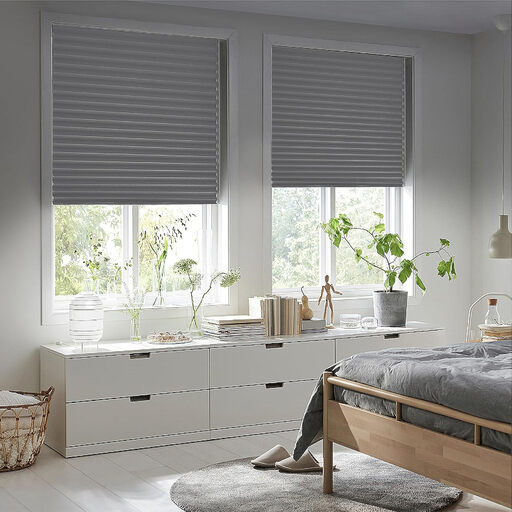
Why This Fits Their Persona: Ideal for standard rental apartments where a straightforward, affordable, and residue-free removable solution for privacy is needed. The common size and neutral colour fit into almost any room.
The included clamp-fit system is designed for common window frame thicknesses, which reduces the risk of a wobbly installation (Trap 1). The manufacturer's clear measuring guide (glass width + 4 cm) helps to avoid light gaps (Trap 2).
Tool-free installation; translucent fabric for bright rooms; moisture-resistant polyester material.
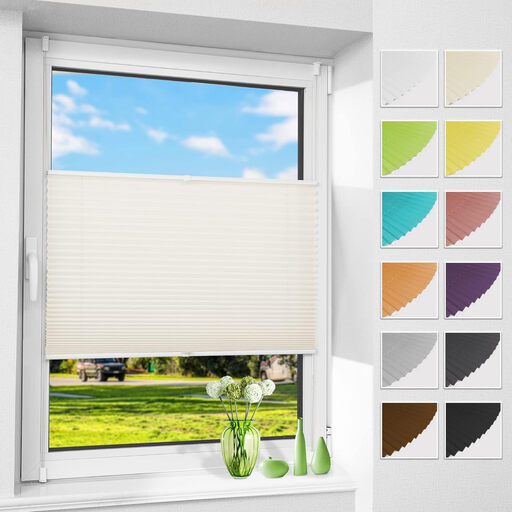
Why This Fits Their Persona: For users who value stable mechanics and a high-quality appearance. Suitable for frequently used rooms like living rooms or offices, where the blind needs to sit firmly even on a tilted window.
According to the manufacturer, this model features patented, adjustable brackets for frame thicknesses of 10-23 mm, promising a tighter and more versatile fit than simple clamps (Trap 1). The combination of polyester fabric and an aluminium rod suggests higher dimensional stability (Trap 3).
Tensioned system prevents swaying on tilted windows; suitable for damp rooms like bathrooms and kitchens; infinitely adjustable via top and bottom rails.
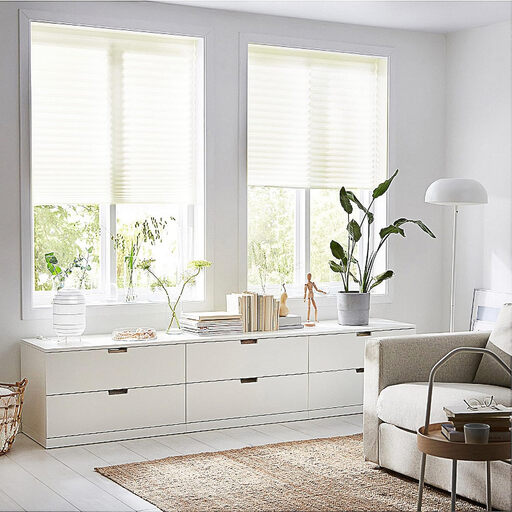
Why This Fits Their Persona: A practical solution for floor-to-ceiling windows or standard balcony doors where a normal-height pleated blind is not long enough. Provides privacy and sun protection for large glass surfaces without drilling.
With a height of 200 cm, this model offers a suitable size for doors, solving the problem of improper dimensions (Trap 2). The included adhesive brackets provide an alternative mounting option if clamping on the door frame doesn't work optimally (Trap 1).
Suitable dimensions for most balcony and patio doors; flexible installation via clamping or adhesive; opaque fabric for good privacy.
We have compiled a complete, up-to-date list of products that fully meet these strict selection criteria and UK regulations.
For frequently tilted windows, so-called "tensioned" pleated blinds are the right choice. These are attached with four brackets to the top and bottom of the window sash. The tension cords ensure that the blind follows the tilting motion and stays close to the window without swaying. Most of the clamp-fit models presented here are tensioned.
Shortening a pleated blind is only intended for a very few models and requires DIY skills. For example, the manufacturer WOLTU states for some products that shortening the width is possible. However, for most pleated blinds, this is not recommended, as an improper cut can cause the fabric to fray and damage the internal mechanism. Always check the product description for an explicit note on whether it can be shortened. When in doubt, choosing the correct width from the start is the safer method.
Most pleated blind fabrics made of polyester are easy to care for. A feather duster or vacuuming with an upholstery nozzle on the lowest setting is usually sufficient for regular cleaning. Light stains can often be gently dabbed with a slightly damp cloth (without cleaning agents). Avoid vigorous rubbing to prevent damage to the fabric's structure. Always follow the specific care instructions from the manufacturer.