
Lieferung heute & morgen

Qualitätsgarantie

Willkommens-Angebote freischalten: KOSTENLOSE Lieferung | Bis zu 80 % RABATT | Kostenlose 30-Tage-JoyPlus-Testphase
App herunterladen
A no-drill pleated blind with clamp brackets can be a practical solution for rented homes, offices or rooms that are used in different ways. Fitting it generally leaves window frames and walls free from drill holes. However, not every no-drill blind is suitable for every window. Incorrect measurements, unsuitable brackets or expecting more blackout than the blind can provide often lead to disappointing purchases.
For many products, the stated width includes the brackets as well as the blind itself. This means the usable fabric width may be smaller. To ensure adequate coverage, you should measure the glass width, rather than just the visible area of the fabric.
For several clamp-fit models, a pleated blind around 4 cm wider than the glass is suggested as a guide. This is not a rule that applies to every window, though. You should also check the window fittings, handles, seals and the type of bracket.
A blackout pleated blind can significantly reduce the amount of light coming in. However, with a free-hanging blind, light may still get through the gaps between the fabric and the sides of the frame. Light-filtering or opaque fabrics also let varying amounts of daylight through.
If you want to keep your bedroom as dark as possible, check the specific product description, fabric construction and fitting clearances. A light-filtering pleated blind is more suitable for living rooms, kitchens or workspaces where you want to balance privacy with natural light.
A pleated blind with clamp brackets attaches to the window sash and is only suitable if the frame thickness and window construction are compatible with the brackets. Adhesive brackets need a clean, smooth and stable surface. They may not stick as well to rough, uneven or very dirty frames.
Before you buy, check whether the blind you want comes with clamp brackets, adhesive brackets or both fitting options.
For a rectangular window, measure:
Common sizes in the selection include pleated blind 60x100 cm, pleated blind 90x120 cm and pleated blind 90x200 cm. In this article, sizes are shown as width × height. Some product pages may display measurements differently, so always check the technical specifications on the relevant product page before you buy.
A height of 200 cm is often important for balcony and patio doors. A clamp-fit pleated blind for windows and doors should be secured firmly enough and must not get in the way of the door handle.
For bathrooms and kitchens, check the information on moisture resistance. Polyester can be easy to care for and moisture-resistant, but it is not automatically waterproof. Avoid direct or prolonged contact with water unless the manufacturer says otherwise.
Clean the frame and allow it to dry completely before fitting the blind. Clamp brackets should sit evenly; adhesive brackets need to be pressed into place for long enough, as directed in the fitting instructions. Once fitted, check that the blind hangs level and moves without needing excessive force.
If the product has cords or chains, follow the safety instructions. Keep cords and chains out of children’s reach. Only rely on information about applicable safety requirements, such as a manufacturer’s declaration under relevant EU product requirements or standard EN 13120, if it is explicitly documented for the product in question.
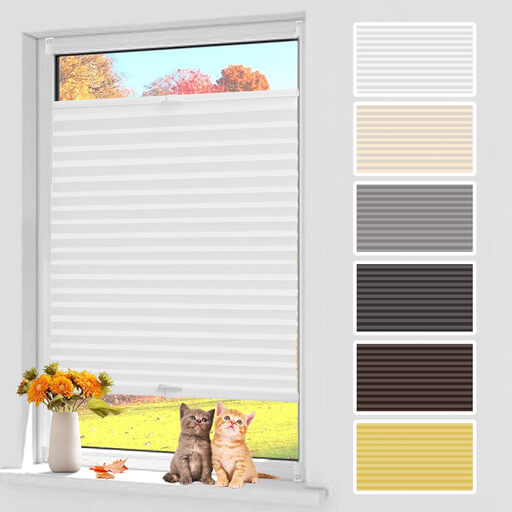
Why it suits this profile: Its compact size is ideal for smaller interior windows, studies or individual kitchen windows. It can be fitted without drilling, using clamp-fit or adhesive brackets.
The stated width of 60 cm makes it easier to check the measurements. The product description refers to light control and privacy without promising complete blackout.
Polyester fabric, adjustable height and a weight of 370 g according to the product details.

Why it suits this profile: Its honeycomb structure and metal frame will appeal to buyers who pay close attention to construction, material details and frame compatibility.
The compatible frame thickness is stated as 10–23 mm. This makes it easier to check before buying whether the clamp brackets will fit your window.
Polyester fabric, top and bottom operating handles, and clamp-fit installation without drilling.

Why it suits this profile: This roller blind is designed for bedrooms, living rooms, offices and bathrooms, and offers two fitting options: clamp-fit installation without drilling or fixed installation with screws.
The compatible frame thickness of 16–22 mm is clearly stated. This makes it easy to check whether the clamp fitting will work with your window before you buy.
Cordless operation using the handle, polyester at 200 g/m² according to the product details, and a surface that can be wiped clean with a damp cloth.
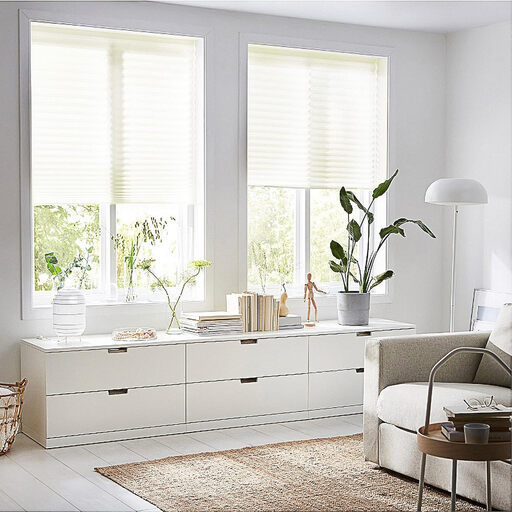
Why it suits this profile: The beige polyester fabric is a good fit for living rooms, workspaces or kitchens where you want to combine soft daylight with privacy.
The product description calls the fabric light-filtering, rather than completely opaque. This makes it easier to understand what to expect from it.
Clamp-fit installation, adjustable height and a choice of other colours, including white, light grey and anthracite.
We’ve put together a complete, regularly updated list of products that meet these strict selection criteria and fully comply with the safety requirements in force in the EU.
Depending on the model, it either attaches to the window sash using adjustable clamp brackets or is fitted to the cleaned frame with adhesive brackets. Check the frame thickness, surface and window handle first. Once fitted, make sure all the fixing points are secure.
Its lifespan depends on the fabric, brackets, how often it is operated, exposure to sunlight and how it is cleaned. Operating it gently and regularly, and using a soft cloth, can help protect the fabric and mechanism. Without specific information from the manufacturer, it is not possible to give a reliable general estimate of its lifespan.
Usually, there are no ongoing costs for electricity or batteries after purchase, as clamp-fit pleated blinds are operated manually. Potential extra costs could include replacement brackets, returning the blind if it is the wrong size or buying a replacement later. Measuring carefully helps reduce this risk.