
Lieferung heute & morgen

Qualitätsgarantie

Willkommens-Angebote freischalten: KOSTENLOSE Lieferung | Bis zu 80 % RABATT | Kostenlose 30-Tage-JoyPlus-Testphase
App herunterladen
A no-drill pleated blind with clamp fitting can quickly provide privacy and sun protection for windows and doors in rented homes, offices or owner-occupied properties. Depending on the design, installation is carried out using clamp brackets, adhesive holders or a combination of both. This means there is no need to drill holes in the wall or window frame.
Even so, not every no-drill pleated blind is suitable for every window. Common unsuitable purchases result from inaccurate measurements, an inappropriate installation method or incorrect expectations about light transmission.
With many clamp-fit pleated blinds, the width should not be selected to match the exact glass width. The product specifications for several models recommend adding around 4 cm to the width of the window pane. The height, on the other hand, is often based on the full window height, including the opening section or frame.
If you measure only the glass area, you risk leaving gaps at the sides. However, if the pleated blind is ordered wider than the available window opening, it may obstruct the handle, seal or wall when the window is opened.
A light-filtering pleated blind filters daylight and reduces visibility from outside. A blackout pleated blind with a light-blocking fabric keeps out considerably more brightness. How dark the room actually becomes also depends on side gaps, the installation position and the size of the window.
Product descriptions such as “opaque”, “blackout” or “light-filtering” should therefore be checked against the specific description and images. A light-blocking fabric is an obvious choice for bedrooms and children’s rooms, while a pleated blind with gentle light filtering may be more pleasant in a home office.
Clamp brackets require a suitable frame and a specific frame area. According to the product specifications, the Allesin model is designed for frame thicknesses of 10 to 23 mm. Adhesive holders will also only adhere reliably to clean, dry and sufficiently smooth surfaces.
Not every clamp-fit pleated blind is suitable for roof windows, wooden windows, sliding windows or sloping windows. Before buying, you should therefore check whether you have a rectangular casement or tilt window, a balcony or patio door, or another type of window.
A clamp-fit pleated blind is attached to the opening section of the window. With a suitable design, the window can still be tilted without the blind swinging excessively. This is particularly practical in rented homes, as no permanent drilling is required.
Adhesive installation is suitable for smooth, grease-free frame surfaces. Before fitting, the surface should be cleaned and allowed to dry completely in accordance with the manufacturer’s instructions. Adhesion may be limited on rough, dusty or damp surfaces.
A simple approach:
The range includes sizes from around 60 × 100 cm to 100 × 200 cm, as well as other options. Unless the product page states otherwise, dimensions should always be read as width × height.
Light-coloured, light-filtering fabrics are often suitable for living and dining rooms. A beige, white, grey or anthracite pleated blind can be coordinated with the room’s décor. Light colours generally make a room feel more open, while darker shades stand out more strongly as a design feature.
For computer workstations, the fabric should reduce glare without unnecessarily darkening the room. In bathrooms and kitchens, moisture resistance is important. Moisture-resistant does not mean waterproof; direct and prolonged contact with water should be avoided.
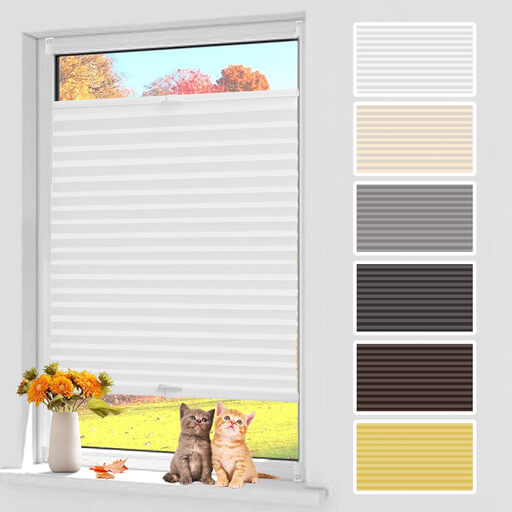
Why this product suits this profile: The compact size is suitable for smaller standard windows. According to the product specifications, it can be installed without tools using a clamp-fit system and is intended for interior windows and doors.
The stated size makes it easier to match the blind to smaller windows. Even so, the glass and frame measurements should be checked before buying.
60 × 100 cm, polyester, tool-free clamp installation and an adjustable position for controlling light and privacy.
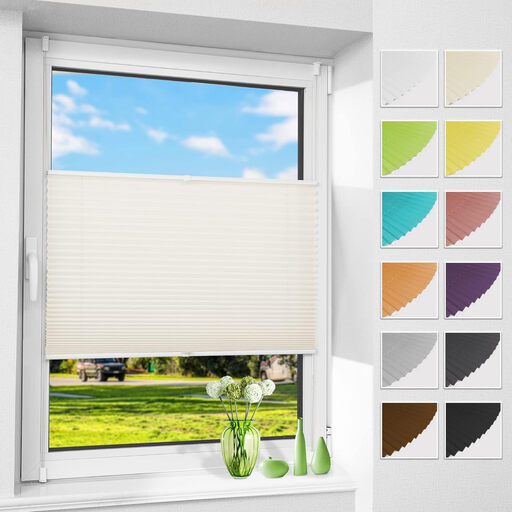
Why this product suits this profile: For buyers who prioritise frame compatibility and clearly explained operation, this model specifies an adjustable range of 10 to 23 mm, along with aluminium rods and polyester fabric.
The specified frame thickness helps you rule out unsuitable windows before ordering. According to the specifications, the model is not intended for wooden, sliding or roof windows.
90 × 100 cm, moisture-wipeable polyester fabric, clamp holders and adjustable handles on the top and bottom rails.
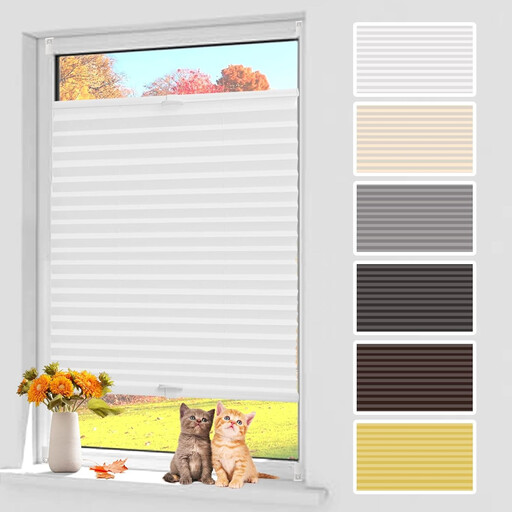
Why this product suits this profile: The 200 cm height is worth considering for larger windows, balcony doors or patio doors. The white finish suits a range of interior styles and is intended for indoor use.
The product description states that it is suitable for windows and doors, but identifies rough or uneven surfaces as unsuitable. This should be checked before installation.
90 × 200 cm, light-blocking polyester fabric, no-drill clamp installation and height-adjustable positioning.
We have put together a complete, regularly updated list of products that fully meet these strict selection criteria and the safety regulations applicable in the EU.
Before installation, the window frame should be free from dust and grease. Clamp holders should be positioned evenly at the top and bottom of the opening section. With adhesive holders, follow the curing or waiting time specified in the product instructions.
After inserting the pleated blind, check that:
For the polyester fabrics mentioned above, a soft, slightly damp cloth is generally sufficient for care. Harsh cleaning products, abrasive sponges and excessive pulling can damage the fabric or holders.
A clamp-fit pleated blind may be suitable for casement and tilt windows if the frame shape, frame thickness and holders are compatible. The specifications for the individual model are decisive. When the window is tilted, check that the pleated blind is sufficiently guided and does not swing against the frame.
Its service life depends on the quality of the fabric, installation, exposure to sunlight and operation. It is advisable to check the clamp or adhesive holders regularly. If a holder becomes loose, it should be reattached or replaced according to the instructions. The pleated blind should not be moved by force or pulled beyond its intended position.
According to the product specifications, moisture-resistant polyester fabrics can be used in bathrooms. However, they are not waterproof. Direct contact with water, persistent dampness and installation in the shower area should be avoided. Good ventilation and a smooth, dry installation surface are also important in a bathroom.