
Lieferung heute & morgen

Qualitätsgarantie

Willkommens-Angebote freischalten: KOSTENLOSE Lieferung | Bis zu 80 % RABATT | Kostenlose 30-Tage-JoyPlus-Testphase
App herunterladen
A no-drill pleated blind with clip fittings can be a practical alternative to permanently screwed-in window coverings for rented homes, flats and offices. Depending on the design, it can be fitted using clip brackets, adhesive brackets or a combination of both. This means your walls and window frames can generally remain free of drill holes.
It’s still worth checking the measurements, frame requirements and fabric properties carefully. Terms such as ‘blackout’, ‘light-filtering’ and ‘no-drill’ aren’t used in the same way by every product.
A common mistake is to order based only on the visible width of the glass. However, many clip-fit pleated blinds are recommended at a slightly greater overall width so the fabric adequately covers the glass. The product details for the Dream-seeker models featured here recommend a width of around 4 cm more than the glass width.
For example, if the glass pane is 61 cm wide, a 65x120 cm pleated blind may be a suitable option. You should also check that the fabric or bracket won’t get in the way of the window handle.
A white pleated blind with opaque fabric can help provide privacy and protection from the sun. However, light may still come through at the sides, along the top or between the fabric and window frame. A light-filtering pleated blind filters daylight and helps prevent people seeing in, but it isn’t designed to create the darkest possible sleeping environment.
For a bedroom, it’s therefore worth distinguishing between blackout pleated blinds and light-filtering designs. If you want to reduce brightness during the day without making the room completely dark, you could choose a semi-transparent model.
A pleated blind with clip brackets needs enough space on the frame. The permitted frame thickness varies by product. For example, the Dream-seeker model with adjustable clip brackets is specified for frames between 10 and 23 mm thick. According to its product description, WOLTU clip brackets are designed for frames between 13 and 23 mm thick.
Wooden frames, roof windows, sloping surfaces and rough surfaces may also be unsuitable. Before buying, check the frame material and thickness, the direction the window opens and the position of the handle.
First measure the visible width of the glass, then measure the height of the entire window sash, including the frame. For many products:
The measurements 65x100 cm, 65x120 cm, 65x130 cm and 65x200 cm refer to width × height. You don’t necessarily need a made-to-measure blind if a suitable standard size is available. If your windows are an unusual size, you can also look for a made-to-measure pleated blind.
There are three common options for no-drill fitting:
Before fitting, make sure the surface is clean, dry and free from grease. Adhesive brackets generally stick better to smooth frames than to rough, textured or dirty surfaces. Once fitted, check that all brackets are secure before moving the blind.
Polyester is the main material used in the products listed here. You can clean it with a slightly damp cloth, but it shouldn’t be exposed to water or harsh cleaning products for prolonged periods. ‘Moisture-resistant’ doesn’t mean waterproof.
Light-filtering fabrics are a good choice for privacy at the window if you want to keep daylight in the room. Opaque or ‘blackout’ designs may be more suitable for bedrooms and media rooms. How dark the room gets also depends on the window size, the distance between the blind and the frame, and any gaps that let light in at the sides.
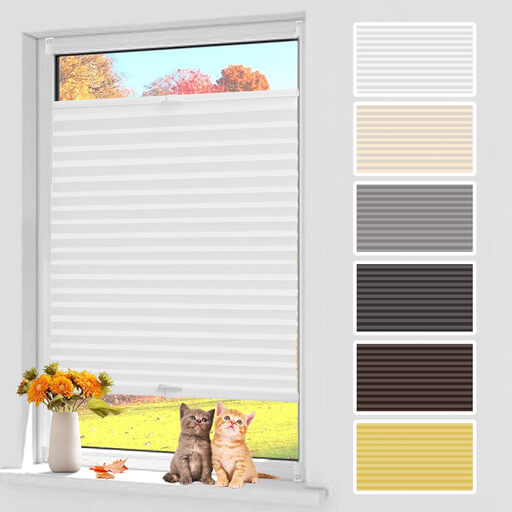
Why it suits this buyer: Its compact size and tool-free clip-fit installation make it a good choice for smaller standard windows in rented homes, kitchens or studies.
The dimensions and intended clip-fit fixing are clearly stated. You’ll still need to check that your frame is the right thickness before buying.
Polyester fabric, 60 × 100 cm, inside mount with no drilling and an adjustable height.

Why it suits this buyer: Its double-layered design lets you adjust the light in stages, moving between more transparent and more opaque sections of fabric.
You can adjust the light without being limited to a single fabric setting. The chain can be fitted on the left or right; note that the frame must be 13 to 23 mm thick.
100% polyester according to the product details, clip or screw fitting, and adjustable light transmission.
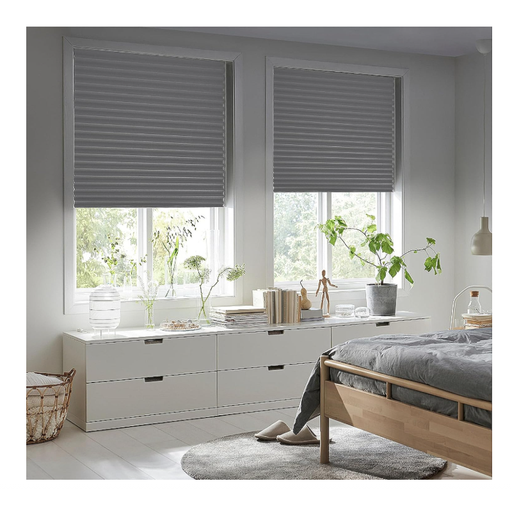
Why it suits this buyer: Its greater width is designed for wider windows or doors when you need light-filtering privacy and protection from the sun.
The product details state the permitted frame thickness of 10 to 23 mm and explain that the blind isn’t designed to block out all light.
85 × 120 cm, light grey polyester fabric, adjustable clip brackets and reduced glare according to the product description.

Why it suits this buyer: This design may appeal if you prefer opaque fabric and no-drill fitting for a window or door.
The product description specifies the size, polyester fabric and adhesive brackets. For a secure fit, the frame must be smooth, clean and dry.
65 × 120 cm, white finish, opaque fabric according to the product description, and easy cleaning with a damp cloth.
We’ve put together a complete, regularly updated list of products that meet these strict selection criteria and fully comply with the safety regulations in force in the EU.
Clip-fit models hook or clamp onto the window frame. For adhesive versions, the brackets are stuck onto the cleaned frame. The permitted fitting method depends on the product and the thickness of the frame.
Its lifespan depends on its weight, how often it’s used, the temperature and humidity, and how securely the brackets are attached. It’s a good idea to check the fittings regularly. If the adhesive starts to lose its grip, replace the brackets before using the blind again.
There are no electricity costs during normal use. Possible follow-up costs include replacement brackets, replacing damaged fabric or fitting a new fixing. Choosing the right size and operating the blind gently can help you avoid unnecessary replacement purchases.