
Lieferung heute & morgen

Qualitätsgarantie

Willkommens-Angebote freischalten: KOSTENLOSE Lieferung | Bis zu 80 % RABATT | Kostenlose 30-Tage-JoyPlus-Testphase
App herunterladen
A no-drill pleated blind with clip-on brackets can provide privacy and sun protection for windows and doors in rented homes, offices or bedrooms without leaving holes in the frame. At first glance, choosing one seems straightforward: pick the size, colour and fitting method, and you’re done. In practice, however, inaccurate measurements, misunderstood fabric descriptions or unsuitable window frames can often lead to the wrong purchase.
This buying guide explains which details really matter before you buy a no-drill pleated blind, and which options suit different homes.
Product dimensions are usually given as width × height. The key question is whether the width needs to fit the window glass, the opening sash or the entire frame. For several clip-on models, it’s recommended that you choose a blind that is about 4 cm wider than the glass. For example, if the glass is 51 cm wide, a 55 cm blind may be a good fit.
Before placing your order, also check whether window handles, seals or protruding parts could obstruct the blind.
Terms such as opaque pleated blind, “blackout” and “light-filtering” aren’t always used consistently by retailers. An opaque fabric reduces visibility from outside, but may still let daylight through. A model described as a blackout blind may also let light in at the sides if it isn’t fully fitted into a guide.
So, for bedrooms, check the specific fabric description:
A pleated blind with clip-on brackets attaches to the window sash. The frame must be compatible with the bracket design. For example, one Allesin model is listed as suitable for frame thicknesses of 10 to 23 mm. Depending on the system, wooden windows, sliding windows, roof windows and uneven surfaces may not be suitable.
Adhesive brackets also need a clean, dry and preferably smooth surface. Dust, grease or moisture can affect how well they stick. No-drill fitting is convenient in rented homes, but you should still check regularly that the fixings remain secure.
Measure the relevant area at several points and note down the width and height in centimetres. Recommendations for clip-on pleated blinds vary by model:
The range includes various sizes, from narrower options such as 60 × 100 cm to taller models measuring 90 × 200 cm or 100 × 130 cm.
A no-drill pleated blind with clip-on brackets usually uses clip-on brackets, adhesive brackets or a combination of the two. Clip-on brackets attach to the frame and can usually be removed, provided the frame shape is suitable. Adhesive brackets stick directly to the cleaned surface and are only suitable for smooth, sturdy surfaces.
Before buying, check:
Polyester is used in many models. A polyester pleated blind can usually be cleaned with a soft or slightly damp cloth. However, suitability for humid rooms doesn’t automatically mean the fabric is waterproof. Check the product description when choosing a blind for a bathroom or kitchen.
A light-filtering pleated blind is a good choice for living rooms and home offices if you want to keep the room bright. A fabric that blocks more light may be more suitable for bedrooms or rooms with direct sunlight. Colours such as white, beige, light grey, anthracite and brown can affect the look and feel of a room, but they don’t replace technical details about light transmission.
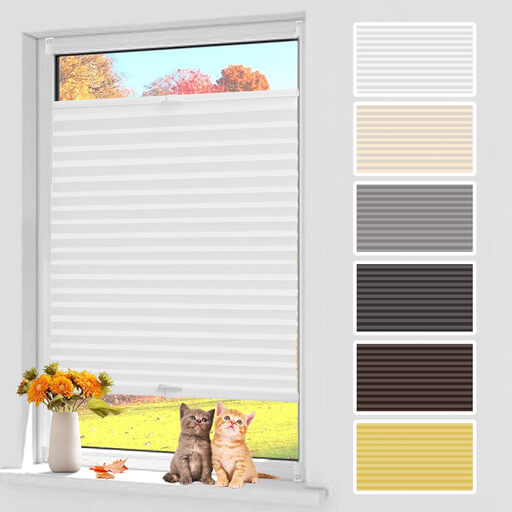
Why it suits this shopper: Its compact size and tool-free clip-on fitting make it a straightforward choice for smaller standard windows and first-time buyers.
The dimensions are clearly stated as 60 × 100 cm. The description specifies polyester, light control and the need to check the frame area before fitting.
Polyester fabric, white finish, 60 × 100 cm size and no-drill fitting with a clip-on system.

Why it suits this shopper: Its honeycomb structure, metal frame and clip-on brackets for frame thicknesses of 10 to 23 mm will appeal to buyers who compare technical details before ordering.
The product details specify compatible frame thicknesses and highlight restrictions for roof windows and protruding handles.
50 × 130 cm, 100% polyester, metal frame, top and bottom handles, and no-drill clip-on fitting.
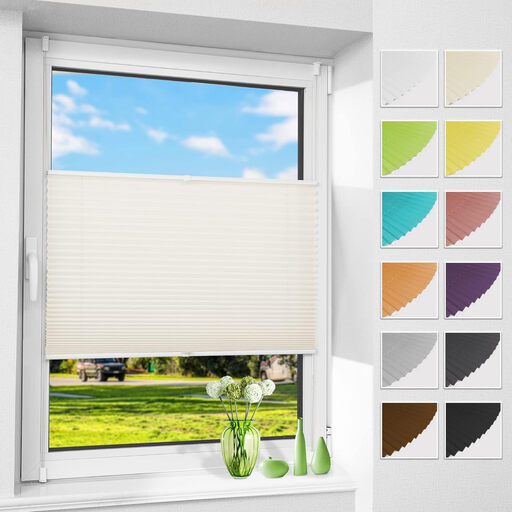
Why it suits this shopper: Its suitability for humid rooms, kitchens and bathrooms makes it an appealing option for households looking for an easy-to-clean way to maintain privacy.
The product details clearly state its limitations: it isn’t suitable for roof windows, wooden windows or sliding windows, and is intended only for normal use in humid rooms.
100% polyester, aluminium bar, adjustable brackets for frame thicknesses of 10–23 mm, and cleaning with a damp cloth.
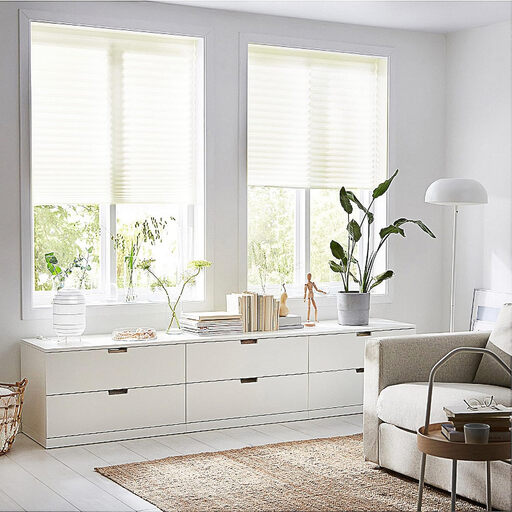
Why it suits this shopper: At 200 cm high, it covers larger window and door areas, while beige offers a subtle colour choice for living spaces.
The product description distinguishes between opaque fabric and a completely dark room: diffused light may still filter through.
75 × 200 cm, beige, polyester, four adhesive brackets and height-adjustable operation for windows and doors.
We’ve put together a complete, regularly updated list of products that meet these strict selection criteria and fully comply with the safety regulations in force in the EU.
Its lifespan depends on the fabric, how it’s operated, exposure to sunlight and the stability of the fixings. Operating it gently and regularly, and fitting it correctly, can help reduce wear. Check adhesive fixings regularly, particularly in warm or humid conditions.
Many models are described as suitable for both windows and doors. Before buying, however, check the door handle, frame thickness, door movement and the maximum height stated. A 200 cm-high model may be more suitable for a patio door than one measuring 100 or 120 cm high.
Not every product described as blackout or room-darkening will make a room completely dark. The fabric may block a large proportion of the light, but side gaps and the specific weave also affect the result. If you want to darken a bedroom more effectively, consider the fabric description, dimensions and edge coverage together.