
Lieferung heute & morgen

Qualitätsgarantie

Willkommens-Angebote freischalten: KOSTENLOSE Lieferung | Bis zu 80 % RABATT | Kostenlose 30-Tage-JoyPlus-Testphase
App herunterladen
No-drill pleated blinds with clip-on brackets are ideal for rented homes, offices and households where you don’t want to make permanent changes to window frames or walls. Depending on the model, they’re fitted using clip-on brackets, adhesive fixings or suction cups. Before you buy, though, it’s worth checking a few details. Otherwise, your blind may look just right but prove difficult to secure safely or let in more or less light than you expected.
Measurements are usually given as width × height. The key is to check whether the width refers to the glass pane, the window sash or the entire frame. Some pleated blinds come with a recommendation to add around 4 cm to the glass width. Other models are sized to fit the frame width.
So, measure:
A pleated blind must not obstruct the window handle. Made-to-measure pleated blinds also have individual manufacturing and measurement requirements; the products listed here are mostly available in fixed sizes.
A light-filtering pleated blind softens daylight and reduces visibility from outside, while still letting light into the room. This can work well in living rooms, kitchens and home offices, for example. An opaque fabric can give you privacy without making the room completely dark.
If you want to keep as much light out as possible in a bedroom, look for a blackout or fully opaque fabric. Terms such as “sun protection”, “glare control” or “UV protection” don’t necessarily mean the blind will block out all light. The specific fabric and product description are more useful than individual marketing terms.
A pleated blind with clip-on brackets attaches directly to the window sash, so the frame needs to have enough space for the fittings. For example, the WOLTU model recommends a rebate depth of 1.5 to 2.3 cm. According to the product details, the Allesin pleated blind is suitable for frame depths of 10 to 23 mm.
Not every model is suitable for roof windows, sloping windows, wooden frames or sliding windows. Before ordering, check that the fitting method is compatible with your type of window. Suction cups may be an alternative for smooth glass or tiled surfaces, but they’re generally less suitable for textured or uneven surfaces.
Many of the models we’ve selected are made from polyester. It’s lightweight and can be cleaned with a soft, slightly damp cloth. However, moisture-resistant doesn’t mean waterproof. In bathrooms and kitchens, avoid exposing the blind to splashes of water for long periods.
Also look for:
Models with a handle bar can be moved up or down, giving you more precise control over the light than a basic roller blind. A no-drill pleated roller blind with a chain mechanism also lets you adjust the light flexibly, but needs more space at the side. Take extra care in households with children.
For doors, balcony windows and patio doors, it’s important to choose a model that’s long enough. For example, a pleated window blind with a height of 200 cm may suit tall French doors, while a 100 or 120 cm model is more likely to be intended for standard windows.
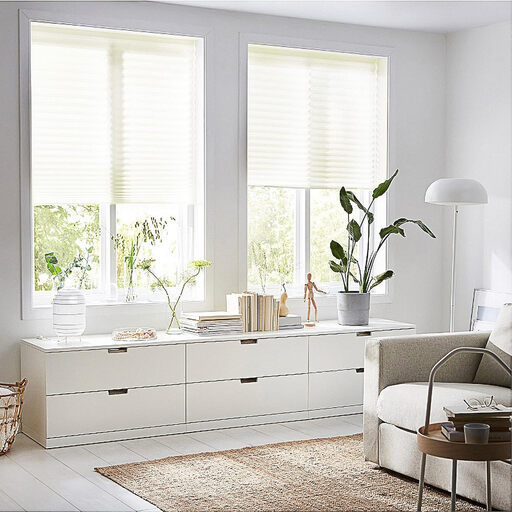
Why this product suits this profile: Its fixed size and clip-on fitting make it a good option for standard windows, rented homes and rooms where you want a simple way to add privacy and sun protection.
The product details specify the dimensions and clip-on fitting, and note that this model isn’t designed for sloping roof windows.
Polyester fabric, adjustable positioning using the handle, easy cleaning with a damp cloth and no-drill fitting.
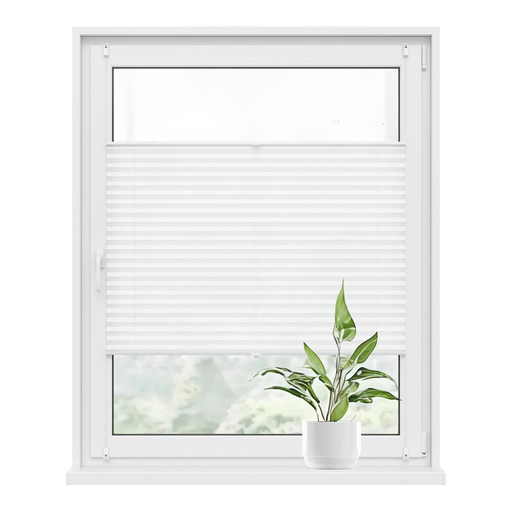
Why this product suits this profile: This model has polyester fabric, an aluminium profile and stated frame compatibility. It’s designed for windows and doors in living rooms, kitchens, offices and bedrooms.
The product details distinguish between light-dimming and full blackout. They also clearly state the frame depth, width range and whether the blind can be shortened.
100% polyester, 20 mm pleat width, aluminium profile, four clip-on brackets and widths from 45 to 120 cm.
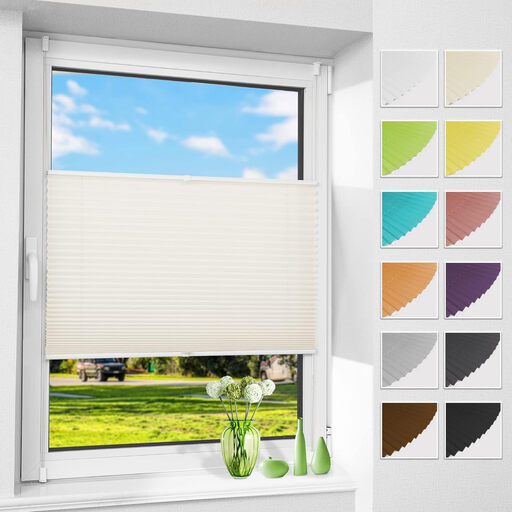
Why this product suits this profile: Its adjustable brackets are designed for frame depths of 10 to 23 mm. This makes it worth considering for kitchens, bathrooms, offices and frequently used windows.
The product guidance clearly sets out where it can be used: this pleated blind isn’t designed for roof windows, wooden windows or sliding windows, and shouldn’t be left wet for long periods.
Polyester and aluminium components, no-drill fitting, flexible adjustment from the top and bottom, and easy cleaning with a damp cloth.
We’ve put together a complete, regularly updated list of products that meet these strict selection criteria and comply with the safety regulations in force across the EU.
Hook the clip-on brackets over the window sash, then secure them in place. Depending on the model, you may also be able to use adhesive fixings. The frame must be clean and dry, and its depth must be suitable for the stated measurements.
Yes, some models are designed for balcony and patio doors. Before you buy, check the height, width and door’s range of movement. The blind must not obstruct the door handle or seal.
Its lifespan depends on the material, how it’s fitted, its exposure to sunlight and how it’s operated. Regularly checking the clip-on or adhesive fixings, adjusting the blind carefully and cleaning it as instructed by the manufacturer can help keep it in good working order. Without specific product and usage details, it isn’t possible to give a reliable estimate of its lifespan.