
Lieferung heute & morgen

Qualitätsgarantie

Willkommens-Angebote freischalten: KOSTENLOSE Lieferung | Bis zu 80 % RABATT | Kostenlose 30-Tage-JoyPlus-Testphase
App herunterladen
A no-drill pleated blind is suitable for rented homes, owner-occupied properties and rooms where you don’t want to make permanent changes to window frames or walls. Depending on the model, it can be fitted with clamp brackets, adhesive holders or suction cups. This means you can often install a privacy or sun blind with very few tools.
However, it’s easy to end up with the wrong product if you don’t check a few details first. Light transmission, fitting method and measurements are often overlooked. For example, a pleated blind described as ‘blackout’ may still let in diffused light. And a no-drill clamp-fit pleated blind won’t necessarily fit every window frame.
The terms opaque, light-filtering, room-darkening and blackout aren’t always used consistently by retailers. An opaque pleated blind provides privacy but may still let in daylight. A light-filtering pleated blind is designed to keep the room bright. A more room-darkening fabric reduces the amount of light coming in considerably, but isn’t necessarily completely lightproof.
If you’re looking for a pleated blind for a bedroom, check the specific product description and material. A light-filtering fabric may be more practical for a living room, kitchen or home office if you want to retain natural light.
A clamp-fit pleated blind attaches to the window frame without the need for drilling. The frame needs to be compatible with the specified bracket. Adhesive holders, on the other hand, require a smooth, grease-free and dry surface. Rough, uneven or heavily textured surfaces can affect how well they stick.
Suction cups are primarily suited to smooth surfaces such as glass or tiles. They aren’t designed for textured walls or delicate wallpaper. Before you buy, make sure you know whether the blind will be attached to the opening window, inside the frame or directly to the glass.
The width of the window glass, the opening window and the entire frame can all differ. Some models recommend choosing a blind about 4 cm wider than the glass. Other systems are measured against the clear width of the frame or can be trimmed to a limited extent.
Before placing your order, check the following:
A pleated blind with clamp brackets is a practical solution for many rented homes. Depending on the version, Dream-seeker models use adjustable clamp brackets and additional adhesive holders. Clean the frame surface before fitting and let it dry completely.
One example is the 60 × 100 cm model. According to the product description, it attaches to the frame without tools and is suitable for windows and doors. Check regularly that the clamp mechanism is secure. When fitting a pleated blind to a window or door, you’ll also need to leave enough clearance around handles and any protruding parts.
Polyester is the main material used in the models mentioned here. It can be cleaned with a soft or slightly damp cloth. However, moisture-resistant fabric isn’t automatically waterproof. For bathrooms and kitchens, check whether the product is suitable only for normal indoor humidity and the occasional splash.
These options are worth considering when planning a room:
A pleated blind in white, beige or charcoal works with a range of interior styles. White has a subtle look and reflects some of the incoming light. Beige often complements warm wood and natural tones. Anthracite or charcoal creates a stronger contrast and can make a bigger impact across larger windows.
The key is to consider the colour alongside the fabric density and the amount of light you want. Colour alone doesn’t indicate how much a pleated blind will darken a room.
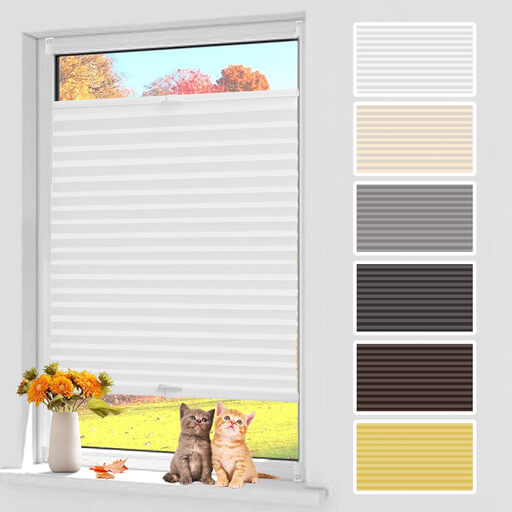
Why this product suits this profile: Its compact size is suitable for smaller standard windows. The white finish works in a range of rooms, while the tool-free clamp-fit installation makes it easy to get started.
The product description specifies the measurements, polyester material and tool-free clamp-fit installation. This makes it easy to check the key details before ordering.
60 × 100 cm, white colour option, polyester fabric and no-drill fitting for interior windows.

Why this product suits this profile: This honeycomb pleated blind has a metal frame, polyester fabric and clamp-fit brackets for frames 10 to 23 mm thick. The top-and-bottom controls let you position it flexibly.
The compatible frame thickness is clearly stated. This helps prevent you from buying clamp brackets that won’t hold securely on your window frame.
50 × 130 cm, honeycomb construction, metal frame and clamp-fit installation for frames 10–23 mm thick.
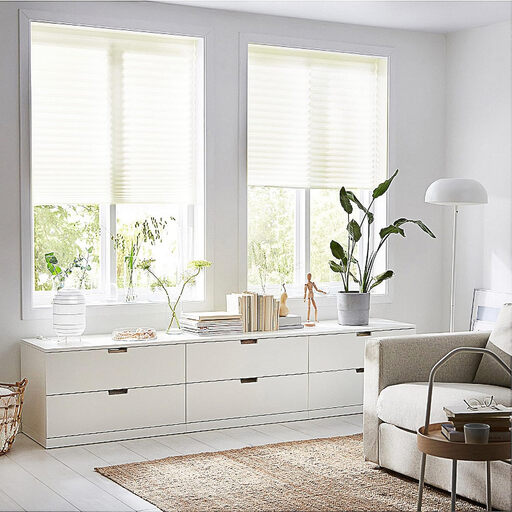
Why this product suits this profile: Its 200 cm height may suit doors, taller windows and balcony entrances. The beige, light-filtering fabric still lets diffused daylight into the room.
The description explains that the fabric doesn’t completely darken the room and is moisture-resistant but not waterproof. This helps you plan realistically where to use it.
75 × 200 cm, beige colour option, light-filtering polyester fabric and no-drill fitting with clamp brackets.
We’ve put together a comprehensive, regularly updated list of products that meet these strict selection criteria and fully comply with the safety regulations in force in the EU.
A few simple steps are key to securely fitting a no-drill pleated blind:
Keep cords and controls out of the reach of young children. Check clamp and adhesive fittings regularly, especially if you open and tilt the window frequently.
How long it lasts depends on the fitting method, frame thickness, surface and how often it’s used. Clamp brackets can be fitted more than once on suitable frames. Adhesive holders need a smooth, clean surface and should be replaced if they start to lose their grip. Check regularly that the blind is secure.
Measure the glass width and the width of the opening window, then compare both measurements with the product instructions. Some Dream-seeker models recommend a blind about 4 cm wider than the glass. Depending on the model, the height may be measured to the top of the entire frame. Make sure window handles and seals don’t obstruct its movement.
Some polyester fabrics are moisture-resistant and can be used in bathrooms or kitchens. However, moisture-resistant doesn’t mean waterproof. Avoid direct contact with water, prolonged dampness and use in a shower unless the manufacturer explicitly says otherwise.