
Lieferung heute & morgen

Qualitätsgarantie

Willkommens-Angebote freischalten: KOSTENLOSE Lieferung | Bis zu 80 % RABATT | Kostenlose 30-Tage-JoyPlus-Testphase
App herunterladen
A no-drill pleated blind can quickly provide privacy and adjustable daylight in rented homes, offices and children’s rooms. However, inaccurate measurements, unsuitable mounting surfaces and unclear information about light transmission often lead to disappointing purchases.
Before you buy, look out for these three common pitfalls:
Measure the width and height in several places, as windows aren’t always perfectly square. Also check whether window handles, seals or protruding parts could obstruct the blind.
For several Dream-seeker models, it’s recommended that you choose an order width around 4 cm wider than the glass pane. The height should match the full height of the window frame. This guidance doesn’t automatically apply to every clamp-fit pleated blind, so always check the size chart for the specific product.
A 65x100 cm pleated blind, for example, may suit smaller standard windows. For taller windows, balcony doors or internal doors, consider options such as 75x200 cm, 80x200 cm or 90x200 cm. If you need pleated blinds in different sizes, it’s best to stick to the same product range so the colour and operation are consistent.
A light-filtering pleated blind softens daylight and, depending on the fabric, reduces glare and visibility from outside. However, it won’t make a room completely dark. For bedrooms or rooms exposed to direct sunlight, a privacy fabric or one described as “blackout” may be a better choice.
Even with a blackout blind, light may get in around the sides if it’s fitted inside the frame. So check whether the fabric is:
This makes it easier to choose the right sun protection and privacy for your living room, kitchen, office, children’s room or bathroom. In damp rooms, it’s also important to distinguish between moisture-resistant and waterproof. Polyester may be described as moisture-resistant, but that doesn’t automatically make it suitable for prolonged contact with water.
A clamp-fit pleated blind is usually secured to the window or door frame with adjustable clamp brackets. This tool-free fitting method is practical for many rented homes, as it doesn’t leave drill holes. Some models also use adhesive brackets.
Before ordering, check the frame thickness, window shape and surface finish. According to product descriptions, suction-cup models adhere to smooth surfaces such as glass or tiles, but not to textured walls. Some systems aren’t suitable for roof windows, wooden windows, sliding windows or sloping windows.
Clean and dry the fitting area before installation. Once the blind is fitted, check that all the brackets are secure and that the window can still be opened or tilted easily. For products with cords, follow the manufacturer’s safety instructions and keep cords and small parts away from young children.
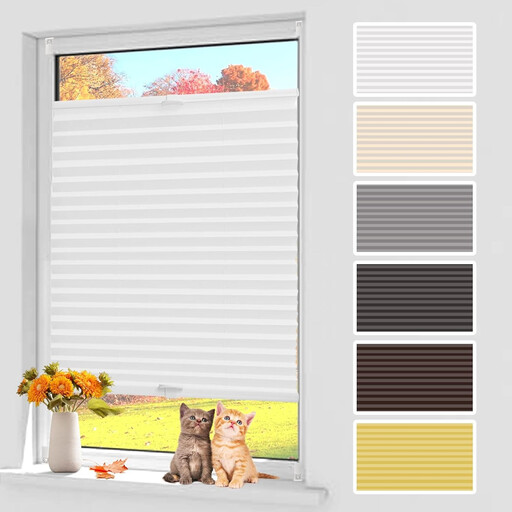
Why this product suits this profile: Its compact size and clamp or adhesive fitting make it a good choice for smaller indoor windows and straightforward use in rented homes.
The precise 65x100 cm dimensions make it easier to choose the right size. The manufacturer describes the fabric as offering privacy while still allowing light through, so don’t expect complete room darkening.
White polyester fabric, indoor fitting and cleaning with a damp cloth, according to the product description.

Why this product suits this profile: Its honeycomb structure and top-and-bottom operation give you flexible positioning for bedrooms, living rooms or workspaces.
The stated frame thickness range of 10–23 mm makes it easier to check compatibility. According to the description, this model isn’t suitable for roof windows.
100% polyester, clamp-fit installation and fabric described as light-blocking, with adjustable handles.
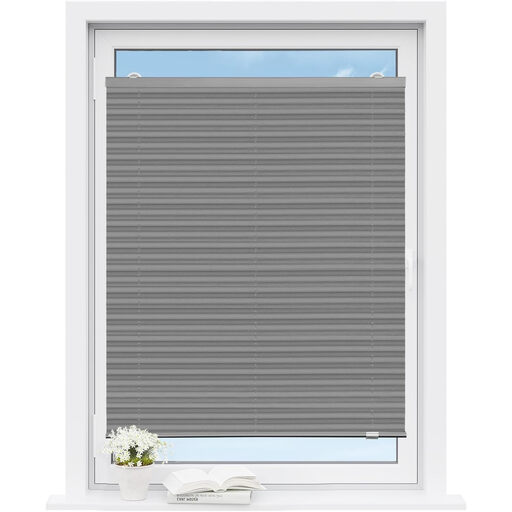
Why this product suits this profile: For smooth glass or tiled surfaces, balcony areas and temporary solutions, suction cups offer an alternative way to fit the blind.
The product information specifically states that smooth surfaces are required and textured walls aren’t suitable. Check the suction cups regularly to make sure they’re still secure.
Adjustable suction cups, polyester fabric and a stated adjustable width of 50 to 90 cm.
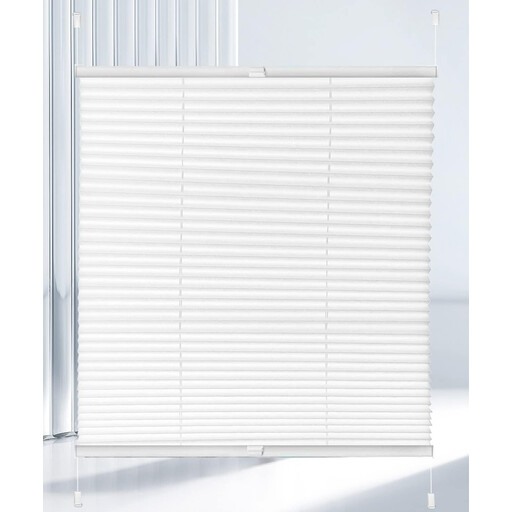
Why this product suits this profile: At 200 cm high, it’s designed for larger windows, balcony doors and internal doors, provided the frame and fitting method are compatible.
The product information describes light filtering and privacy, rather than promising complete blackout. This helps you set realistic expectations for the fabric.
80x200 cm, white polyester fabric and no-drill clamp-fit installation, according to the product description.
We’ve put together a complete, regularly updated list of products that meet these strict selection criteria and fully comply with the safety regulations in force in the EU.
How long it lasts depends on the frame thickness, the blind’s weight, how often it’s used and whether it’s fitted correctly. Clamp brackets should be secure, but shouldn’t be tightened with excessive force. Adhesive brackets need a dry, smooth surface, and dust or moisture can weaken their grip.
Some polyester fabrics are described as moisture-resistant and may be suitable for bathrooms. However, this doesn’t mean they’re waterproof. Avoid direct and prolonged contact with water, such as in a shower area. Also check that the window frame is suitable for the chosen bracket.
Not every model will. A light-filtering pleated blind softens daylight, while privacy fabrics or those described as blackout reduce the amount of light more significantly. Gaps at the sides may still let in some light. The result depends on the fabric, fitting position, window size and specific product description.