
Lieferung heute & morgen

Qualitätsgarantie

Willkommens-Angebote freischalten: KOSTENLOSE Lieferung | Bis zu 80 % RABATT | Kostenlose 30-Tage-JoyPlus-Testphase
App herunterladen
Finding the right sun and privacy protection for your windows can quickly become complicated, especially in rental apartments where drilling holes in walls or window frames is often prohibited. A no-drill pleated blind seems like the ideal solution. However, the market is flooded with products of widely varying quality. Many buyers only discover after installation that their new blind doesn't live up to its promise.
This guide reveals the three most common pitfalls when buying and explains which technical details truly matter to find a durable and functional solution.
Easy installation is the main selling point for a clip-on pleated blind. Yet, this is precisely where the biggest weaknesses are often hidden, leading to frustration and unnecessary expenses.
To avoid these problems, you should check three core features before making a decision. These determine the functionality and longevity of your new privacy screen.
Not all drill-free mounting is created equal. The most common method is the clamp-fit blind, where adjustable brackets are clamped onto the window sash.
The choice of fabric determines light transmission, privacy, and thermal properties.
This is a critical point: The specified order width usually refers to the total width of the product, including the side mounting brackets. The fabric width is always narrower (often by about 4 cm).
Pro Tip: Measure the width of the glass pane and add about 2 cm on each side to minimize light gaps. The resulting width should be your order width. Make sure the blind does not interfere with the window handle.
Here are some product recommendations tailored to specific use cases and the quality criteria mentioned above.
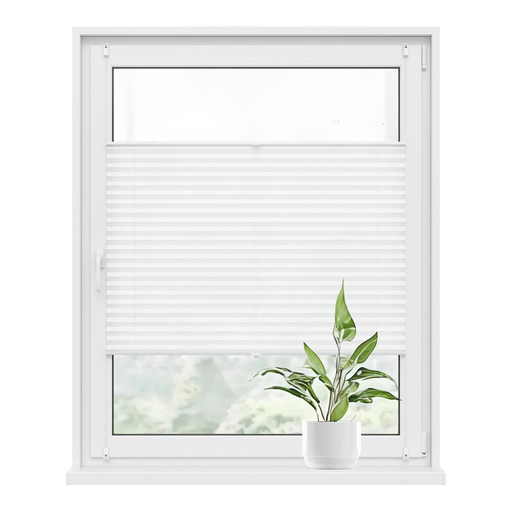
Why This Fits Their Persona: Ideal for renters seeking a straightforward and cost-effective solution for standard windows. The light-filtering material ensures privacy without darkening the room, perfect for living areas or the kitchen.
The mounting kit includes clamp brackets with a metal core, which minimizes the risk of breaking plastic. The instructions provide clear guidance on installation and tensioning the cords to prevent slipping.
Simple clamp-fit installation for window frame thicknesses of 1.5-2.3 cm. The pleated blind is continuously adjustable and offers excellent value for money.
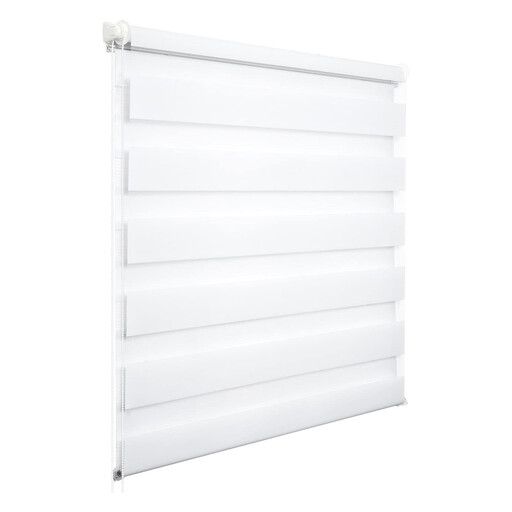
Why This Fits Their Persona: Perfect for professionals working from home who need to reduce screen glare but don't want to work in the dark. The alternating stripes allow for precise control of incoming light.
The clear instructions for measuring (order width = glass width + approx. 4 cm) help to avoid the typical "light gap" mistake. The smooth-running chain hoist is designed for daily use.
Seamless regulation of light and privacy. The chain hoist can be flexibly mounted on the left or right. Installation is drill-free via clamp brackets.

Why This Fits Their Persona: For families and energy-conscious households looking for an effective solution for bedrooms. It provides blackout, privacy, and helps regulate room temperature with its thermal properties.
This product bypasses the "empty thermal promise" with its honeycomb structure. The air pockets provide a demonstrable insulating effect. The sturdy metal frame and tear-resistant polyester fabric ensure durability.
Effective blackout and thermal insulation. Additional sound-dampening effect. Infinitely adjustable from the top and bottom via a handle.
We've compiled a complete, up-to-date list of products that fully meet these strict selection criteria and UK regulations.
The lifespan of a clamp-fit system depends heavily on the material quality of the brackets. Models with a metal core or made of high-quality, thick-walled plastic are significantly more durable than simple plastic holders. With proper installation and normal use, such systems can function reliably for many years.
Some models are designed to be cut to width. This will be explicitly mentioned in the product description, often with a note that it can be done with a hacksaw for the rails and scissors for the fabric. Check for this information before purchasing, as improper trimming can void the warranty.
The effectiveness depends on the design. A cellular shade is most effective here, as the trapped air in the honeycombs acts as an insulating layer. Blinds with a special silver or aluminum coating on the back can also noticeably reduce heat transfer by reflecting solar radiation in the summer and reducing heat loss in the winter. In contrast, a simple fabric blind without these features has only a minimal thermal effect.