
Lieferung heute & morgen

Qualitätsgarantie

Willkommens-Angebote freischalten: KOSTENLOSE Lieferung | Bis zu 80 % RABATT | Kostenlose 30-Tage-JoyPlus-Testphase
App herunterladen
A pleated blind with no-drill clamp fittings is a practical choice for rented homes, offices and rooms that are frequently rearranged. It attaches to the window frame without plugs or drill holes. However, models can vary considerably in their measurements, fittings, light transmission and suitability for different types of window.
If you focus only on colour or price, you could end up with a blind that doesn’t fit properly, blocks the window handle or lets in too much light for the room. The following points can help you avoid common buying mistakes.
A clamp-fit pleated blind is usually attached to the window sash using clamp brackets. Some models may also include adhesive brackets. Clamp brackets generally leave no drill holes, but they do need a suitable window frame.
For adhesive fittings, the surface must be clean, dry and as smooth as possible. Adhesion may be reduced on rough, dirty or damp surfaces. Before ordering, also check that the window can still be opened and tilted without difficulty.
A light-filtering pleated blind lets daylight into the room and can reduce direct visibility from outside. However, it isn’t automatically a substitute for a blackout blind. In bedrooms or rooms with computer workstations, a sheer or semi-sheer fabric may let in too much light or cause glare.
If you need more light protection, look for terms such as ‘privacy’, ‘opaque’ or ‘blackout’, and read the product description carefully. A claim such as ‘sun protection’ doesn’t necessarily mean the blind will fully darken a room.
For pleated blinds and roller blinds, the stated measurement may refer to the complete product, including the brackets. This means the usable fabric width may be narrower. A blind that appears to be the right width may not provide enough coverage for the window pane.
As a general guide for many models:
Manufacturer specifications may vary, so always follow the fitting instructions for the model you’ve chosen. The rules for choosing a made-to-measure pleated blind differ from those for a ready-made standard size.
Clamp brackets only fit certain frame thicknesses. For example, some WOLTU models are designed for frame thicknesses of 13 to 23 mm, while others are suitable for 10 to 23 mm or 1 to 10 mm. Don’t assume these measurements apply to every model.
Many models aren’t suitable for roof windows, sloping roof windows, wooden windows, sliding windows or fixed glazing. Always choose a pleated blind for windows and doors based on the specific type of window you have.
Woven polyester fabrics are lightweight and can usually be cleaned with a soft cloth. However, moisture-resistant doesn’t mean waterproof. In a kitchen or bathroom, avoid exposing the blind to direct water over a prolonged period.
For children’s bedrooms and homes with pets, it’s important to consider how the blind is operated and how its cords are routed. Chains and pull cords should be fitted and used out of children’s reach. Models with a handle may have a different design, but they don’t replace the need for supervision and safe fitting.
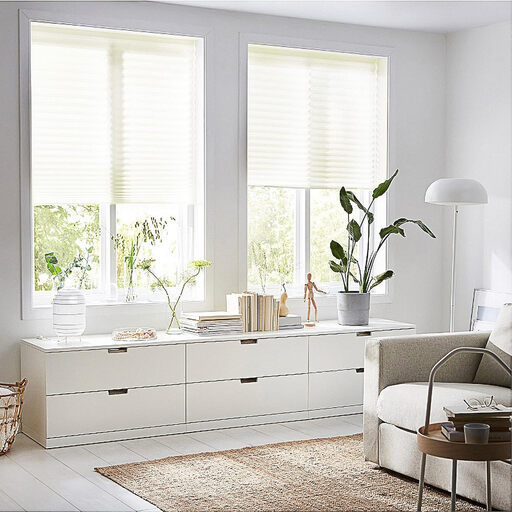
Why this product suits this profile: The standard size of 65 x 120 cm and beige colour make it a good fit for small to medium-sized windows if you’re looking for a simple pleated blind with a natural look.
The product description specifies clamp fitting, measurements and light-filtering fabric. This makes it easier to check the fitting method and light effect before you buy.
Polyester fabric, handle operation, no-drill clamp fitting, and a choice of beige, white, light grey and anthracite.

Why this product suits this profile: Its honeycomb structure, metal frame and adjustable clamp brackets make it a good choice for buyers who place greater importance on materials and technical specifications.
The specified frame thickness of 10 to 23 mm and the warning that it isn’t suitable for roof windows help prevent incorrect use.
Opaque polyester, top and bottom operating handles, a moisture-repellent surface and cleaning with a damp cloth, according to the product description.

Why this product suits this profile: This model is designed for rooms where stronger light protection is needed, such as bedrooms, studies or rooms that get direct sunlight.
The product details specify a compatible frame thickness of 16 to 22 mm and state that the overall width includes the brackets.
Clamp or drilled fitting, operated using the bottom handle, polyester fabric and, according to the product description, a silver-coated backing.
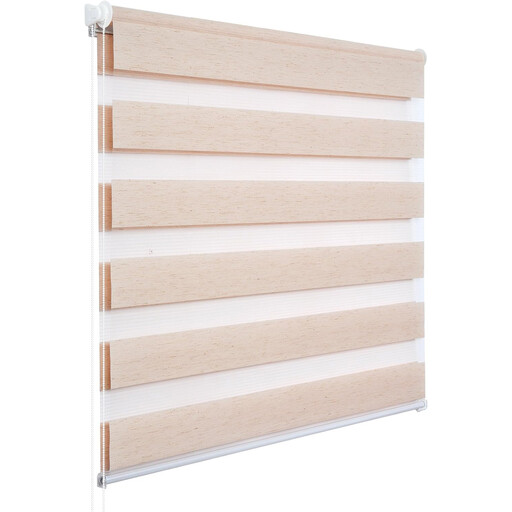
Why this product suits this profile: This duo blind is a good choice if you want to switch between sheer and privacy fabric stripes and need flexible light control.
The product description specifies a frame thickness of 13 to 23 mm and states that the blind isn’t suitable for roof windows or wooden windows.
Two fabric layers, a chain control that can be fitted on the left or right, clamp fitting and cleaning with a soft brush or damp cloth.
A pleated blind with no-drill fitting may need adjusting if it’s used frequently. Don’t put extra strain on loose brackets; refit them according to the instructions instead.
We’ve put together a complete, regularly updated list of products that meet these strict selection criteria and fully comply with the safety regulations in force in the EU.
How well it holds depends on the frame shape and thickness, the weight of the product and whether it’s fitted correctly. Choose clamps that are suitable for your window sash. Adhesive brackets need a clean, dry and smooth surface. It’s a good idea to check the fitting regularly.
Many models are designed for both windows and doors. However, the door frame, movement and handle position are all important. Before buying, check that the blind won’t catch when you open or close the door.
The product doesn’t normally need electricity. Ongoing costs mainly come from cleaning, replacement brackets or replacing the blind further down the line. Polyester fabrics can often be cleaned with a soft cloth or brush.