
Lieferung heute & morgen

Qualitätsgarantie

Willkommens-Angebote freischalten: KOSTENLOSE Lieferung | Bis zu 80 % RABATT | Kostenlose 30-Tage-JoyPlus-Testphase
App herunterladen
Finding the right sun protection or privacy screen for a rental apartment or your own home often leads to one practical solution: the no-drill pleated blind. Its installation, which doesn't damage the window frame, is a decisive advantage. However, the market is flooded with products of widely varying quality. Common issues like faulty clamp brackets or misleading fabric descriptions frequently lead to disappointment and unnecessary expense.
As your Joybuy Product Recommendation Officer, I'm here to help you navigate these pitfalls. This guide will show you the critical features to look for to find a durable and functional solution for your windows.
Many products promise simple installation and high functionality, but their weaknesses often become apparent in practice. Watch out for these three typical problems to avoid a bad purchase:
To ensure your new no-drill blind serves its purpose long-term, you should check three core parameters.
Drill-free installation is primarily achieved through two systems:
The choice of fabric determines the function of your privacy screen.
The method of operation affects daily convenience.
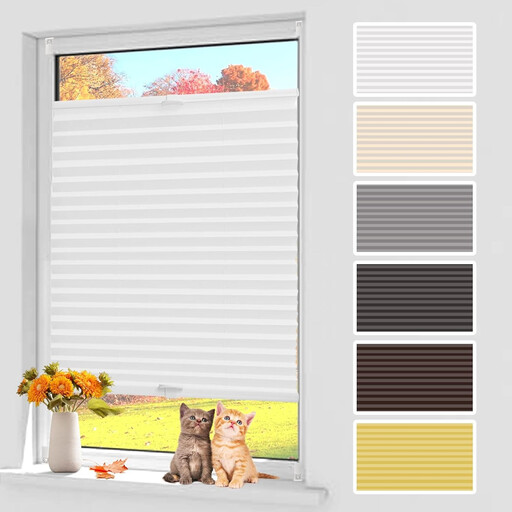
Why it's a good fit: Ideal for renters looking for a straightforward and affordable solution for standard windows. It provides basic privacy and sun protection for living rooms or home offices without damaging the window frame.
The product offers both clamp and adhesive brackets, making it flexible for different frames. The fabric is clearly described as translucent and opaque, which sets clear expectations and prevents disappointment.
The combination of two no-drill mounting options (clamping/adhesion) in one package offers high installation flexibility. The blind is freely adjustable, allowing for easy control of light exposure.

Why it's a good fit: Perfect for bedrooms and nurseries where complete darkness and temperature regulation are desired. The high-quality coating ensures darkness and privacy.
This blind directly addresses the problem of misleading claims: according to the manufacturer, the silver-coated backing provides 100% blackout. The clamp brackets are designed for a common frame thickness of 16–22 mm.
The combination of blackout and thermal insulation from the silver coating offers a dual benefit. The OEKO-TEX certified polyester material is also water-repellent and tear-resistant.
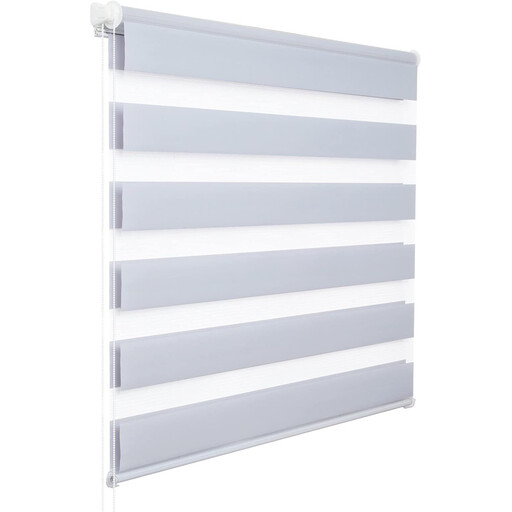
Why it's a good fit: For anyone who wants to combine a modern look with flexible light control. The dual roller blind is excellent for living rooms or offices where light levels need to be adjusted depending on the time of day and activity.
This model clearly defines its function through its alternating stripes. It doesn't promise a complete blackout but rather flexible control from translucent to opaque. The clamp-fit brackets are suitable for a wide frame range of 13-23 mm.
The stepless light regulation via the two fabric panels is the main advantage. The chain drive can be mounted on the left or right, making it easy to adapt to the room's layout.
Reliable blackout is especially important for a child's room. We have compiled a selection of products that meet these criteria.
1. How do I correctly measure my window for a no-drill pleated blind? Measure the width of the glass pane (from seal to seal) and add about 2 cm on each side to minimise light gaps at the edges. However, the total width should not interfere with the window handle. For the height, measure the entire height of the window sash. Many manufacturers provide precise measurement instructions on the product page.
2. Are clamp-fit systems truly durable? The durability of a clamp-fit system depends on the quality of the brackets. Models with adjustable metal components and solid construction generally offer a reliable and long-lasting hold. Ensure that the specified frame thickness matches your window and tighten the clamps firmly, but not with excessive force.
3. What is the difference between a no-drill pleated blind and a roller blind? A pleated blind (or concertina blind) consists of pre-folded fabric that collapses like an accordion. It can often be flexibly operated from both the top and bottom. A roller blind winds the fabric onto a tube and is usually operated by a side chain or a spring mechanism. The choice depends on your desired aesthetic and operational flexibility.