
Lieferung heute & morgen

Qualitätsgarantie

Willkommens-Angebote freischalten: KOSTENLOSE Lieferung | Bis zu 80 % RABATT | Kostenlose 30-Tage-JoyPlus-Testphase
App herunterladen
A no-drill pleated blind is a practical and stylish solution for privacy and sun protection, especially in rental apartments where damaging window frames must be avoided. Tool-free installation sounds appealing, but the market is flooded with products of widely varying quality. Before you make a decision, it's crucial to know the most common pitfalls that can lead to frustration and unnecessary expense.
As your Joybuy Product Recommendation Officer, I'll help you separate the wheat from the chaff. We'll highlight the critical features you should look for and navigate typical marketing traps together.
The 3 Most Common Problems with Clamp-Fit Pleated Blinds:
To avoid these problems, you should carefully examine three core parameters. These are crucial in determining the functionality and longevity of your new sun protection.
Drill-free mounting is the main advantage, but the systems differ significantly.
The choice of fabric depends on the desired degree of no-drill window privacy and light control.
To minimise side light gaps and ensure a clean look, correct measurement is essential. A proven rule of thumb for the width is:
Order Width = Width of the window pane + approx. 4 cm (2 cm overlap per side)
Measure the pane width at several points and use the smallest value. The overlap ensures that the fabric slightly covers the window frame, reducing light ingress at the edges. The height usually corresponds to the entire height of the window sash. Always check the manufacturer's specific measurement guide.
Based on these criteria, we have identified some products that offer a well-thought-out solution for different needs and living situations.
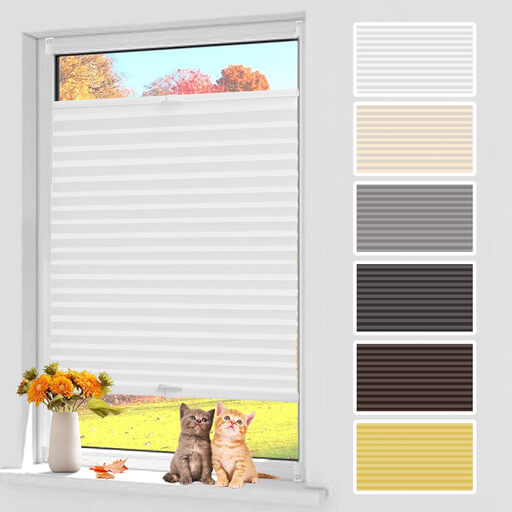
Why This Fits Their Persona: Ideal for standard windows in rental apartments, where a simple, cost-effective, and residue-free removable solution is required. The blackout function also offers significant added value for bedrooms or children's rooms without breaking the bank.
The included clamp-fit system is designed for common window frame thicknesses and provides a stable hold. The clear product name "Blackout" ensures you get the expected level of light protection, not just an opaque product.
Combines tool-free installation with a true blackout function. The lightweight polyester fabric is also easy to clean.
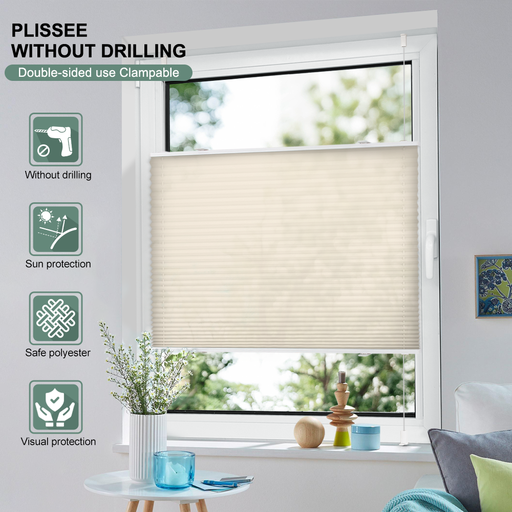
Why This Fits Their Persona: The combination of stylish colours like anthracite and durable aluminium rails fits perfectly into a modern living environment. An aesthetic upgrade for homeowners who value appearance and material quality.
High-quality aluminium top and bottom rails prevent the fabric from sagging, a typical problem with wider pleated blinds. The precisely manufactured clamp brackets ensure a permanently secure connection to the window frame.
Sturdy aluminium rails provide dimensional stability and a premium look. The choice between opaque and light-filtering versions allows for precise customisation to the room.
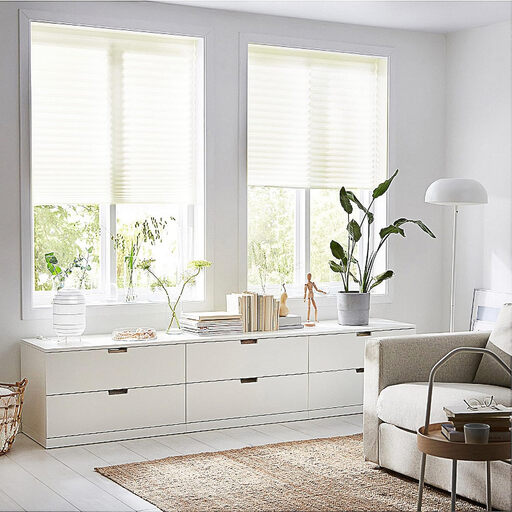
Why This Fits Their Persona: With a height of 200 cm, this pleated blind is perfect for floor-to-ceiling windows or balcony doors, which often present a challenge. The fabric, described as moisture-resistant, also makes it suitable for use in kitchens or bathrooms with higher humidity.
The generous dimensions are specifically designed for doors and tall windows, avoiding unsightly gaps. The tensioning system is built to handle the potentially higher weight and larger surface area to ensure stable operation.
Suitable for doors and tall windows up to 200 cm. The fabric, described as moisture-resistant, extends its use to rooms like the kitchen or bathroom.
We've compiled a complete, up-to-date list of products that fully meet these strict selection criteria.
The durability of a clamp-fit pleated blind depends heavily on the quality of the brackets and correct installation. High-quality clamp brackets made of robust plastic or with metal reinforcement can last reliably for many years. With adhesive fixings, surface preparation is key: a clean, dry, and grease-free surface ensures a long-lasting bond. The adhesive strength may weaken over time with strong sun exposure and temperature fluctuations.
Yes, this is possible in most cases. Clamp brackets work on many wooden windows, as long as the frame thickness meets the manufacturer's specifications and the frame has a suitable edge for clamping. For very old or heritage wooden windows where clamping is not desired, adhesive mounting directly on the glass pane can be an alternative.
The main difference lies in the construction and appearance. A pleated blind (or folding blind) consists of a fabric folded into pleats, which collapses like an accordion. It can often be flexibly adjusted from top to bottom and from bottom to top. In contrast, a classic no-drill roller blind consists of a smooth panel of fabric that is wound onto and off a tube and is typically operated only from the top down.