
Lieferung heute & morgen

Qualitätsgarantie

Willkommens-Angebote freischalten: KOSTENLOSE Lieferung | Bis zu 80 % RABATT | Kostenlose 30-Tage-JoyPlus-Testphase
App herunterladen
A no-drill clip-on pleated blind is ideal for rented homes, offices and rooms where you don’t want to make permanent changes to window frames or walls. Depending on the model, it can be fitted using clamp brackets, adhesive fixings or a combination of both. But there’s more to consider before you buy than just colour and price.
Three common issues can lead to the wrong purchase:
The width and height of a pleated blind for windows and doors are normally given in the order W × H. First measure the visible width of the glass, then the height of the entire window sash, including the frame.
For several Dream-Seeker models, the recommended blind width is around 4 cm wider than the glass. For example, if the glass is 51 cm wide, a 55 cm-wide pleated blind may fit. Always follow the specific fitting instructions and take the position of the window handle into account.
Also check for:
With clip-on systems, the frame thickness must be compatible with the clamp brackets. For example, the WOLTU Blackout Blind is specified for frames between 16 and 22 mm thick. Other models may have different requirements.
A light-filtering pleated blind filters daylight and can reduce direct visibility from outside. It’s a good choice for living rooms, kitchens and home offices, among other spaces. For bedrooms, children’s rooms or rooms that get a lot of sunlight, a blackout pleated blind may be a better option.
Don’t confuse the following terms:
The pleated blinds listed here are mainly made from polyester. In most cases, you can clean the fabric with a soft, slightly damp cloth. However, ‘moisture-resistant’ doesn’t mean waterproof. If you’re planning to use a blind in a bathroom or kitchen, check whether the specific product is suitable for damp indoor spaces. Avoid prolonged exposure to water.
The operating mechanism also matters: some blinds are adjusted using a handle, while others use a pull cord or side chain. Follow the safety instructions for products with cords or chains, and keep operating parts out of children’s reach.
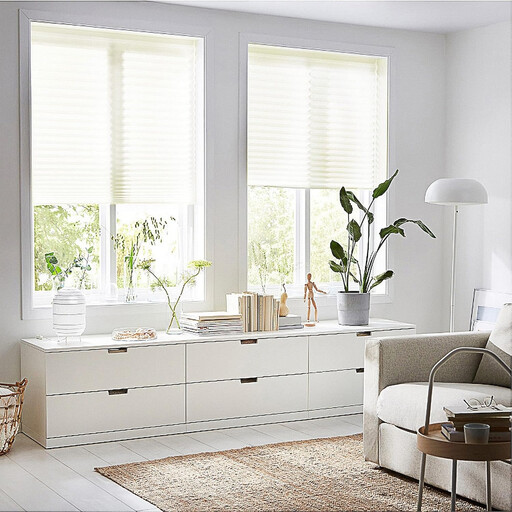
Why it suits this profile: The 75 × 100 cm size is suitable for smaller standard windows. Clamp brackets and adhesive fittings give you flexible no-drill installation options.
The product details describe the fabric as light-filtering, rather than simply calling it a blackout blind. This gives you a more realistic idea of how much light it will let through.
Measures 75 × 100 cm, with polyester fabric and clamp or adhesive fittings for indoor windows and doors.

Why it suits this profile: Its honeycomb structure, metal frame and clip-on brackets for frames measuring 10 to 23 mm will appeal to buyers who like to check fitting requirements and construction details carefully.
The specified frame thickness makes it easier to check whether the blind will fit. This model is explicitly not suitable for roof windows.
Blackout fabric, top and bottom handles, moisture-resistant polyester fabric and easy cleaning with a damp cloth.

Why it suits this profile: With blackout fabric and two fitting options, this model is a good choice for bedrooms, home offices or doors where you need greater control over the light.
Check that your frame is between 16 and 22 mm thick before ordering. According to the product details, the fabric is around 4 cm narrower than the overall blind.
Cordless operation using the handle, polyester fabric with a coated backing, and clamp or screw fitting options.
We’ve put together a complete, regularly updated list of products that meet these strict selection criteria and fully comply with the safety regulations in force in the EU.
A made-to-measure pleated blind is a good option if standard sizes don’t fit your windows. With standard models, it’s worth comparing the width, height, fabric type and fitting instructions carefully. Roof windows often need different fitting solutions, and several of the models described here are explicitly not suitable for them.
How long it stays in place depends on the frame thickness, fitting surface, weight of the product and how it’s used. Make sure clamp brackets are compatible with the window frame. Adhesive fixings need a smooth, dry surface and should be checked regularly to make sure they’re still secure.
Measure the width of the glass and the height of the entire window sash. Then check the manufacturer’s recommended extra width. Some Dream-Seeker models are specified as around 4 cm wider than the glass. Make sure the blind won’t get in the way of window handles or seals.
A light-filtering pleated blind lets daylight into the room, making it a good choice if you want privacy while keeping the room bright. A blackout pleated blind reduces the amount of light more significantly. The gaps at the sides and how well the blind fits also affect how dark the room gets.