
Lieferung heute & morgen

Qualitätsgarantie

Willkommens-Angebote freischalten: KOSTENLOSE Lieferung | Bis zu 80 % RABATT | Kostenlose 30-Tage-JoyPlus-Testphase
App herunterladen
Whether you're a renter or a homeowner, finding an effective privacy and sun protection solution without damaging window frames or walls can be a challenge. Drill holes are often prohibited in rental properties, and even owners frequently prefer a hassle-free option. A no-drill pleated blind offers a practical and flexible alternative.
This guide is here to help. We'll explain what to look for when choosing a blind and introduce several models that stand out for their simple installation and functionality. Our goal is to provide you with the information you need to make an informed decision when buying the perfect pleated blind for your windows and doors.
Before you decide on a model, consider a few key criteria to ensure the product meets your needs.
Drill-free installation is typically done in one of two ways:
For most applications, a clamp-on pleated blind is the most straightforward and secure choice.
The blind's fabric determines its function. Consider what purpose the window covering needs to serve in each specific room.
Taking the right measurements is crucial for an optimal fit. For a clamp-fix pleated blind, follow these steps:
Also, check the frame thickness of your window. Most clamp brackets are designed for a thickness of 10 to 23 mm.
Here is a selection of models that are suited for different needs due to their specific features.
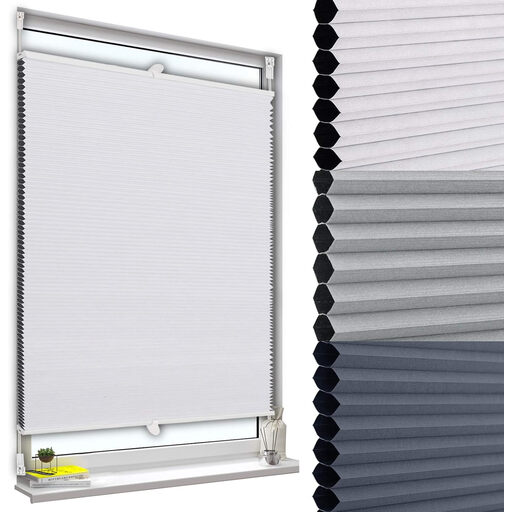
Why it stands out: The WOLTU blind uses a honeycomb structure that not only provides complete blackout but also offers thermal and acoustic benefits. The internal aluminium coating effectively blocks light, while the air chambers act as an insulating layer against external heat, cold, and noise. Its cordless operation also makes it safe for households with children.
Pros:
Best for: This model is ideal for bedrooms, children's rooms, or rooms facing noisy streets where maximum blackout, quiet, and improved energy efficiency are desired.
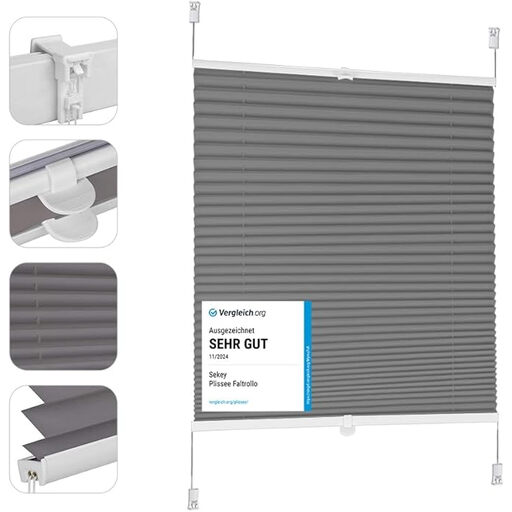
Why it stands out: The Sekey blind focuses on straightforward operation and flexible light control. It can be adjusted seamlessly from both the top and bottom, allowing you to precisely tailor the light to your needs. Installation with the four adjustable clamp brackets is tool-free and quick. The opaque polyester material provides reliable sun and UV protection.
Pros:
Best for: An excellent choice for renters and anyone looking for a quick, flexible solution for living rooms or home offices. Its variable adjustment offers a great balance between privacy and natural light.
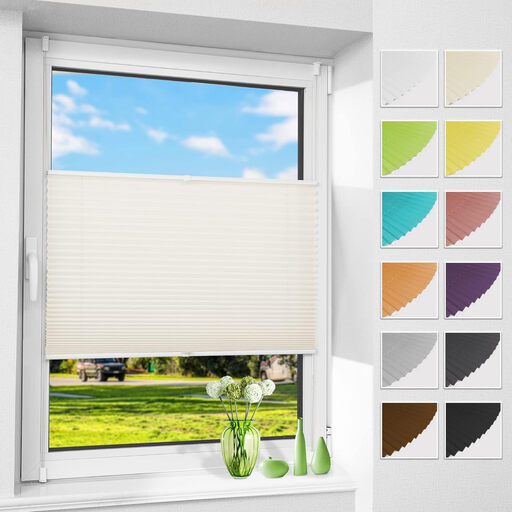
Why it stands out: The Allesin blind is designed as a bright privacy screen. It filters sunlight and shields from prying eyes while maintaining a bright, welcoming atmosphere in the room. A key feature is its patented brackets, which allow for extremely fast installation. The material is moisture-resistant, making it suitable for use in kitchens or bathrooms.
Pros:
Best for: Perfect for rooms where privacy is important, but you don't want to sacrifice natural daylight, such as in the kitchen, bathroom, or dining area.
The products featured here cover a wide range of needs. However, if you're looking for different colours, sizes, or fabrics, there is an even greater variety to explore. Every home is unique, and the right window treatment plays a major role in shaping its atmosphere.
Discover our entire selection of pleated blind panels and find the perfect solution for your home.
When installed correctly on a suitable window frame, clamp-fix pleated blinds are very stable and can easily withstand daily use. The clamp brackets are tightened securely to the frame, preventing them from slipping or falling, even when the window is tilted. It's important not to exceed the manufacturer's specified maximum frame thickness.
No, there are some limitations. No-drill pleated blinds with clamp brackets are designed for most inward-opening tilt-and-turn windows made of plastic. They are not suitable for fixed-pane windows, skylights, sliding windows, or wooden windows with very narrow or rounded frames, as the brackets cannot get a secure grip.
Maintenance is straightforward. Dust can best be removed with a soft brush or a feather duster. For light stains, the fabric can be gently dabbed with a slightly damp cloth. Avoid harsh rubbing or using aggressive cleaning agents to prevent damaging the material.