
Lieferung heute & morgen

Qualitätsgarantie

Willkommens-Angebote freischalten: KOSTENLOSE Lieferung | Bis zu 80 % RABATT | Kostenlose 30-Tage-JoyPlus-Testphase
App herunterladen
As a Joybuy Product Recommendation Officer, I see daily how challenging it can be to choose the right privacy and sun protection. Especially with no-drill solutions, there are pitfalls that can quickly lead to a bad purchase. Many renters and homeowners are looking for a simple, damage-free method to dress their windows, but they often encounter products that don't live up to their promises. This guide will help you separate the wheat from the chaff and make an informed decision.
The most common problems during selection are:
To avoid these problems, you should check three key aspects before buying. These determine the functionality and longevity of your new window treatment.
Drill-free installation is the main reason for choosing these products. However, the most common systems have specific use cases:
The function of the fabric is just as important as the mounting. There are four main levels of light transmission:
A thermal roller blind with such a coating (usually silver-coloured) reflects the sun's rays in the summer, helping to keep the room cool. In winter, it has an insulating effect and can help reduce heat loss through the window.
This is the critical point to avoid light gaps at the sides.
Measuring Guide: Measure the width of the glass pane. To cover the pane completely and minimise side light gaps, the fabric width should be at least as wide as the glass pane. Therefore, add about 4 cm to the glass width to determine the correct order width. Make sure the blind does not interfere with the window handle. For a roller blind for a balcony door, the height of the entire window sash is the correct measurement for the order height.
Based on the criteria mentioned, we have identified several products that offer a well-thought-out solution for specific needs and use cases.
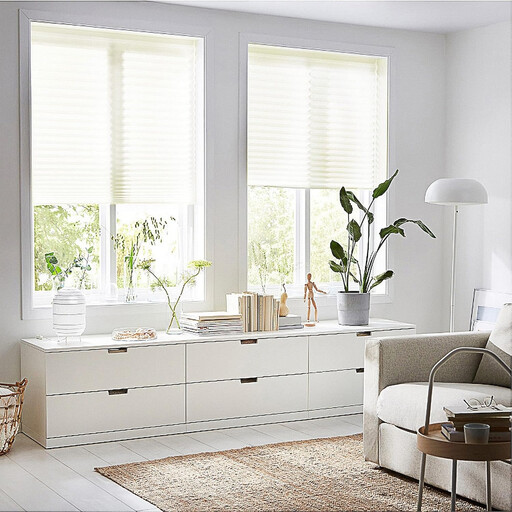
Why it's a great fit: Ideal for renters seeking a straightforward and affordable solution for standard windows. It provides solid privacy for living spaces without damaging the building structure.
The product offers two mounting options—clamp and adhesive brackets—making it more flexible than systems that rely on a single method. This reduces the risk of a bad purchase due to an incompatible window frame.
The infinitely variable adjustment by sliding the handle allows for precise positioning for privacy from the bottom, top, or middle.
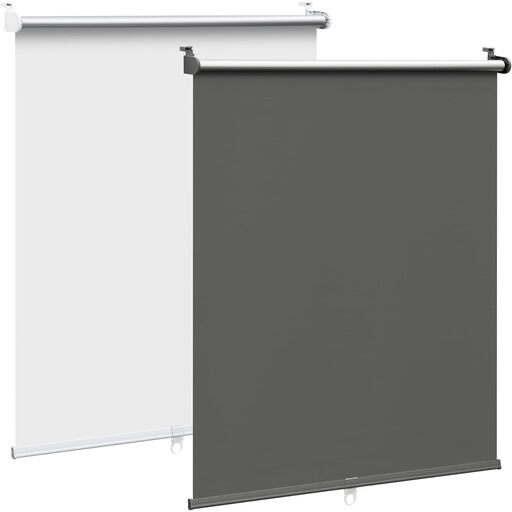
Why it's a great fit: Meets the two most important requirements for children's rooms and bedrooms: effective blackout and safety. The cordless operation eliminates the strangulation hazard posed by loose chains or cords.
The product description specifies a silver backing for 100% blackout. This is a clear technical feature that distinguishes it from mere dimout fabrics and avoids the "false blackout" pitfall.
The thermal coating offers the added benefit of heat and cold protection. According to the manufacturer, the material is also water-repellent and mould-resistant.
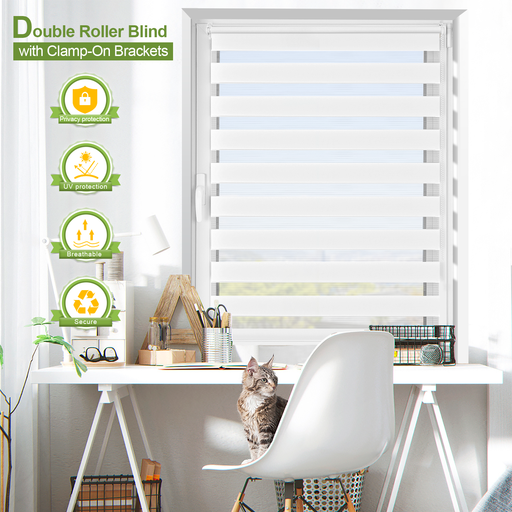
Why it's a great fit: A **no-drill double roller blind** is the most flexible solution for home offices and living rooms. It allows for continuous adjustment of light from transparent to opaque, preventing glare on screens without completely darkening the room.
Instead of committing to a single fabric property, this blind combines two fabric types. This bypasses the problem of a single fabric letting in either too much or too little light, making it unsuitable for changing light conditions.
The alternating transparent and opaque stripes allow for precise control of privacy and brightness via a side chain pull.

Why it's a great fit: For users who value energy efficiency as much as blackout functionality. The honeycomb structure creates an air cushion that acts as an additional insulating layer at the window.
While many products offer only a simple fabric panel, this pleated blind provides demonstrable added value through its honeycomb structure. It goes beyond mere privacy and actively addresses thermal insulation and even sound dampening.
The design ensures complete blackout because the tension cords run inside the honeycombs, leaving no visible holes in the fabric. This maximises light blockage.
We have compiled a comprehensive, up-to-date list of products that fully meet these strict selection criteria and UK regulations.
The durability of a Klemmfix system depends on the quality of the clamp brackets and correct installation. High-quality brackets made of sturdy plastic or metal, designed for the exact thickness of the window frame, provide a very reliable hold. It is important to tighten the brackets firmly but not to overtighten, to avoid damaging the plastic. When properly attached to a suitable window, they will last for years.
A no-drill roller blind consists of a smooth panel of fabric that is rolled up and down onto a tube. It is usually operated by a side chain or a spring mechanism. A no-drill pleated blind consists of a fabric folded into pleats, which collapses like an accordion. Pleated blinds are often more flexible as they can be opened from both the top-down and the bottom-up, allowing for more targeted control of light.
Yes, this is possible. When choosing a roller blind for a balcony door, make sure to select the appropriate length (usually 200 cm or more). A Klemmfix system is well-suited here as it attaches directly to the door sash and does not interfere with the door's function. Before purchasing, check that the width is sufficient to cover the glass pane completely and that the roller cassette at the top does not collide with the wall or ceiling when the door is opened.