
Lieferung heute & morgen

Qualitätsgarantie

Willkommens-Angebote freischalten: KOSTENLOSE Lieferung | Bis zu 80 % RABATT | Kostenlose 30-Tage-JoyPlus-Testphase
App herunterladen
As a renter or homeowner, you know the problem: you need effective sun or privacy protection but don't want to damage your window frames with drill holes. A no-drill pleated blind seems like the ideal solution. However, the market is flooded with products of widely varying quality. Many buyers fall into traps that lead to frustration and unnecessary expenses. This guide will help you navigate the typical pitfalls and make an informed decision.
The three most common mistakes when buying are:
To avoid a bad purchase, you should carefully examine three core aspects. These determine the functionality, durability, and fit of your new sun protection.
Drill-free installation is primarily achieved through two systems: clamping or sticking.
Many products offer both mounting options, which increases flexibility.
The fabric determines the primary benefit of your blind. Clarify your needs beforehand:
This is one of the most common sources of error. Note the rule: The fabric width is almost always narrower than the specified order width (usually by about 4 cm).
Here are some recommendations tailored to different needs and living situations.
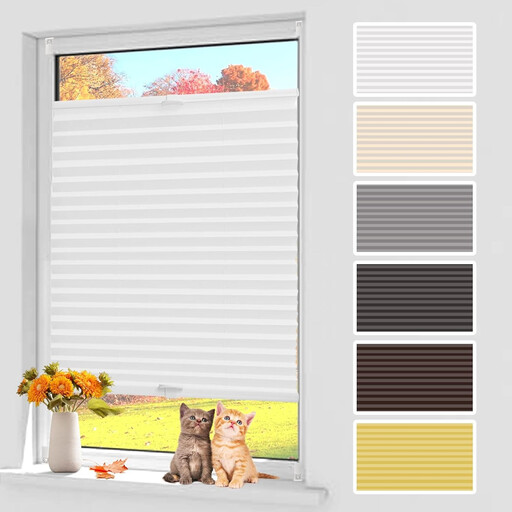
Why this product is a great fit: Ideal for standard windows in rental apartments where a simple, functional, and residue-free removable solution for privacy and light dimming is needed.
The product offers both clamp and adhesive mounts, increasing compatibility with different window types and reducing the risk of a bad purchase due to ill-fitting brackets.
A combination of two no-drill mounting methods (clamp/adhesive) in one package. The fabric is opaque and provides solid privacy.
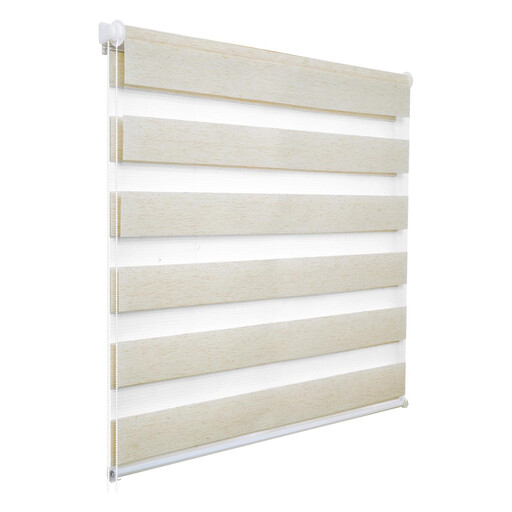
Why this product is a great fit: Perfect for living rooms or offices where lighting conditions need to be adjusted depending on the time of day and activity—from bright daylight to full privacy.
The manufacturer clearly specifies the compatible frame thickness (1.3–2 cm) and explains the difference between order and fabric width. This prevents the two most common fitting errors.
Infinitely variable light control through two parallel fabric panels with alternating opaque and transparent stripes.

Why this product is a great fit: For bedrooms or south-facing rooms where a high level of blackout and noticeable thermal insulation against heat or cold are desired.
The honeycomb structure is a clear technical feature that physically justifies the promised thermal and sound insulation function, setting it apart from vague advertising claims.
Effective blackout and thermal insulation due to the air pockets in the honeycomb structure. The operation is also cordless, which increases safety in households with children.
We've compiled a full list of products that meet these selection criteria.
The lifespan of a clamp-fit system depends heavily on the material quality of the brackets. Models with adjustable clamps made of metal or high-quality, solid plastic are generally more durable than simple, rigid plastic clips. With correct installation and normal use, good quality systems can function reliably for several years.
Installation on wooden windows can be tricky. Clamp brackets are often designed for the standardized profiles of uPVC windows and may not find a secure grip on the often rounder or more profiled wooden frames. Some manufacturers explicitly exclude use on wooden windows. An adhesive version might work on smoothly painted wood, but it is recommended to test the adhesion in an inconspicuous area first.
Most fabrics can be gently dusted with a soft brush or a vacuum cleaner on the lowest setting. For light stains, a slightly damp, lint-free cloth can be used. Avoid aggressive cleaning agents and heavy rubbing, as this could damage the special blackout or thermal coating. Always follow the manufacturer's care instructions.