
Lieferung heute & morgen

Qualitätsgarantie

Willkommens-Angebote freischalten: KOSTENLOSE Lieferung | Bis zu 80 % RABATT | Kostenlose 30-Tage-JoyPlus-Testphase
App herunterladen
A no-drill pleated blind is a good choice for rented homes, offices and any room where you don’t want to make permanent changes to the window frame or walls. Depending on the model, it can be fitted using clamp brackets, clip-on brackets, adhesive pads or suction cups. This means you can usually remove the blind with little or no residue.
Even so, common assumptions can lead to the wrong choice. Check these three potential pitfalls before ordering:
Measure the glass width, the height of the window sash and the depth of the frame rebate. Also check whether the brackets or fabric could get in the way of the window handle.
With a pleated blind fitted using clamp brackets, the clip-on bracket attaches directly to the window sash. This is particularly suitable for rectangular tilt-and-turn windows. The brackets should fit securely without compressing the seal. Adhesive brackets may be less reliable on uneven or rough surfaces.
For pleated blinds for windows and doors, also consider how often the sash is moved. A tensioned design with guide cords or top and bottom handles can be more practical on a door than a freely hanging blind.
“Light-filtering” does not mean complete blackout. This type of fabric lets daylight into the room and, depending on its construction, reduces glare and direct visibility from outside. It’s often a good option for kitchens, home offices and living rooms.
For bedrooms or children’s rooms, consider a blackout roller blind without drilling or an opaque pleated blind. Check the specific product description: “blackout”, “light-blocking” and “opaque” don’t necessarily mean the same thing. Even blackout fabric can leave gaps at the sides if the blind isn’t wide enough.
A no-drill day and night blind offers a more flexible option. Its alternating transparent and opaque stripes let you adjust the amount of light coming in. Depending on how you position it, it can darken the room, but it won’t necessarily provide complete blackout.
Polyester is commonly used for pleated blinds and roller blinds because it can be cleaned with a damp cloth. For kitchens and bathrooms, look for descriptions such as moisture-resistant or suitable for humid rooms. However, this doesn’t mean the product is waterproof or should be exposed to splashing water over a long period.
For chain-operated blinds, keep the chain out of children’s reach. Some chain-free models are operated using a handle on the bottom rail. After fitting, check that all the brackets are secure and that the window sash can still open fully or tilt as before.
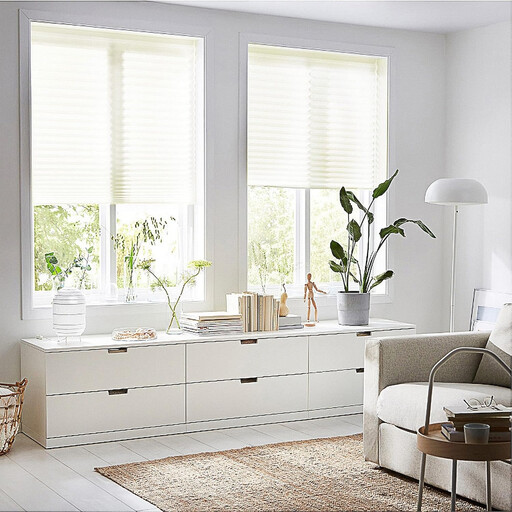
Why it’s a good fit: This compact clip-fit pleated blind is designed for smaller interior windows and doors, and combines clip-on brackets with an additional adhesive fitting option.
The product details state a size of 75 x 100 cm and describe the blind as light-blocking and opaque. Even so, check your frame width and make sure the adhesive surface is suitable before buying.
Beige polyester fabric, no-drill fitting and an adjustable height.

Why it’s a good fit: Its double-layer construction is designed for anyone looking for an opaque finish and flexible operation from both the top and bottom.
The product details clearly specify that it fits clip-on frames measuring 10 to 23 mm, and that it isn’t suitable for roof windows. Check this restriction before placing your order.
Opaque polyester, top and bottom handles, product details describe it as moisture-repellent, and it can be cleaned with a damp cloth.
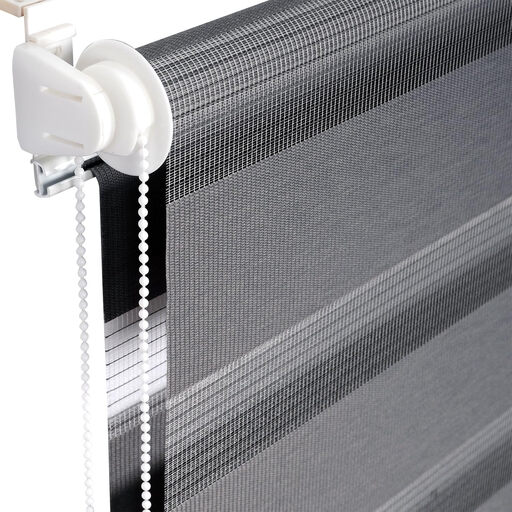
Why it’s a good fit: This day and night blind is well suited to home offices, living spaces and humid rooms where you want to adjust the light regularly.
Alternating transparent and opaque stripes let you adjust the light in stages. However, this doesn’t automatically provide complete blackout.
Clip-on fitting for frames measuring 13 to 23 mm, chain can be fitted on the left or right, and can be cleaned with a soft brush or damp cloth.
We’ve put together a complete, regularly updated list of products that meet these strict selection criteria and the safety regulations in force across the EU.
Depending on the design, the blind is fitted to the window frame or another smooth surface using clamp brackets, adhesive brackets or suction cups. Clean and dry the fitting area first. Then check that the brackets are secure and that the window can still be opened and closed easily.
Its lifespan depends on the fabric, how it’s operated, exposure to sunlight and moisture, and how securely it’s fitted. Avoid pulling it too hard, using harsh cleaning products or exposing it to high levels of moisture over a long period. Adhesive brackets may lose their grip because of dust, heat or uneven surfaces.
Some polyester models are described in the product details as suitable for bathrooms or kitchens. They’re usually wipe-clean and may be moisture-resistant, but they aren’t waterproof. Avoid direct contact with water, persistent condensation and unsuitable frames. Also check that the fitting method is approved for your window frame.