
Lieferung heute & morgen

Qualitätsgarantie

Willkommens-Angebote freischalten: KOSTENLOSE Lieferung | Bis zu 80 % RABATT | Kostenlose 30-Tage-JoyPlus-Testphase
App herunterladen
No-drill pleated blinds are a practical choice for rented homes, owner-occupied properties and temporary living arrangements. Depending on the system, they can be secured to the window frame with clips, adhesive or suction cups. This usually means the walls and frames remain undamaged during installation.
However, not every pleated blind is suitable for every window. Inaccurate measurements, an unsuitable frame or unrealistic expectations about how much light a blind will block can often lead to the wrong purchase. The following criteria can help you compare a clamp-fit pleated blind, a no-drill pleated roller blind or a suitable roller blind.
For many roller blinds and day-and-night blinds, the stated width includes the brackets. This means the fabric itself may be several centimetres narrower. According to the product description, the fabric on the WOLTU Blackout Roller Blind is approximately 4 cm narrower than its overall width.
For reliable privacy at the window, you should therefore measure more than just the glass. Also check that there is enough room on the frame for the brackets, without obstructing the window handle or seal.
An opaque pleated blind can help keep prying eyes out while still letting daylight through. Light-filtering models are suitable for living rooms, kitchens and home offices, for example. For bedrooms or rooms exposed to direct sunlight, a blackout pleated blind or blackout roller blind is a better choice.
Terms such as “blackout”, “dimming” and “light-filtering” should not be treated as interchangeable. With a light-filtering pleated blind, the room will still appear brighter, even when the fabric is fully closed.
The required frame thickness varies considerably from one product to another. Here are some examples from the selection:
Measure the thickness of the window sash in several places. Wooden windows, sliding windows, roof windows and uneven surfaces often have different requirements. Always follow the information on the relevant product page.
Clamp-fit installation is suitable for many rectangular tilt-and-turn windows. The blind attaches directly to the window sash and can be removed when you move home. However, clamp brackets need a suitable amount of clearance on the frame and must not obstruct the window handle.
Adhesive installation is an option if the surface is smooth, clean and strong enough to support it. Rough or uneven frames can affect how well the adhesive holds. Suction cups are designed for smooth glass or tiled surfaces, making them a better choice for flexible, temporary solutions.
A pleated blind for sun protection reduces direct sunlight to varying degrees, depending on the fabric and coating. According to the product description, the silver-coated backing on the WOLTU Blackout Roller Blind is designed to block out light and reflect heat. This is a product feature, not a blanket guarantee of a particular room temperature.
A thermal pleated blind with a honeycomb structure can offer additional insulating properties thanks to its design. The WOLTU Honeycomb Pleated Blind is described as offering light protection, thermal insulation and sound insulation. The result will still depend on how well it is installed, the window glazing and seals, and how much sun reaches the window.
Models with handles on the top and bottom rails can be adjusted from either side. Day-and-night blinds are usually adjusted using a side chain. This should be secured out of reach of children and pets. A cordless blind with a control handle, such as the WOLTU Blackout Roller Blind mentioned here, reduces the number of loose operating components.
Keep small installation parts out of children’s reach while fitting the blind. Once installed, check that it is secure and does not slip when you tilt the window.
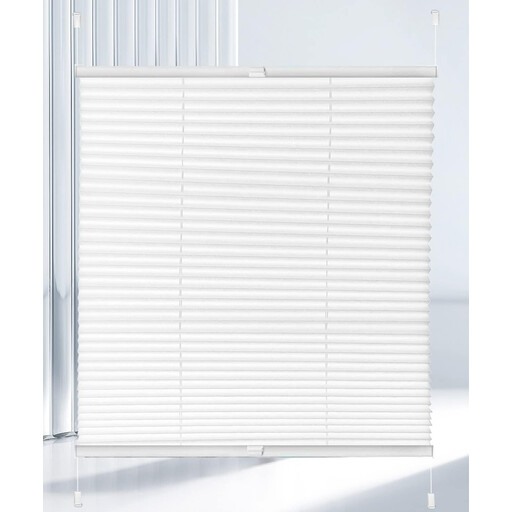
Why this product suits this profile: This light-filtering pleated blind is a simple solution for windows and doors when you want to keep the daylight. Its clamp-fit installation requires no drill.
The product description makes clear that it filters light rather than providing complete blackout. This helps you avoid expecting the fabric to block out more light than it does.
Light-filtering polyester fabric, no-drill installation and height-adjustable operation.

Why this product suits this profile: This blind is designed for anyone looking for stronger light and privacy protection in a bedroom, home office or living space.
The required frame thickness of 16–22 mm and the narrower fabric width are clearly stated, making it easier to check whether the blind will fit before you buy.
200 g/m² polyester according to the product details, silver-coated backing, cordless operation and clamp-fit or screw installation.

Why this product suits this profile: The honeycomb structure and handles on both sides make this a good choice for rooms where light protection and flexible positioning need regular adjustment.
The suitable frame thickness of 10–23 mm is clearly stated, as is the fact that the blind is not suitable for roof windows. This makes it easier to check whether it will fit before you buy.
Opaque polyester, clamp-fit installation, top and bottom handles, and easy cleaning with a damp cloth.
We’ve put together a complete, regularly updated list of products that meet these strict selection criteria and fully comply with the safety regulations in force in the EU.
For roof windows, look specifically for a no-drill sun blind designed for this type of window. According to the product details, several of the clamp-fit models mentioned are not suitable for roof windows.
Depending on the model, they are fitted using clamp brackets, adhesive pads or suction cups. Clamp brackets attach to the window sash. The frame must be the correct thickness, with enough clearance around the window handle.
Their lifespan depends on factors such as fabric quality, sun exposure, how often they are operated and how well they are fitted. Adjusting them gently, dusting them regularly and cleaning them according to the manufacturer’s instructions can help reduce wear. With chain or cord systems, check the moving parts regularly to make sure they are secure.
No. No-drill pleated blinds and roller blinds are usually operated manually and do not need an electrical connection. Ongoing care is generally limited to cleaning and occasional checks of the brackets.