
Lieferung heute & morgen

Qualitätsgarantie

Willkommens-Angebote freischalten: KOSTENLOSE Lieferung | Bis zu 80 % RABATT | Kostenlose 30-Tage-JoyPlus-Testphase
App herunterladen
A no-drill pleated blind with clamp fittings can provide privacy and shade in rented homes, owned properties and temporary living spaces without drilling holes in the window frame. To avoid disappointment after a short time, though, you’ll need to check more than just the colour and price.
Three common mistakes are:
For many clamp-fit pleated blinds, it’s recommended that you allow for the glass width plus around 4 cm. This gives you better coverage at the sides. At the same time, the blind mustn’t overlap window handles or other parts that protrude.
For the height, the full height of the window sash, including the frame, is often relevant. So if you’re looking for an 80 x 200 cm pleated blind, check whether the product size is given as width × height. For doors and floor-to-ceiling windows, also make sure there’s enough clearance around the handle when the door or window is opened or tilted.
A light-filtering pleated blind is a good choice for a living room, kitchen or home office if you want to keep the room bright with natural light. A more opaque fabric may be better for bedrooms and children’s rooms. However, make sure you read product descriptions carefully:
Don’t rely on marketing terms alone. The product description, fabric type and coverage of the window area are what matter.
A pleated blind with clamp fittings is usually attached to the window sash. Before buying, check that the shape and thickness of your frame are suitable for the fittings. If you’re using adhesive fittings, the surface must be dry and free from grease. Adhesion may be reduced on rough, uneven or damp surfaces.
Polyester fabric can generally be cleaned with a soft, slightly damp cloth. However, moisture-resistant doesn’t mean waterproof. In bathrooms and kitchens, avoid exposing the blind to direct water or heavy condensation for extended periods.
The operating mechanism matters too: top and bottom rails let you position the blind flexibly, while pull cords and operating chains must be kept safely out of children’s reach. Follow the manufacturer’s guidance on secure fitting and keeping the controls out of children’s reach.
The models below differ in size, colour, light control and fitting options. Details are based on the descriptions for each product.
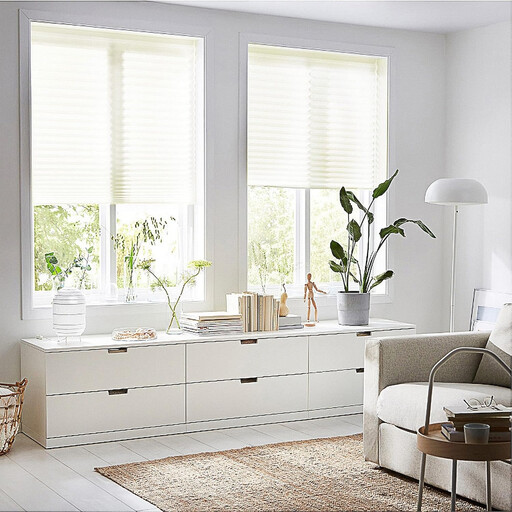
Why this product suits this profile: Its size is suitable for smaller standard windows. Beige blends in discreetly with bright living rooms, bedrooms or home offices. Clamp and adhesive fittings make it a renter-friendly option.
The product description clearly states the size, colour and fitting method. You’ll still need to check your own window measurements before ordering.
Polyester fabric, adjustable positioning and no-drill fitting; designed for interior windows and doors.
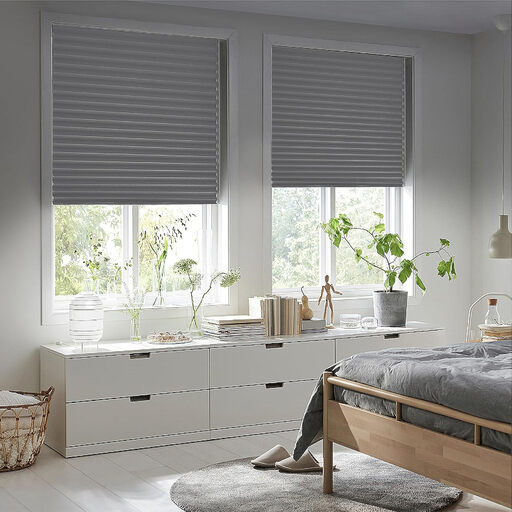
Why this product suits this profile: The light grey finish is a subtle option for living rooms, studies or kitchens. The system is height-adjustable and described as suitable for windows and doors.
The description highlights the need to clean the frame and check the fittings, and notes that the blind isn’t suitable for sloping roof windows.
Woven polyester fabric, height-adjustable operation and four adhesive fittings included, according to the product description.

Why this product suits this profile: Its honeycomb design is intended for rooms where you want to combine light control with privacy. The top and bottom rails let you position the blind flexibly.
The product details state the suitable frame thickness range of 10–23 mm and note that the blind isn’t suitable for roof windows. This helps prevent buying a blind that won’t fit your frame.
Polyester honeycomb pleated blind, no-drill clamp fitting and operation using top and bottom rails.
We’ve put together a complete, regularly updated list of products that meet these strict selection criteria and the safety regulations in force in the EU.
This depends on the fittings, window frame and product design. A model fixed at both the top and bottom may stay more secure when the window is tilted. Check the manufacturer’s guidance on tilt functions and frame thickness before buying.
There’s no single answer. It depends on how the blind is fitted, how often it’s used, how much sunlight it gets and how it’s cleaned. Regularly checking the fittings and operating the blind gently can help prevent it from coming loose or getting damaged prematurely.
A manually operated pleated blind doesn’t need electricity, so there are no ongoing running costs. When choosing a blind to shade your windows, though, consider the differences between light-filtering fabric, more opaque privacy fabric and options designed to block out more light.