
Lieferung heute & morgen

Qualitätsgarantie

Willkommens-Angebote freischalten: KOSTENLOSE Lieferung | Bis zu 80 % RABATT | Kostenlose 30-Tage-JoyPlus-Testphase
App herunterladen
As a Joybuy Product Recommendation Officer, I see every day how simple a good window solution can be—and how frustrating a bad purchase is. A no-drill pleated blind promises a quick, straightforward installation, ideal for rental apartments or for anyone who wants to avoid using tools. However, the market is flooded with products of widely varying quality. Before you make a decision, it's crucial to understand the typical pitfalls that often only become apparent after the purchase.
The search for the right privacy screen can quickly become overwhelming. Many products look identical at first glance, but the differences are in the details—and it's precisely these details that determine durability and functionality.
To avoid these mistakes, focus on three objective criteria. These will help you verify the product promises and make an informed choice.
The mounting is the heart of any drill-free system. Your choice depends directly on your window type.
Clearly define the purpose of the blind to choose the right fabric.
To minimise side light gaps, the correct measurement is crucial. A proven rule of thumb, also recommended by manufacturers like WOLTU, is:
Order Width = Width of the glass pane + approx. 4 cm
This allowance ensures that the fabric slightly overlaps the glass pane on both sides, thus blocking light more effectively. The order height should correspond to the height of the entire window sash. Make sure the blind does not block the window handle.
Based on these objective criteria, we have identified some products that represent a well-thought-out solution for specific requirement profiles.

Why This Fits Their Persona: Ideal for renters looking for an effective blackout solution for the bedroom that can be removed without leaving residue. The adhesive mount installation is straightforward and requires no DIY skills.
The clear "Blackout" specification addresses the pitfall of choosing the wrong fabric. The adhesive mount is a defined method that is reliable when the surface is prepared correctly.
Offers a high blackout function for maximum privacy and light protection. The damage-free adhesive installation is optimal for rental apartments.
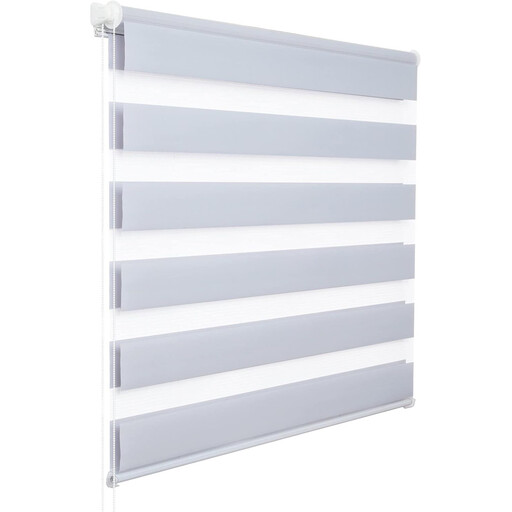
Why This Fits Their Persona: Perfect for living rooms or offices where lighting conditions need to be flexibly adjusted. The double roller design allows for a seamless transition from transparent to opaque.
The clear specification of the compatible frame thickness (13–23 mm) for the clamp brackets prevents the purchase of an unstable system. The dual function of the fabric solves the problem of choosing the wrong fabric.
Stepless light control through alternately woven fabric panels. Robust clip-fix mounting for common window sashes.
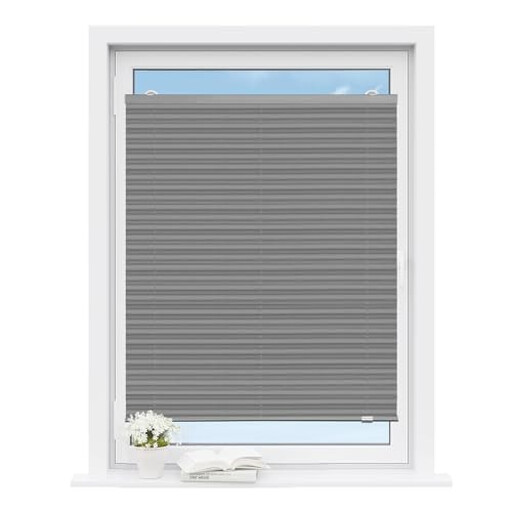
Why This Fits Their Persona: A clever solution for special installation situations like fixed-pane windows, skylights, or glass doors where mounting on the frame is not possible.
This system completely bypasses the typical problems of clamp or adhesive brackets by offering an alternative mounting method directly on the glass.
Mounting directly on the glass pane using vacuum suction cups. Can be removed and repositioned at any time without leaving residue.
We have compiled a complete, up-to-date list of products that fully meet these strict selection criteria and German safety regulations.
The lifespan largely depends on the quality of the mounting parts and correct installation. With clamp-fit systems, it is crucial that the clamp bracket sits firmly on the window frame without any play. For adhesive versions, the surface must be thoroughly degreased before installation. Under these conditions, high-quality systems can last reliably for several years.
This should be approached with caution. Clamp brackets are mostly designed for the standardised profiles of plastic windows and may not hold well on wooden frames or could damage the paint. Some manufacturers explicitly advise against installation on wooden windows. Adhesive solutions are possible, but adhesion can be compromised by the paint or varnish layer of the wood. In any case, check the manufacturer's product description for relevant information.
The fabric of a blackout blind is generally opaque. However, achieving complete darkness in a room is difficult, as minimal light gaps almost always remain at the sides, top, or bottom when mounted on the window frame. To minimise this effect, the order width should be chosen to be slightly larger than the glass area, as described above.