
Lieferung heute & morgen

Qualitätsgarantie

Willkommens-Angebote freischalten: KOSTENLOSE Lieferung | Bis zu 80 % RABATT | Kostenlose 30-Tage-JoyPlus-Testphase
App herunterladen
A no-drill pleated blind with clamp brackets can provide privacy and shade in rented homes, owned properties and temporary living spaces, without the need for screws or wall plugs. To avoid disappointment shortly after buying, check the fitting method, fabric properties and measurements carefully before you order.
Terms such as blackout, “light-blocking” and “room-darkening blind” are not used consistently across all listings. Some products reduce the amount of light coming in, but daylight may still enter the room around the sides. Even a blind described as “opaque” may let some diffused light through.
So, if you’re choosing a blind for a bedroom, read the product description carefully. If you prefer flexible light control and natural daylight in the room, choose a light-filtering pleated blind or one that offers glare reduction and privacy. For the darkest room possible, also check the exact fabric description and how much of the window pane the blind covers.
A clamp-fit pleated blind is usually attached to the window sash with clamp brackets. A pleated blind with adhesive brackets, on the other hand, uses adhesive pads or brackets on the frame. Suction cups work best on smooth, clean glass or tiled surfaces.
The differences matter in practice:
Before fitting the blind, clean the window frame and let it dry completely. Loose brackets can cause the blind to slip or fall.
A pleated blind can look like a perfect fit, but if it’s too narrow, gaps at the sides can let in light and leave the room exposed to view. For several Dream-seeker models, the recommended order width is approximately 4 cm wider than the glass. Other systems are sized to fit the frame.
So, don’t automatically use the window measurements from your floor plan. Instead:
A clamp-fit system is only suitable if the brackets sit securely on the window sash. Some models are designed for specific frame thicknesses. For example, the WOLTU honeycomb pleated blind is specified for frames measuring 10 to 23 mm. The Allesin model has adjustable brackets for frames measuring 10 to 23 mm.
Older wooden windows, roof windows, sliding windows and sloping windows often have restrictions, so check these before you buy. A pleated blind fitted to a door may also be subject to more wear if the door is opened and closed regularly.
Polyester is the most common fabric among the products mentioned. It’s usually cleaned with a soft, slightly damp cloth. However, moisture-resistant does not automatically mean waterproof. So, if you’re choosing a blind for a bathroom or kitchen, avoid exposing it to direct water over long periods.
These features can help you choose the right blind for your needs:
Blinds with handles can often be adjusted from the top or bottom. Other models use a pull cord to adjust the height. Before you buy, check which operating method suits your window and how you use it day to day.
Keep cords and small parts out of children’s reach. Check regularly that the brackets are secure. Don’t force the blind or pull it beyond its intended limits.
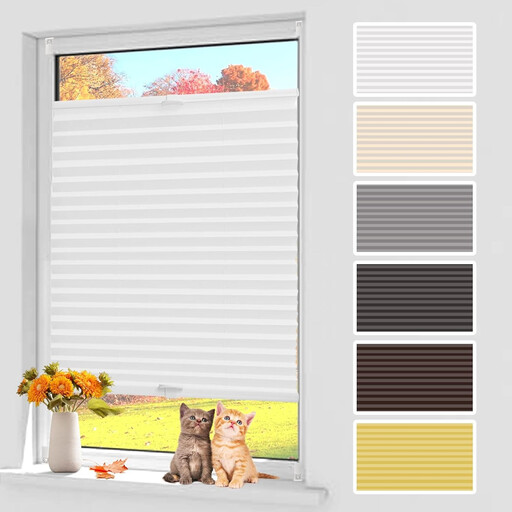
Why this product suits this profile: The compact 65 × 100 cm size is suitable for smaller standard windows. The white finish blends discreetly into living rooms, offices and bedrooms.
The product details specify clamp and adhesive fitting, with no drilling required. This makes it easy to check the fitting method before you buy.
65 × 100 cm, polyester fabric, white finish and suitable for windows and doors according to the product details.

Why this product suits this profile: Its honeycomb structure and top-and-bottom operation appeal to buyers who want flexible control over light and positioning.
The product details specify a suitable frame thickness of 10–23 mm and note that the blind is not suitable for roof windows.
Polyester honeycomb pleated blind, no-drill clamp fitting and stepless positioning using the top and bottom handles.
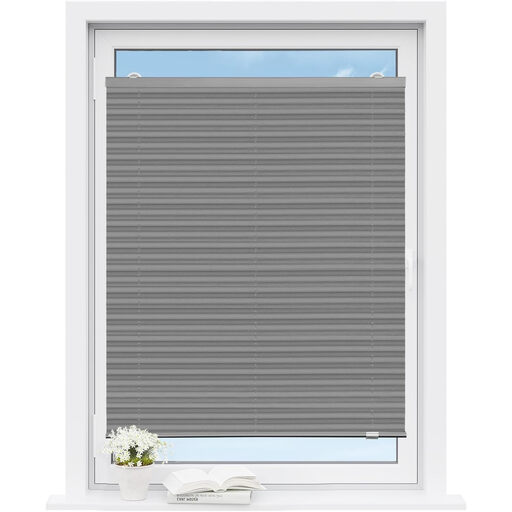
Why this product suits this profile: Suction cups may be a good option for smooth glass, patio doors or temporary installations.
The product description specifies smooth surfaces such as glass or tiles, and rules out textured walls as a suitable fitting surface.
50 × 130 cm, semi-transparent grey polyester fabric and adjustable suction-cup fitting, according to the supplier’s details.
We’ve put together a complete, regularly updated list of products that meet these strict selection criteria and the safety regulations in force in the EU.
Depending on the model, the blind is fitted using clamp brackets, adhesive brackets or suction cups. The window frame must be clean and dry. Before fitting, check the frame thickness, mounting surface and position of the window handle against the product details.
First measure the glass width and the height of the entire relevant window area. For some Dream-seeker models, a width of around glass width plus 4 cm is recommended. Other products are sized according to the frame width. Measurements such as 65 × 100 cm or 90 × 200 cm usually refer to width × height, but it’s still worth checking the relevant product page.
How long it lasts depends on the fabric, how it’s operated, sunlight exposure and how securely the brackets are fitted. Move the blind slowly and avoid pulling it sideways. Check adhesive brackets and suction cups regularly. If they start to lose their grip, refit them before using the blind again.